How aging gives Parmesan its sharp edge
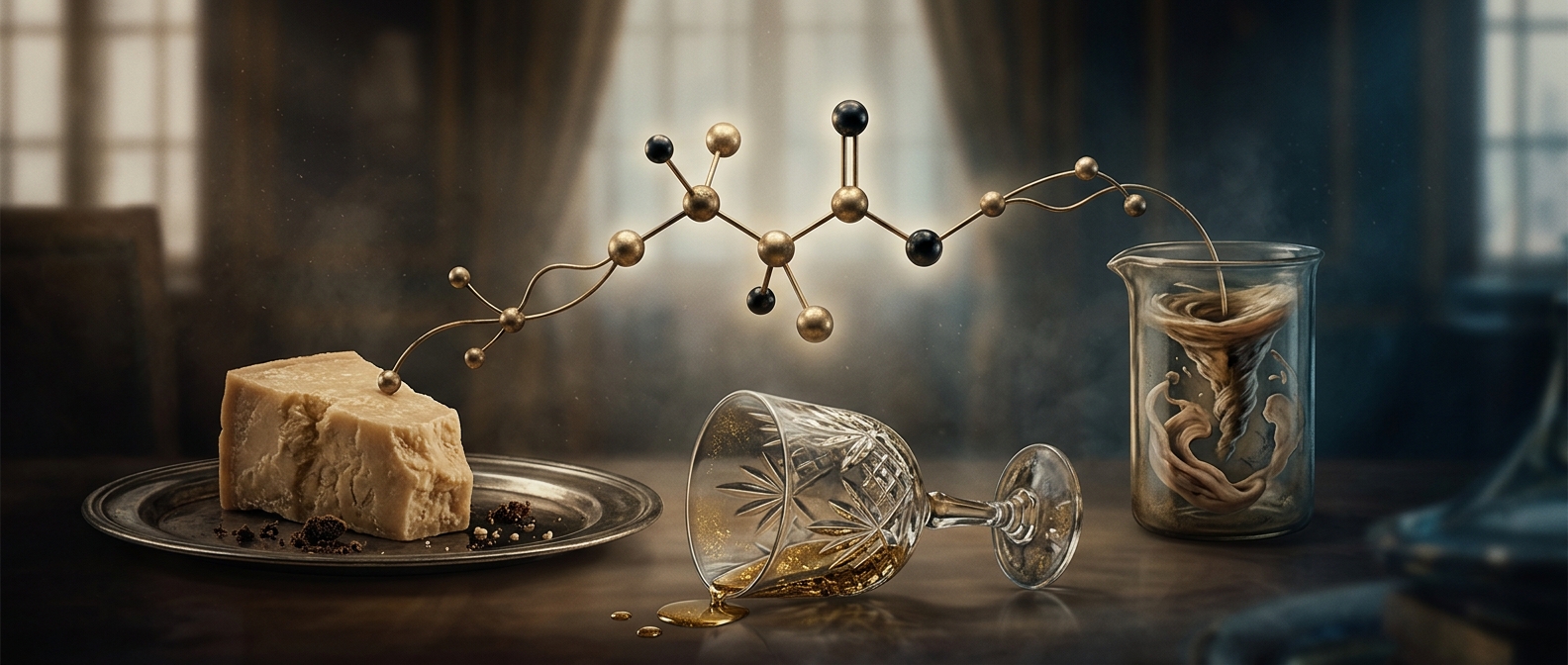
Parmesan is made from milk, whose fat is mostly packaged in molecules called triglycerides. During cheesemaking and aging, enzymes from the milk and starter cultures can split some of those molecules, releasing free fatty acids—fat components no longer attached to the original molecule. Butyric acid is one of the short-chain fatty acids that may be released.
Because it is volatile, some butyric acid escapes from the cheese into the air and reaches the nose. At high concentrations, it has a pungent, rancid odor; in a food, its effect depends on how much is present and what other aroma compounds surround it. Aging also produces many compounds from fat and protein breakdown, giving Parmesan its layered savory, nutty, and sharp notes rather than a single-note smell.
Why the same molecule suggests something else
Vomit can contain butyric acid too, alongside acids and other odor-producing substances from stomach contents and partially digested food. The nose does not identify a smell by checking for one molecule in isolation: it responds to a blend, and the proportions of that blend matter. A small amount of a pungent compound can contribute a recognizable edge without defining the whole aroma.
That is why Parmesan can sometimes trigger a fleeting association with vomit, especially when its sharp notes stand out, while still smelling unmistakably like cheese. The overlap is real, but the surrounding chemistry changes the impression.