Why avocado affects animals differently
Persin is a natural chemical made by avocado plants. It helps defend the plant against fungi, but its effects vary sharply among animals: a dose that people generally tolerate can disrupt the health of certain species. That difference reflects biology, not a simple divide between “safe” and “toxic” foods. Animals process chemicals in different ways, and some are far more susceptible to persin’s effects than humans are.
The dose matters—and so does the species
The danger is not identical for every animal or every exposure. Birds and some livestock are particularly vulnerable, while the risk to a dog or cat depends on how much was eaten and the animal’s circumstances. Persin can harm susceptible animals by damaging tissues, including the heart and mammary glands. A plant’s antifungal defense, in other words, can become a serious internal poison in the wrong animal.
That makes “avocado is poisonous” an incomplete description. The meaningful question is which animal ate how much, and which part of the fruit was involved.
The pit creates a different kind of danger
Even apart from persin, the large, hard pit poses a physical hazard. If swallowed, it can lodge in an animal’s throat or block the digestive tract. This is an obstruction risk, not the same process as chemical poisoning, and it can matter even when the animal is not among the species most sensitive to persin.
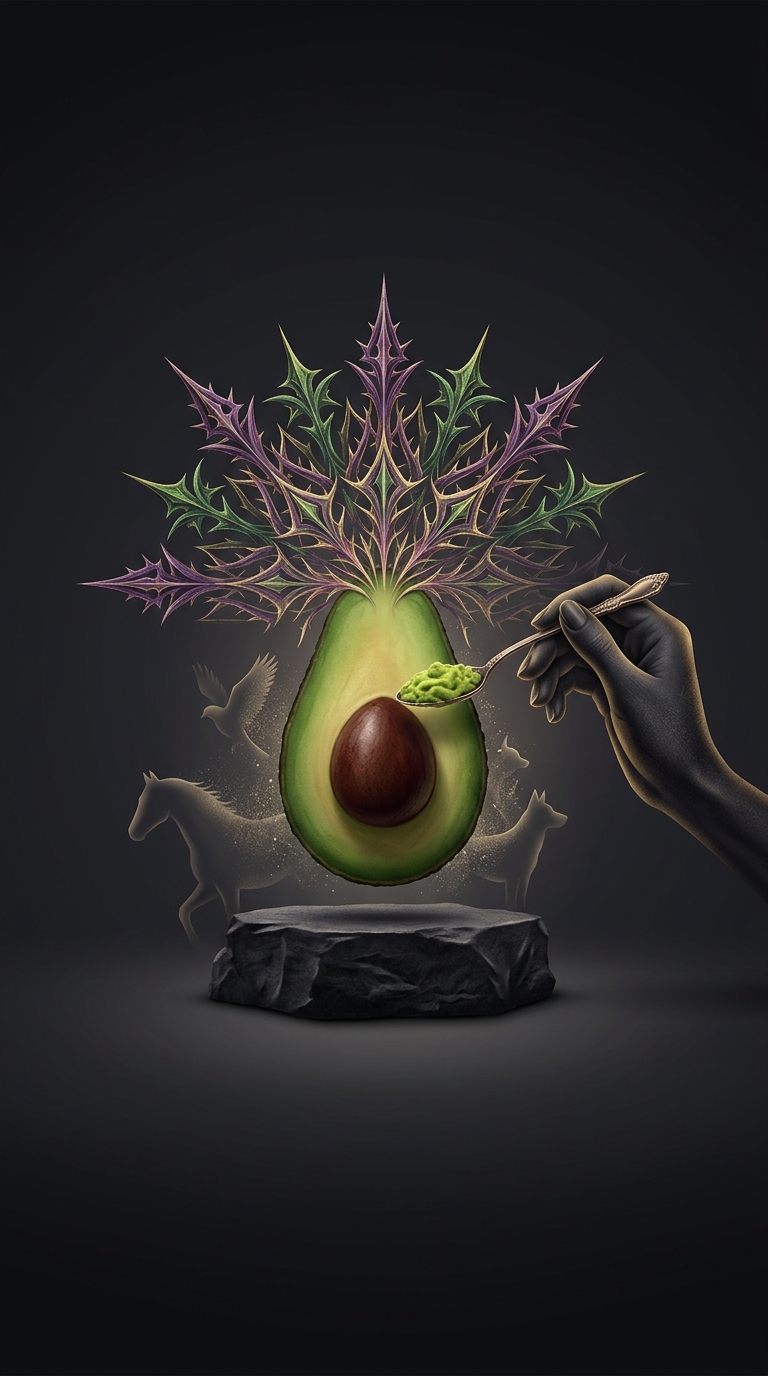
A single avocado can therefore present two distinct problems: a plant toxin whose effects vary by species and dose, and a pit capable of choking or obstructing. The same fruit that is ordinary food for a person can demand very different caution around a bird, a farm animal, or a pet.