How ethylene changes a fruit’s ripening pace
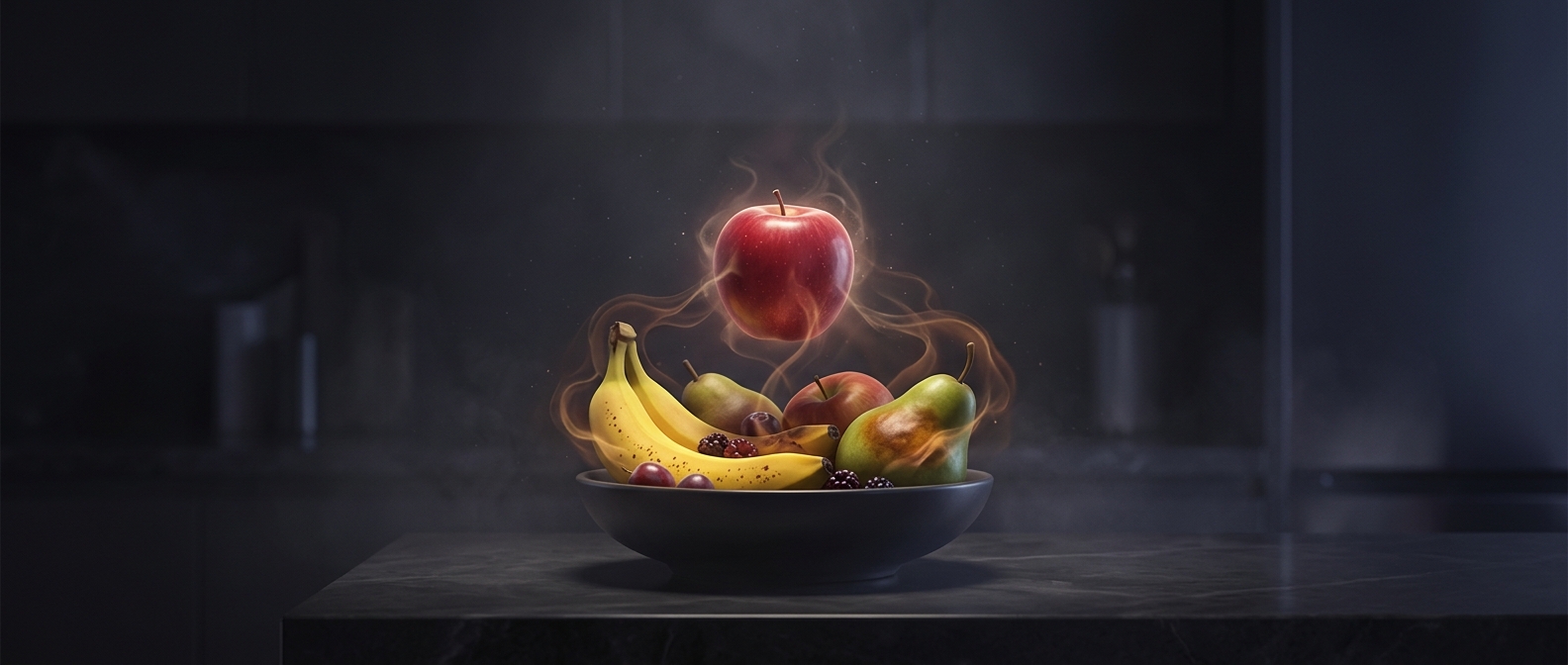
Ripening is not just a matter of fruit sitting until it softens. Many fruits produce ethylene, a gas that acts as a chemical signal. As a fruit matures, its ethylene can prompt changes in its own tissues—and, when enough gas reaches nearby fruit, help trigger similar changes there.
In a banana, those changes include breaking down some of the firming material in its cell walls and converting stored starches into sugars. The fruit becomes softer and sweeter, while its peel changes color. Ethylene does not ripen every kind of fruit in the same way or at the same rate, but bananas are responsive to it.
Why a paper bag can make the effect stronger
Ethylene disperses into the surrounding air. In an open room, air movement carries it away, so a nearby apple’s signal is diluted. A paper bag slows that exchange with the room, allowing more ethylene to accumulate around the banana. The apple and banana do not need to touch: the gas travels through the shared air inside the bag.
The bag is not a sealed chamber, and it does not create ethylene. It simply helps retain some of the gas that the fruit is already releasing. That makes the signal more concentrated than it would be in a well-ventilated space, which can encourage the banana’s own ripening response.
A useful nudge, not a precise timer
The result depends on how ripe the fruits are, how much ethylene they release, and the temperature and airflow around them. So an apple in a bag may help a banana ripen faster, but it cannot guarantee an exact schedule. The practical trick is to check the banana regularly: the same trapped signal that helps it soften can carry ripening further than intended if it is left too long.