How a tree’s gas becomes airborne particles
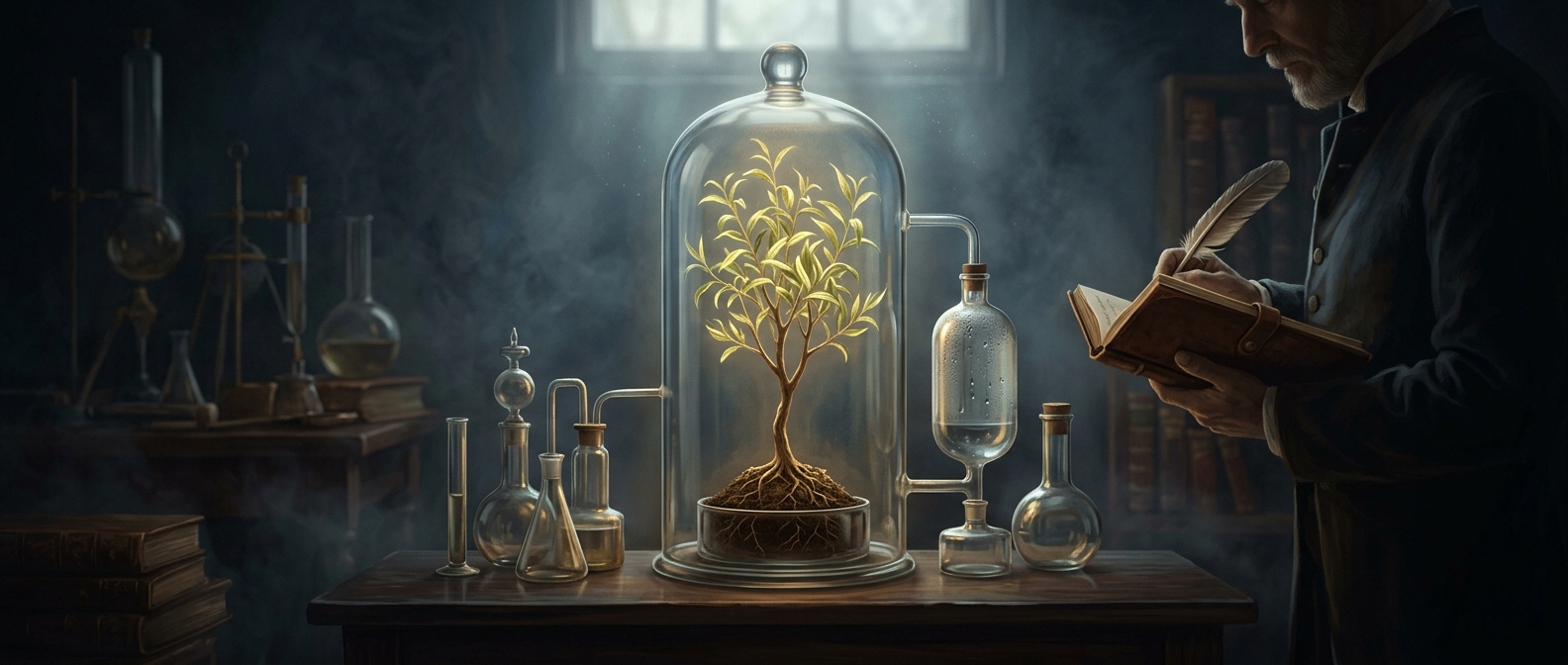
On warm, sunny days, leaves can release isoprene, a carbon-rich gas that evaporates readily into the air. The gas is invisible, but it does not necessarily stay a gas: reactions with oxygen and other substances in the atmosphere alter its molecules. Some of the resulting compounds can condense into tiny airborne particles, a process called secondary particle formation because the particles form in the air rather than being emitted directly.
Why the distant ridges look blue
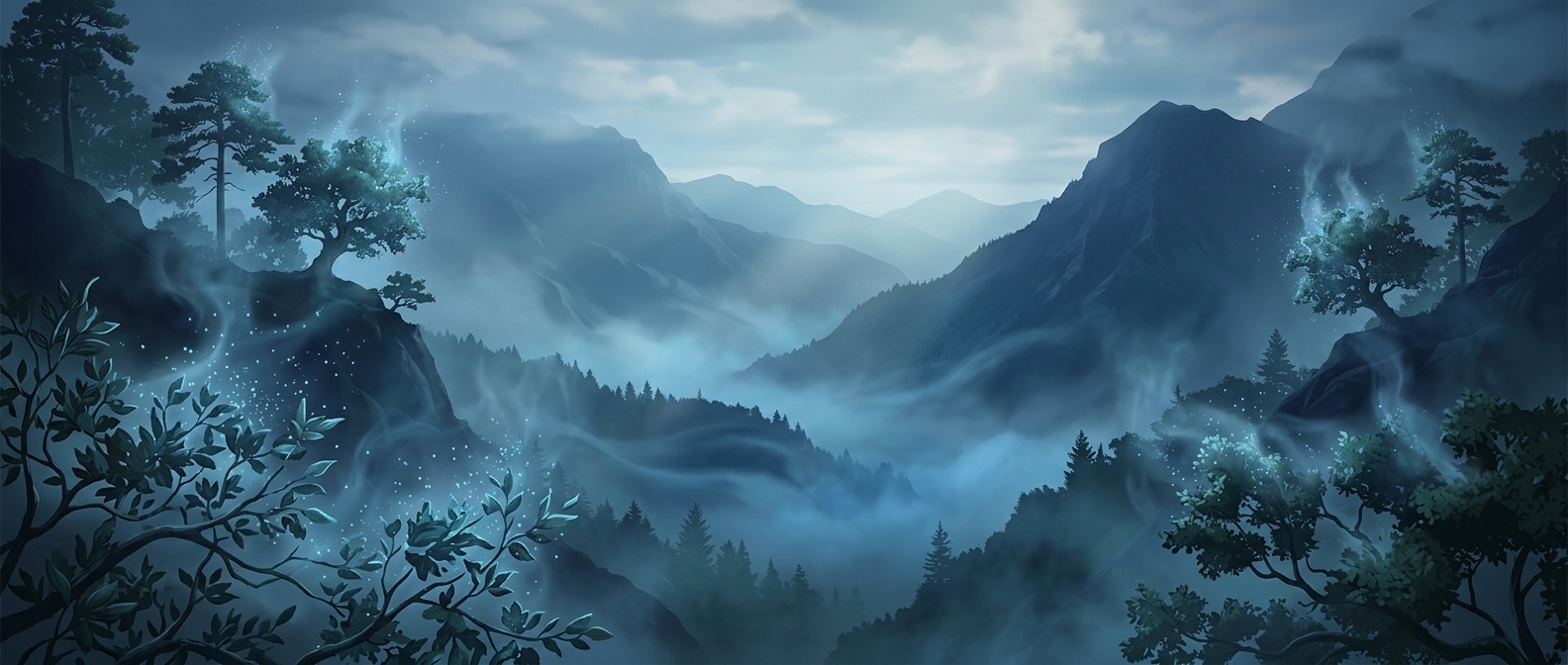
Sunlight contains every visible color. As it travels through air, small particles scatter some of that light in different directions. Shorter blue wavelengths are scattered especially effectively by sufficiently small particles, sending blue light toward an observer. The farther away a ridge is, the more air its light passes through—and the more opportunities there are for scattering to soften its colors and make it appear blue.
This is not a blue cloud sitting over the mountains. The effect builds along the long stretch of air between the viewer and the forest, where particles mingle with ordinary air and other atmospheric material. Isoprene-derived particles can contribute to that haze, though they are only part of the mixture.
The forest sets the stage; the air completes the effect
The visible color depends on more than how much gas trees release. Sunlight and atmospheric chemistry help determine whether isoprene becomes particle-forming compounds, while wind, humidity, and other conditions affect how those particles accumulate or disperse. That is why a forested ridge can look sharply defined one day and washed in blue the next: the trees supply some of the ingredients, but the intervening air determines how much light reaches the eye.