How a Ripe Banana Can Speed Up the Fruit Bowl
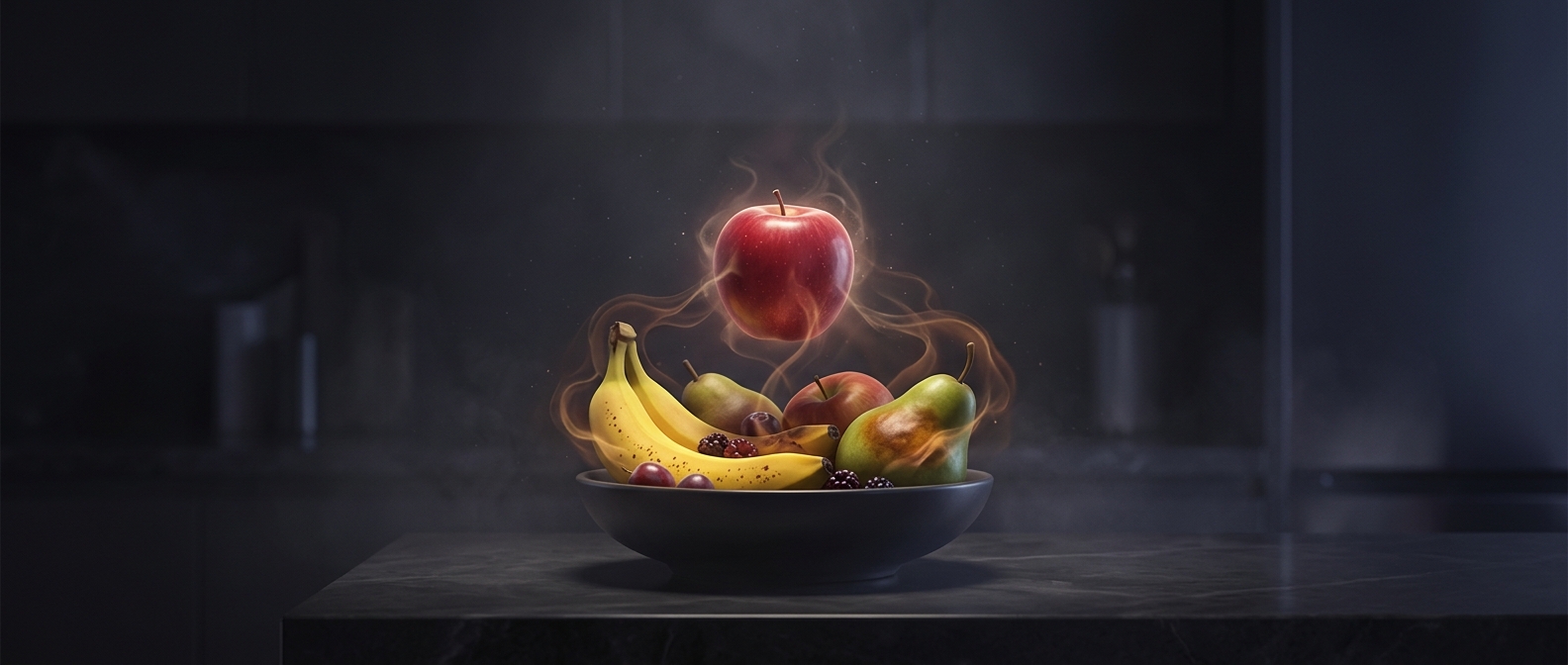
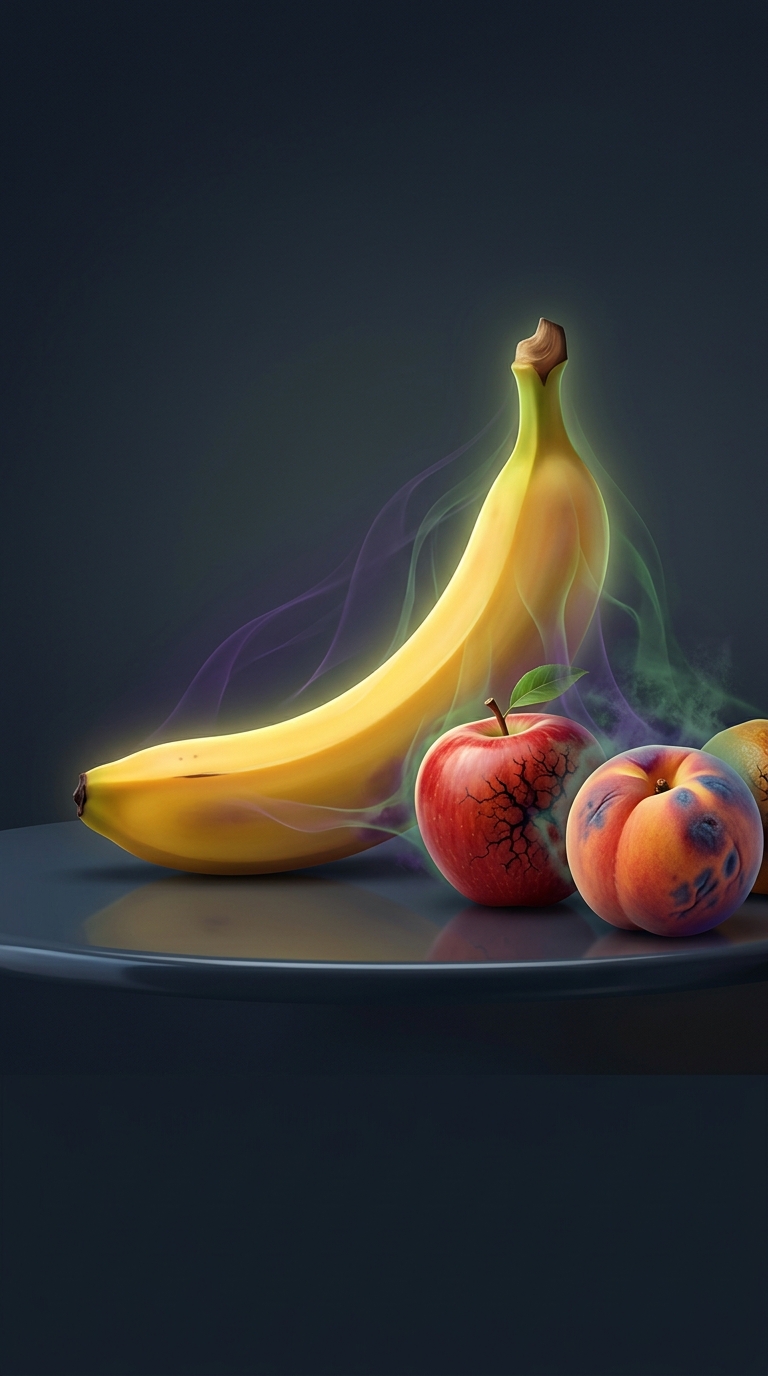
A banana does not infect its neighbors or make them decay on contact. As it ripens, it releases ethylene, a colorless gas that plants use as a signal. Nearby fruit can absorb that signal, and in responsive varieties it can start or accelerate changes that soften the flesh, alter its color, and develop its aroma.
The effect is strongest when fruit is enclosed together, where ethylene can build up. In an open bowl, the gas disperses, so the influence is usually less dramatic—but a ripe banana can still help sensitive fruit move toward ripeness sooner.
Ripening Is Not the Same as Rotting
For fruits such as pears, avocados, and many apples, ethylene can hasten ripening. As ripening proceeds, enzymes break down firm cell walls and convert stored starches into sugars. The fruit gets softer and sweeter, but also more vulnerable: bruises spread more easily, and fungi and bacteria can take hold once the skin or flesh is damaged.
That is why the bowl can seem to go from fresh to spoiled all at once. The banana may have nudged a neighbor into ripeness; warmth, bruising, moisture, and microbes then help determine how quickly it deteriorates. Ethylene itself is not a rot-causing germ.
Why Some Fruit Barely Reacts
Not all produce responds alike. Some fruits ripen substantially after picking and are sensitive to ethylene; others change little once harvested. Even among responsive fruits, the speed depends on variety, temperature, and how ripe each piece already is. A banana beside an unripe avocado may make a noticeable difference, while a different fruit in the same bowl may show little change.
To slow the cascade, separate ripe bananas from fruit you want to keep firm, and store delicate or already-ripe produce in cooler conditions when appropriate. The practical lesson is simple: one ripe banana can advance a neighbor’s ripening schedule, but the familiar “rotting” is the later result of softness and spoilage—not the gas eating the fruit.