An Oscar, but not a seat with the cast
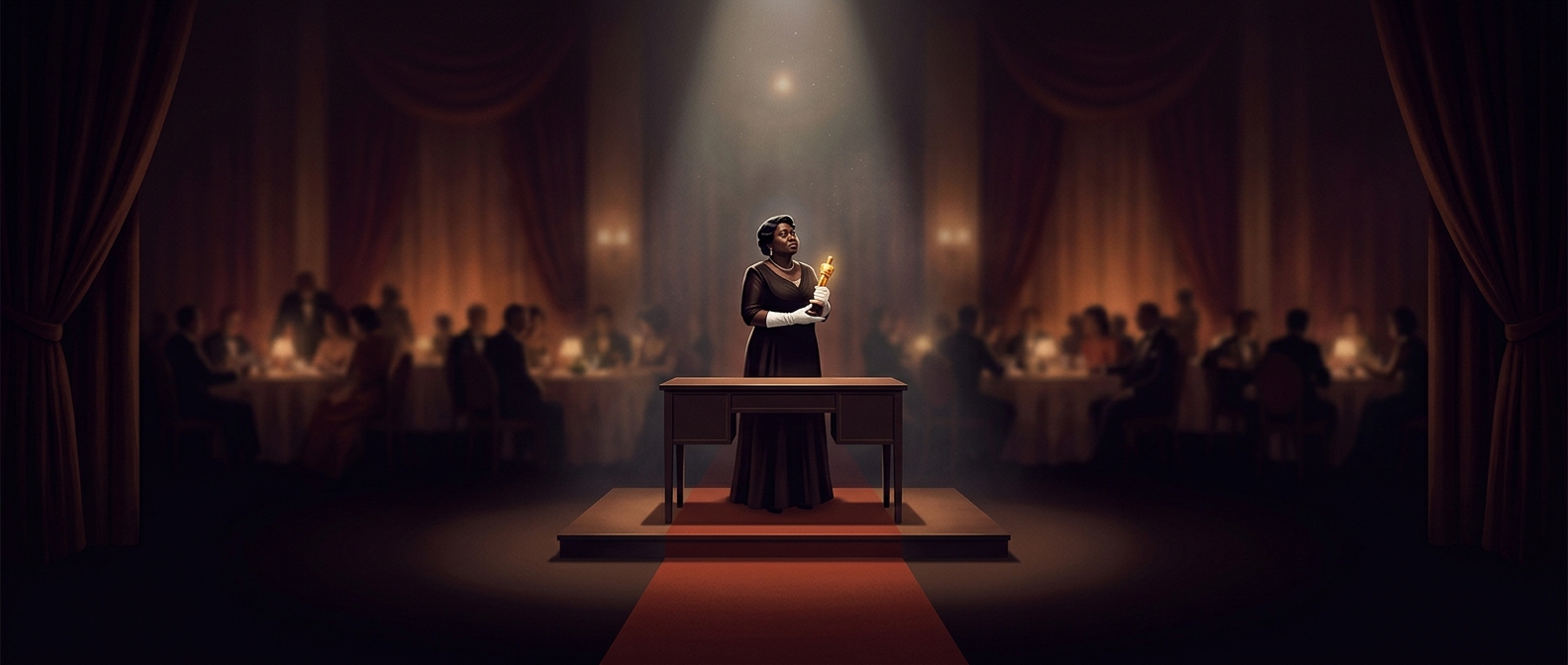
At the 1940 Academy Awards, Hattie McDaniel won Best Supporting Actress for playing Mammy in Gone with the Wind. The ceremony was held at the Ambassador Hotel’s Coconut Grove, where segregation shaped who could sit where. McDaniel was admitted only after an exception was arranged, and she was seated apart from her white co-stars at a small table.
The separation made the ceremony’s contradiction visible: Hollywood could honor a Black performer onstage while still enforcing racial boundaries in the room. The award recognized McDaniel’s performance, but it did not give her equal access to the event or erase the limits Black actors faced in the industry.
Recognition did not mean equal treatment
McDaniel was the first Black person to win an Academy Award. That milestone mattered, yet the roles available to Black performers were severely constrained, often confined to stereotyped supporting parts. Her win could acknowledge her skill without changing the system that shaped which stories she was allowed to tell—or how she was treated at a major industry gathering.
The small table remains a concrete measure of that gap: McDaniel received the ceremony’s highest recognition for supporting performance, while being kept physically apart from the people whose film she helped bring to life.