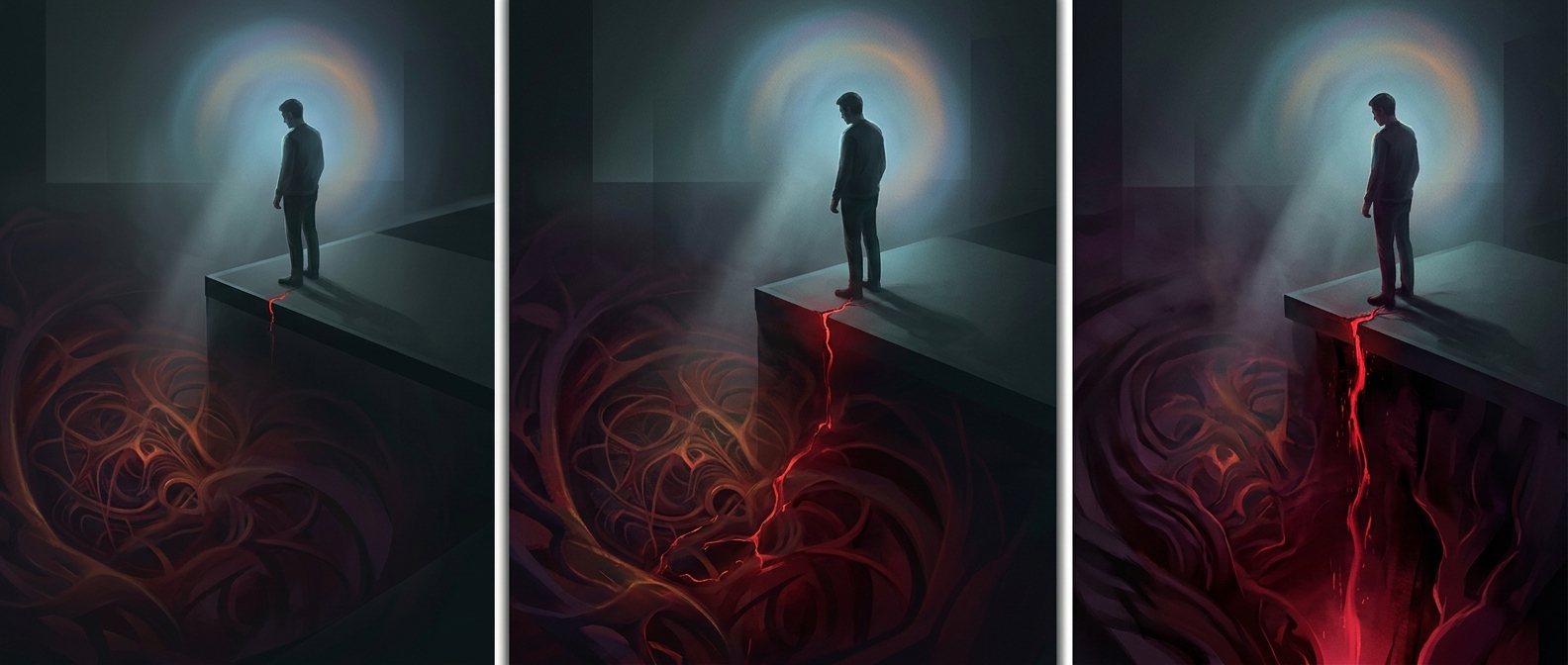
Why another person’s pain can feel distant
Pain is more than a fact we learn about someone. It is a bodily experience: a sharp sting, a pulse of heat, the effort of moving carefully. When we hear that someone is hurting, we can use memories of our own pain to imagine what those words might mean. But we are not replaying a recording. We are reconstructing a sensation from memory, language, and clues about the other person’s situation.
That reconstruction can be harder when we feel comfortable. Without a current ache or other bodily discomfort to bring painful memories to mind, the experience may seem less vivid. The person’s pain remains real, but our own calm state can make it harder to grasp its force from the inside.
Comfort changes the comparison, not the facts
Psychologists sometimes describe a related pattern as an empathy gap: people can misjudge how strongly a feeling will affect someone when they are not experiencing that feeling themselves. Someone who is not hungry, for instance, may underestimate how urgent hunger feels. Pain can work similarly. From a calm, comfortable state, it is easy to treat another person’s description as an abstract report rather than as a sensation that could dominate attention and limit ordinary movement.
This does not mean people must hurt themselves to understand pain, or that everyone responds the same way. It means that imagination has limits, especially when the relevant experience is absent. Specific details—what movement hurts, how long the pain lasts, or what the person can no longer do—can give the mind more to work with than a general label such as “sore.”
The practical consequence is simple: when someone describes pain, taking their account seriously is often more reliable than using your own present comfort as a measure of how bad it can be.