What a radio telescope actually collects
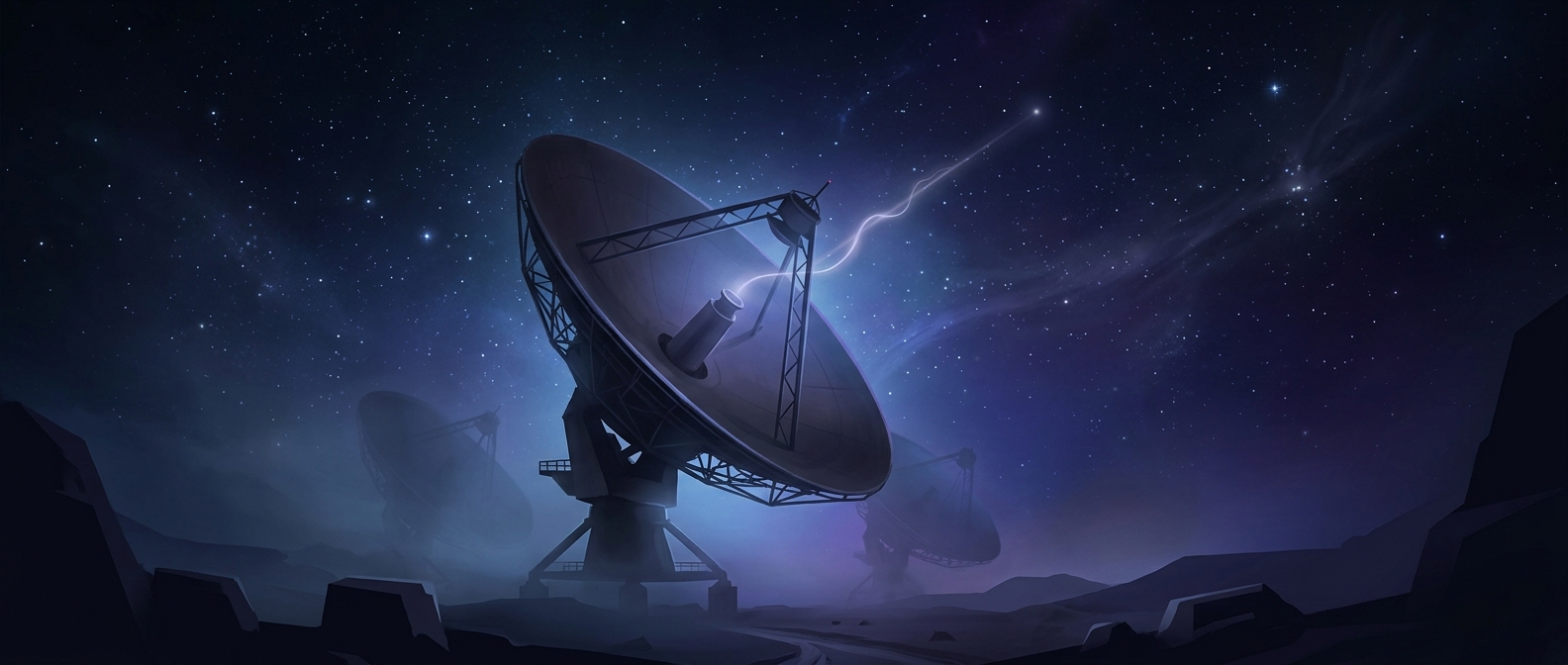
A radio telescope does not photograph the sky in the usual sense. Its antenna gathers radio waves—electromagnetic energy with wavelengths much longer than visible light—and directs them to a receiver. In a dish-shaped telescope, the curved surface reflects incoming waves toward a small receiver at the center. The receiver turns their faint energy into electrical signals that computers can measure and analyze.
Because cosmic signals are weak, astronomers often combine observations from many antennas or collect data over long periods. This can reveal patterns too faint to stand out in a quick snapshot.
Seeing through cosmic dust
Dust clouds can make a region of space look dark because they absorb or scatter much of the visible light passing through them. Radio waves are generally less affected: their longer wavelengths interact differently with the small particles in the dust. As a result, a radio telescope can pick up signals from behind some clouds that hide the view in visible light. Dust is not transparent to every radio wavelength, but it does not automatically erase the view.
That difference lets astronomers study objects and regions that ordinary optical telescopes cannot readily see. The radio data may trace energetic particles moving through magnetic fields in a galaxy, or reveal a pulsar—a rapidly rotating stellar remnant whose radio beam sweeps past Earth like a lighthouse beam.
Listening means measuring patterns
The receiver does not hear sound. “Listening” is a metaphor for detecting and decoding radio energy. Astronomers look for structure in the signal: a repeating pulse, emission spread across a region, or changes over time. A dark patch in a visible-light image can therefore contain a rich radio view, turning apparent emptiness into evidence about what lies behind the dust.