A race without a fixed finish line
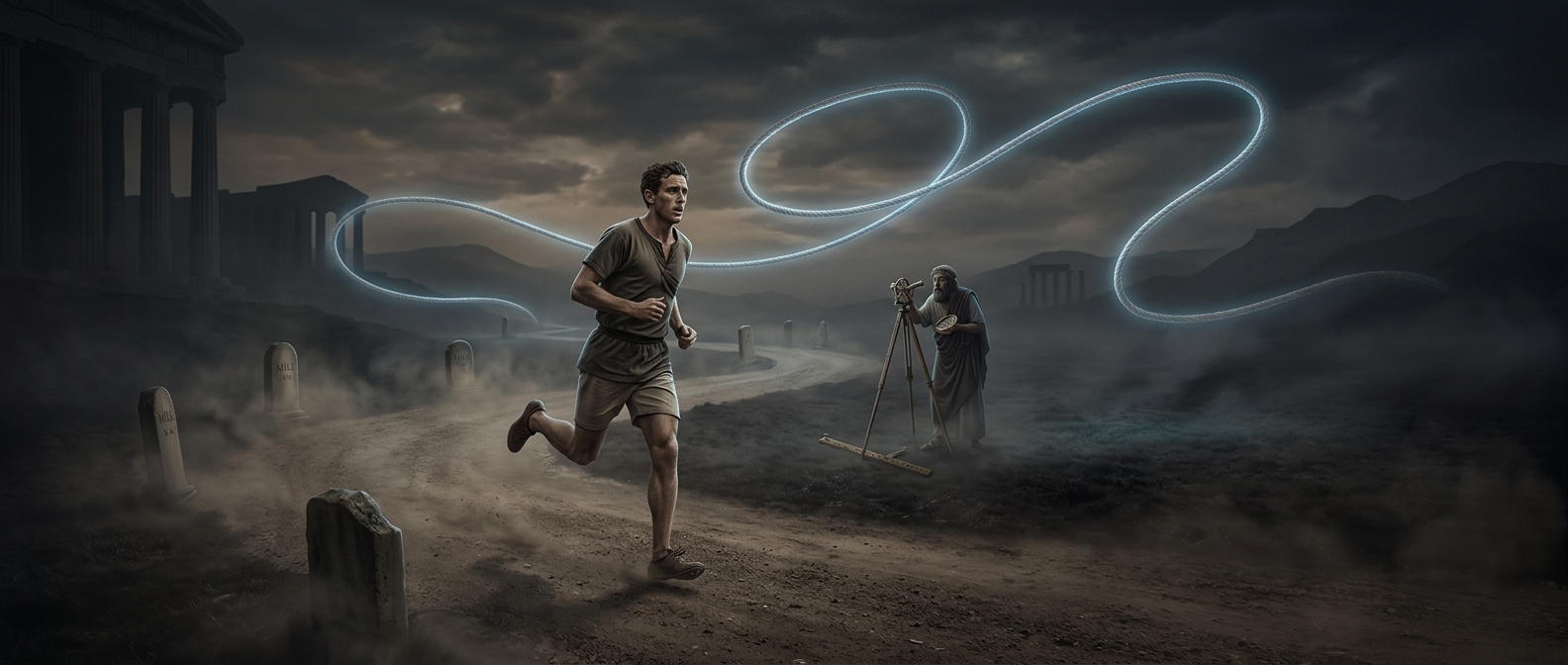
For years, “marathon” described a kind of race more than a precise distance. Organizers laid out courses according to local roads, starting points, and finish locations, so one event might cover 24 miles while another stretched to 26 or fell between them. Runners could compete in marathons without running the same distance from one race to the next.
That flexibility made sense when races were organized as individual events rather than as instances of one globally standardized test. But it also made comparisons difficult: a faster time could reflect a shorter course as well as a stronger performance.
The London course that set the measure
The distance that eventually became standard came from the 1908 Olympic marathon in London. Its route ran from Windsor Castle to the Olympic stadium. The course was extended so the runners would finish in front of the royal box, bringing the total to 26 miles and 385 yards—about 42.195 kilometers.
That measurement was initially a feature of one particular race, not a universal rule. Its later importance came from adoption: in 1921, the governing body for international athletics fixed the marathon distance at that length.
One distance, comparable performances
Standardization turned the marathon into a consistent event. A runner’s time could now be compared with performances on other officially measured marathon courses, because each had the same nominal distance to cover. The London route’s extra 385 yards—added to shape a finish at the stadium—became part of the race everywhere.