How a Mud Flap Interrupts the Tire’s Spray
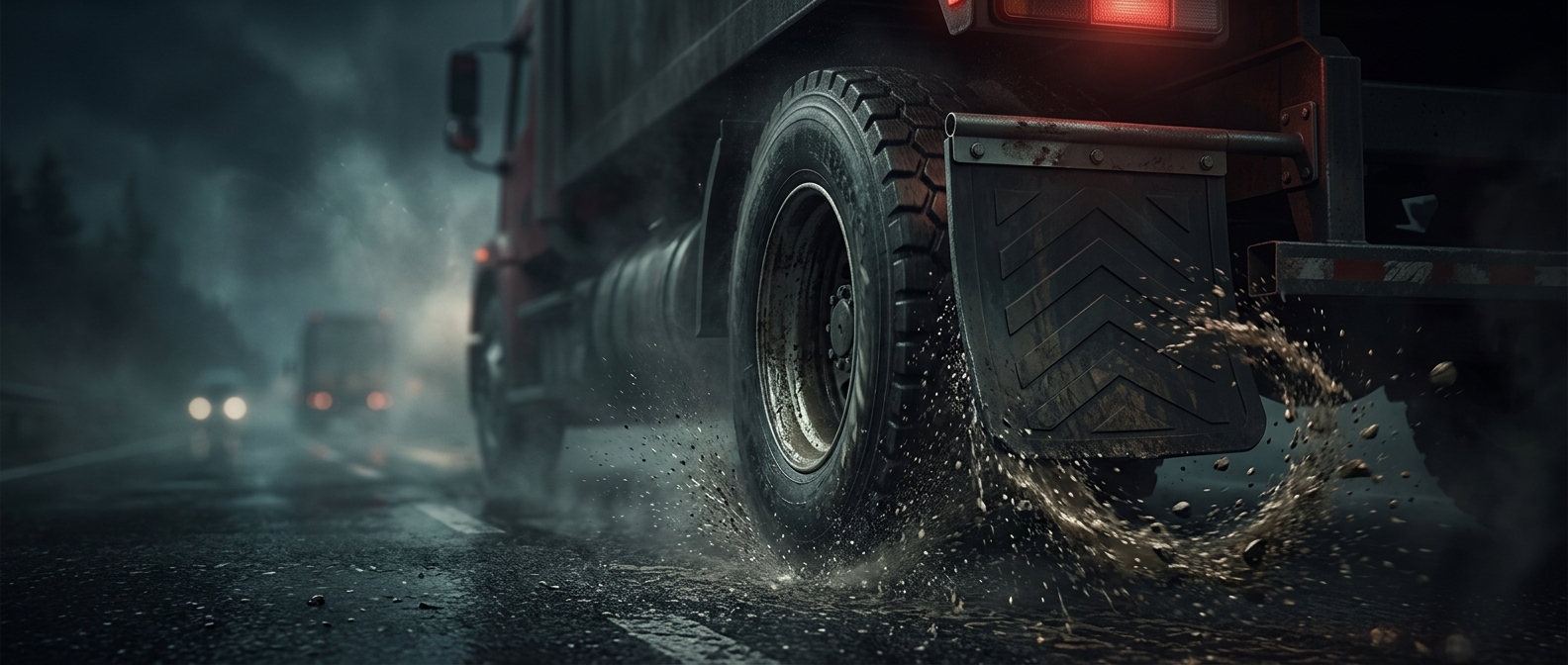
A rolling tire does more than press against the pavement. Its tread picks up water, grit, and small stones at the road surface, then carries them upward as the wheel turns. Near the back of the wheel, that material can be flung outward and backward. A flap placed close behind the tire blocks much of this path, catching larger debris and redirecting water toward the ground.
The flap works as a barrier, not a sealed shield. It hangs low enough to intercept material leaving the tire but remains flexible enough to bend when it hits road edges or shifts in the airflow. That flexibility matters: a rigid panel could crack or be damaged by the very impacts it is meant to absorb.
Why the Difference Matters on a Truck
A truck’s large tires can throw substantial spray, and debris from a rear wheel can reach vehicles following behind. The flap reduces the amount sent directly into another driver’s view and helps limit stone strikes on nearby vehicles. It cannot stop every fine droplet: air moving around the tire and under the truck can carry mist past the barrier.
So the practical result is not a dry road behind the truck, but a less forceful stream of spray and fewer hard pieces launched into traffic. On a wet highway, even that interruption can give a following driver a clearer view and a little more time to react.