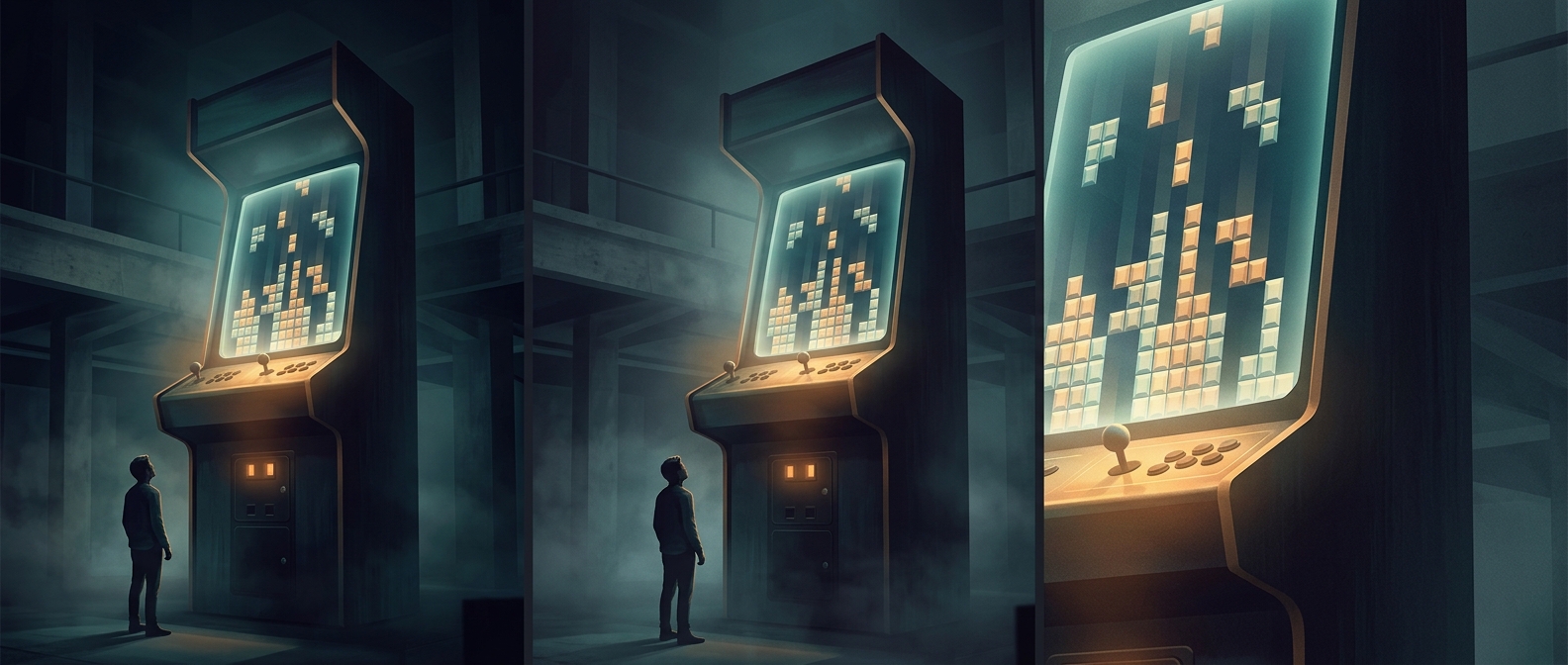
When Tetris becomes a full-body game
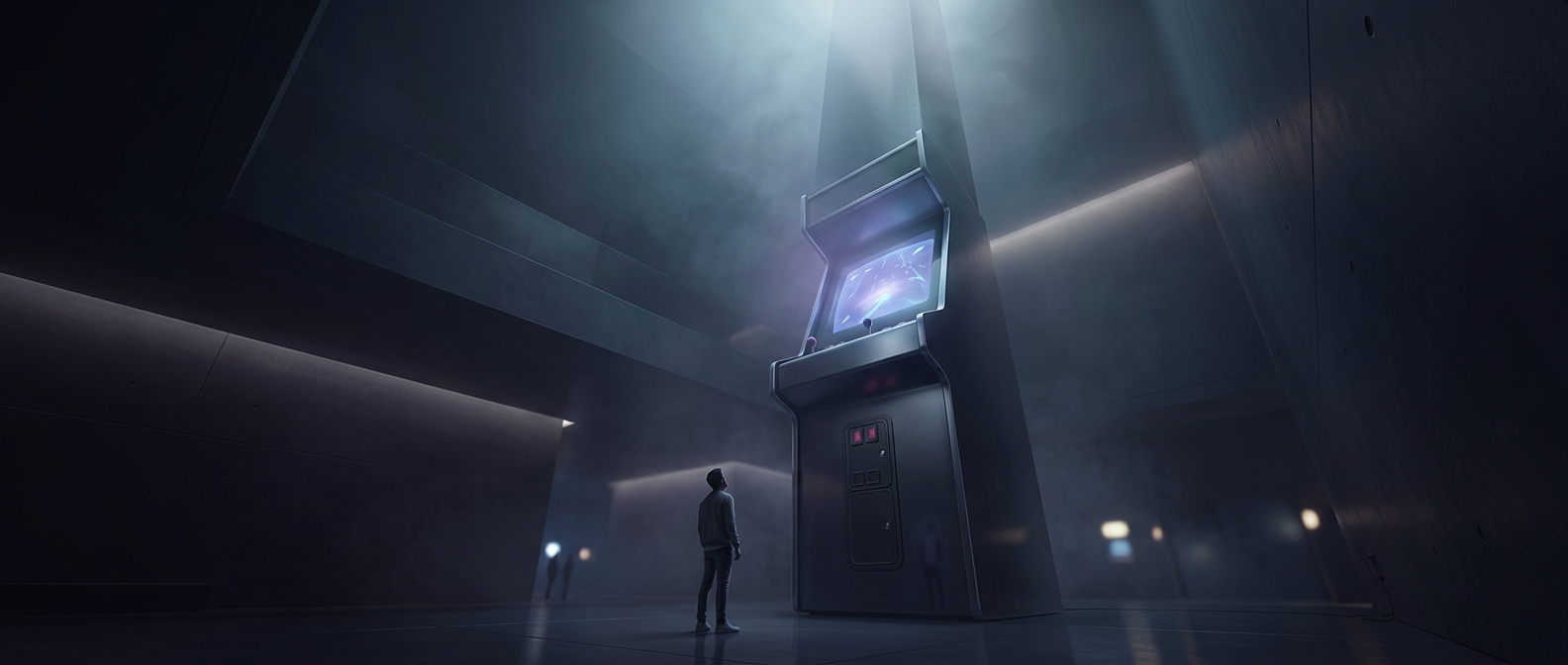
Tetris normally asks for small, quick inputs: move a falling shape left or right, turn it, or send it down to fill a gap. In Mads Peter Iversen’s oversized arcade cabinet, those familiar commands are still made with a joystick and buttons—but operating them takes far more than a thumb.
The scale changes the player’s job. A joystick that takes your body weight to move turns a brief directional adjustment into a physical effort. Oversized buttons make each press a conspicuous action, too. The puzzle still depends on timing and spatial judgment; now the player must also manage the effort of controlling the machine.
The controls become part of the spectacle
In an ordinary cabinet, the controls disappear into the background while the player watches the screen. Here, they demand attention. Moving a piece is no longer a tiny flick of the hand but a visible act involving the player’s whole body.
That contrast is the cabinet’s central joke and challenge: Tetris remains a game of precise, rapid decisions, but its interface makes every decision feel outsized. A simple move across the board becomes something an observer can see—and a player has to work for.