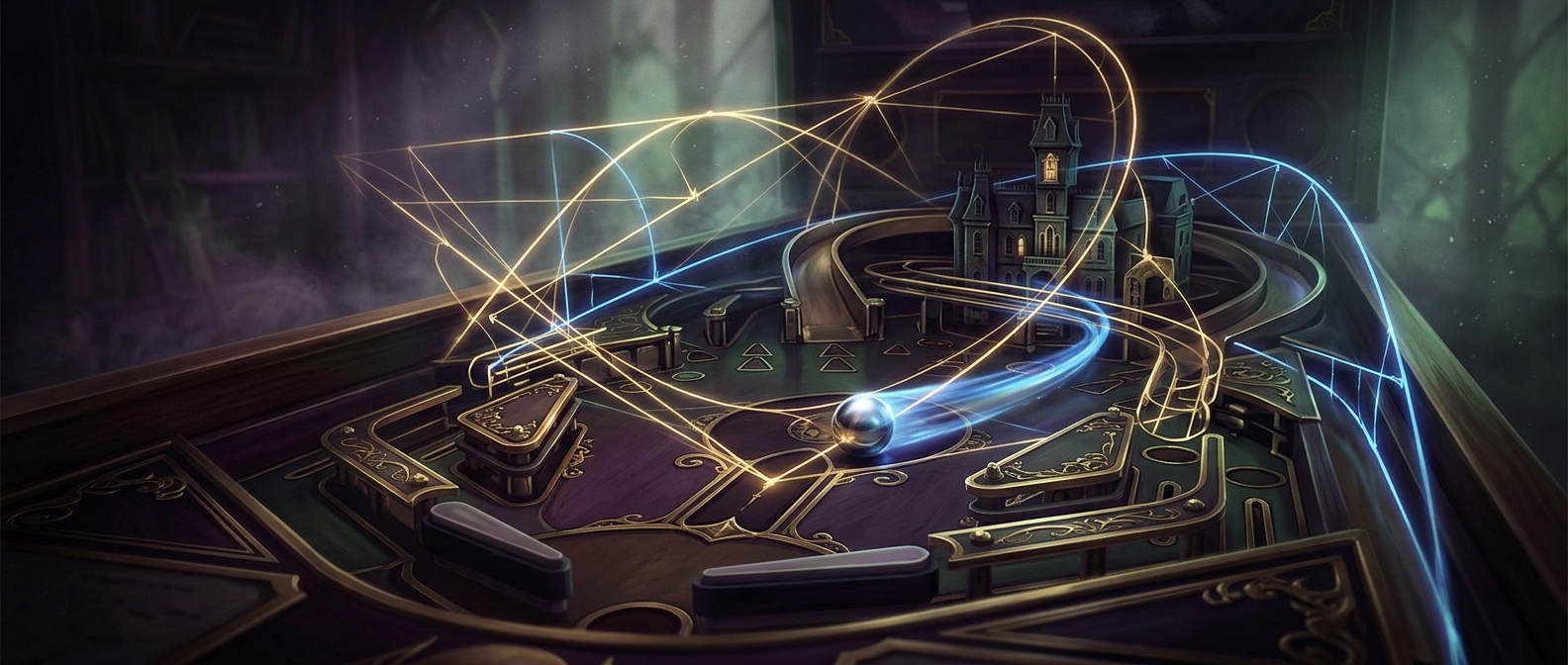
A ramp that gives the shot back
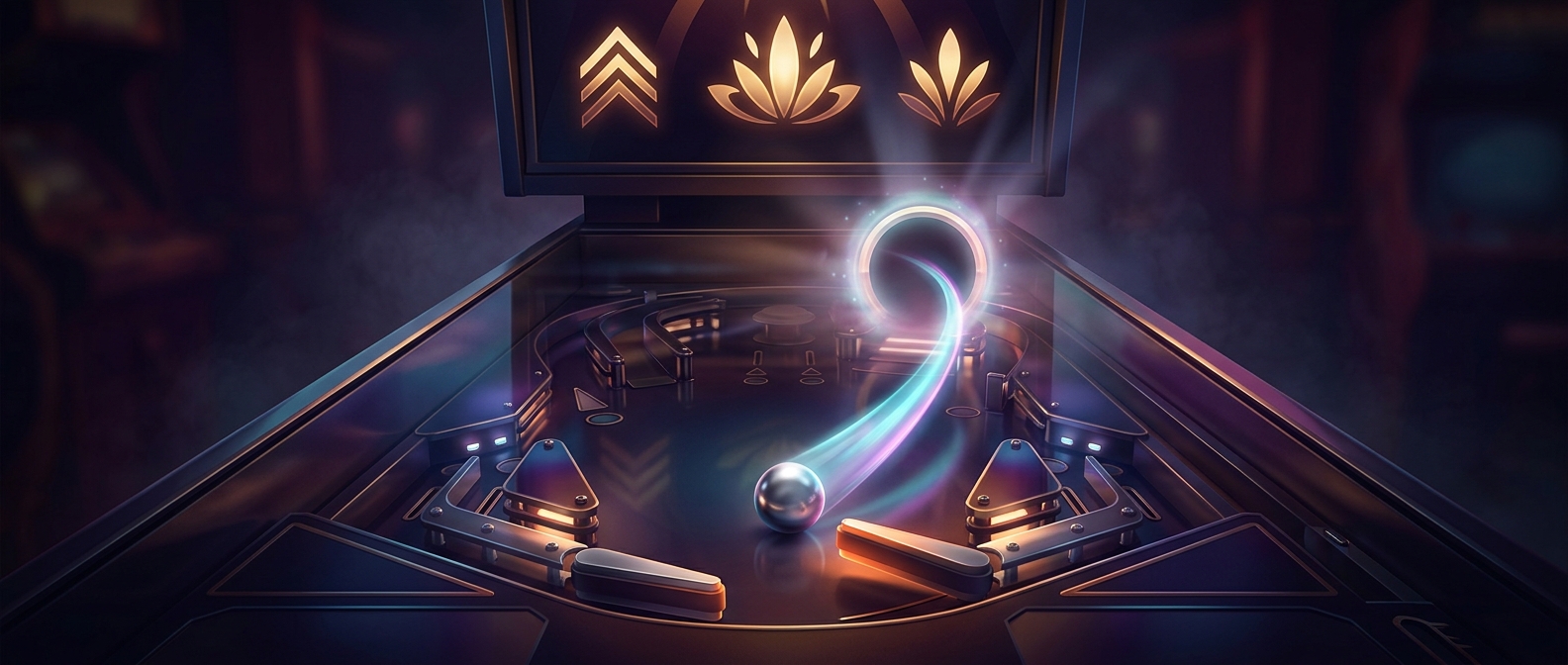
A pinball ramp is more than a way to send the ball upward: its shape and exit determine where the ball goes next. In The Addams Family, designer Pat Lawlor arranged the ramps so that a well-aimed shot returns the ball to the flipper that launched it. The player can catch the ball, settle it, and try the shot again instead of scrambling to reach the opposite flipper.
That return path turns one successful shot into a repeatable sequence. The player still has to aim and time each launch; the ramp does not guarantee another loop. But once the shot is under control, the ball’s route becomes familiar enough for the player to focus on repeating it.
Why repetition can feel absorbing
Pinball demands quick decisions because the ball is always moving. A controlled return briefly changes that pressure: the player can see the ball coming back to a known place and prepare the next shot. Each successful pass gives immediate feedback—aim well, and the ball completes the route; miss, and the pattern breaks.
That balance helps create flow, the absorbed state that can emerge when a task is challenging but feels manageable. The loop offers a clear goal and a chance to improve through repetition, while leaving enough risk to keep each shot meaningful. Its appeal is not that the ball literally moves forever, but that a player can sustain a satisfying rhythm for as long as skill and luck allow.