How a Pinball Table Turns a Fall Into a Timing Test
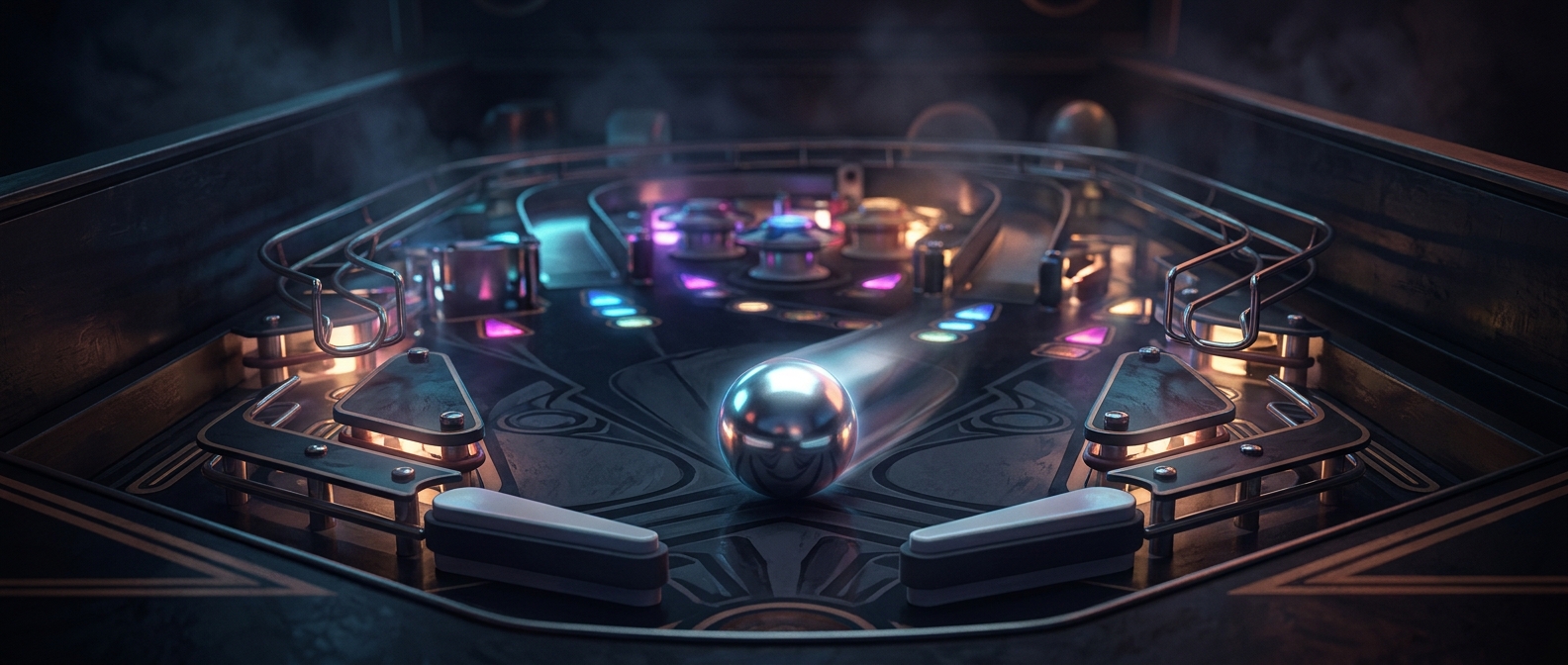
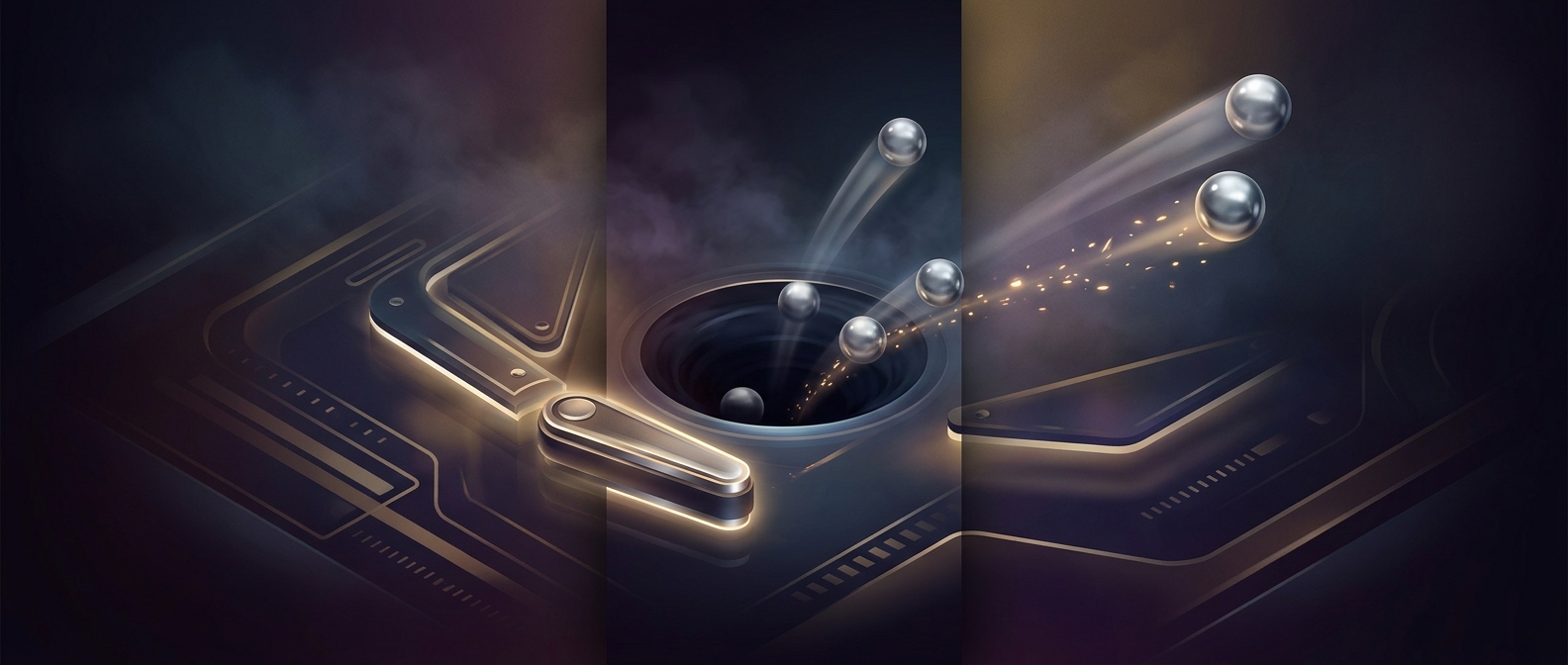
A pinball is always being pulled downhill by gravity, but the table’s angled surface and metal guides send it through a maze of possible routes. Bumpers and slingshots can knock it into new paths; the flippers are the player’s main chance to redirect it before gravity carries it toward the opening at the bottom.
A flipper does more than block the ball. Pressing its button swings a small paddle upward, and the point and timing of contact affect where the ball goes next. A late hit may send it sharply upward; a glancing hit can steer it sideways. Players learn to read the ball’s approach and choose a moment, rather than simply hold both buttons down.
Why the Drain Shapes the Game
The drain gives every shot a consequence. A ball that passes the flippers is gone, so the player must weigh a risky attempt to reach a target against the danger of sending the ball onto a path they cannot recover. Table designers use the layout to create those choices: targets may reward a difficult shot, while rails and bumpers can make the ball’s route unpredictable.
That mix of control and uncertainty is central to pinball’s appeal. The player can influence the ball, but cannot dictate every bounce. Keeping a rally alive means repeatedly turning a fast-moving object’s changing path into a quick decision—and the narrow space between a successful save and the drain is where the game’s tension lives.