Why a Claw Machine Can Pause the Tough-Guy Routine
A claw machine turns a crowded arcade into a tiny test of patience. One player controls the joystick, lines up the claw, and gets a brief chance to grab a prize; everyone else has to wait until the attempt is over. The rules are simple and visible, so cutting in is easy to notice—and hard to justify.
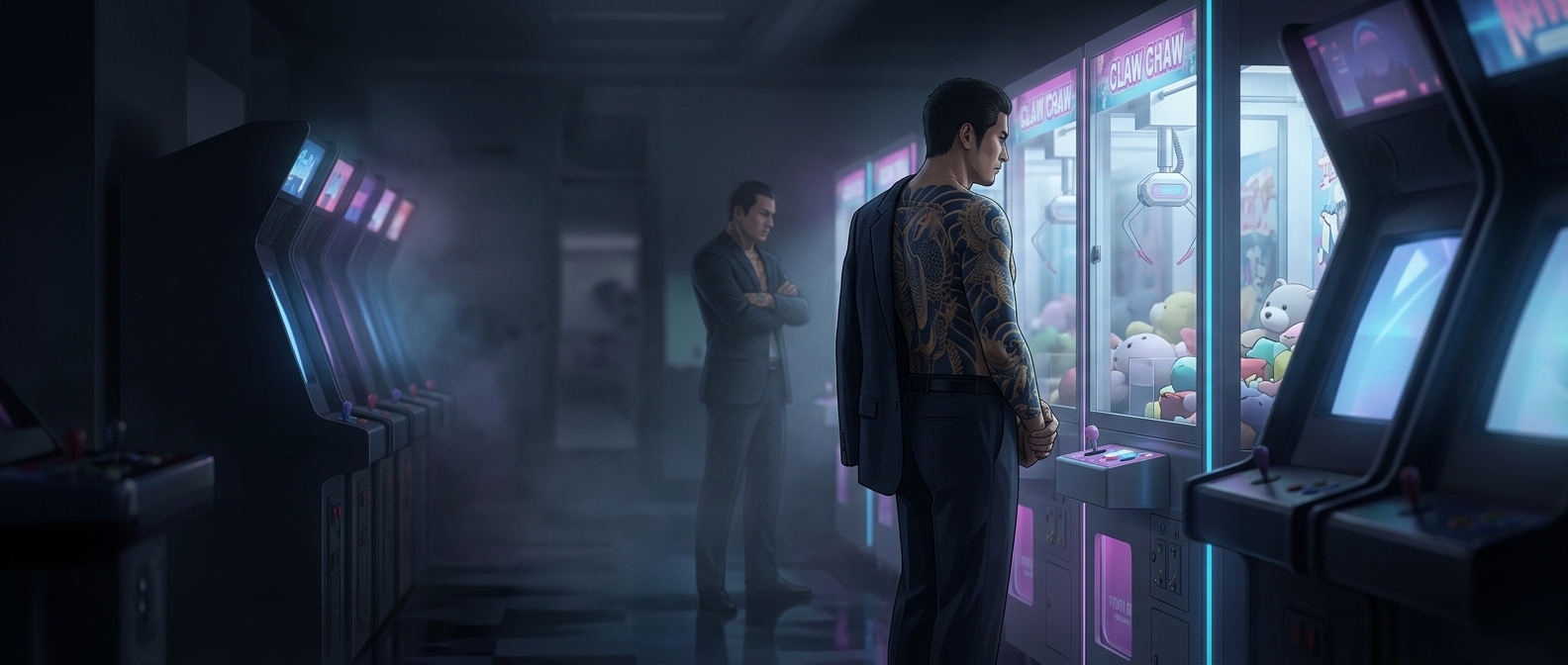
That can make the queue an unexpectedly ordinary scene even when the people waiting have reputations built around intimidation. Yakuza are members of Japan’s organized-crime groups, but a public arcade is still a shared space, with staff, other customers, and social expectations. A person can carry a fearsome image and still follow the local turn-taking rule when there is no reason to challenge it.
The Machine Makes Waiting Part of the Game
Unlike a game that lets several people act at once, a claw machine gives control to one player at a time. The suspense is part of its appeal: everyone can watch the claw descend, see whether it grips the toy, and judge whether another try might work. That makes the queue part of the entertainment, not merely an obstacle before it.
The contrast is what makes the image memorable. Street rivalries belong to a different setting; at the machine, the immediate question is simply whose turn it is. A shared game can briefly reduce a loaded public image to a familiar arcade ritual: wait, watch, and hope the claw holds on.