Tokens Put Quarters Back Into Circulation
Arcades depended on quarters, but the coins that paid for games did not necessarily keep moving through the wider economy. Operators collected them in machines and cash drawers, then often held large reserves to refill machines and make change. When quarters were in short supply, that stockpile mattered: coins sitting in an arcade could not be used by shops, banks, or customers elsewhere. The government’s appeal was to replace quarters in the machines with privately made tokens.
How a Token System Worked
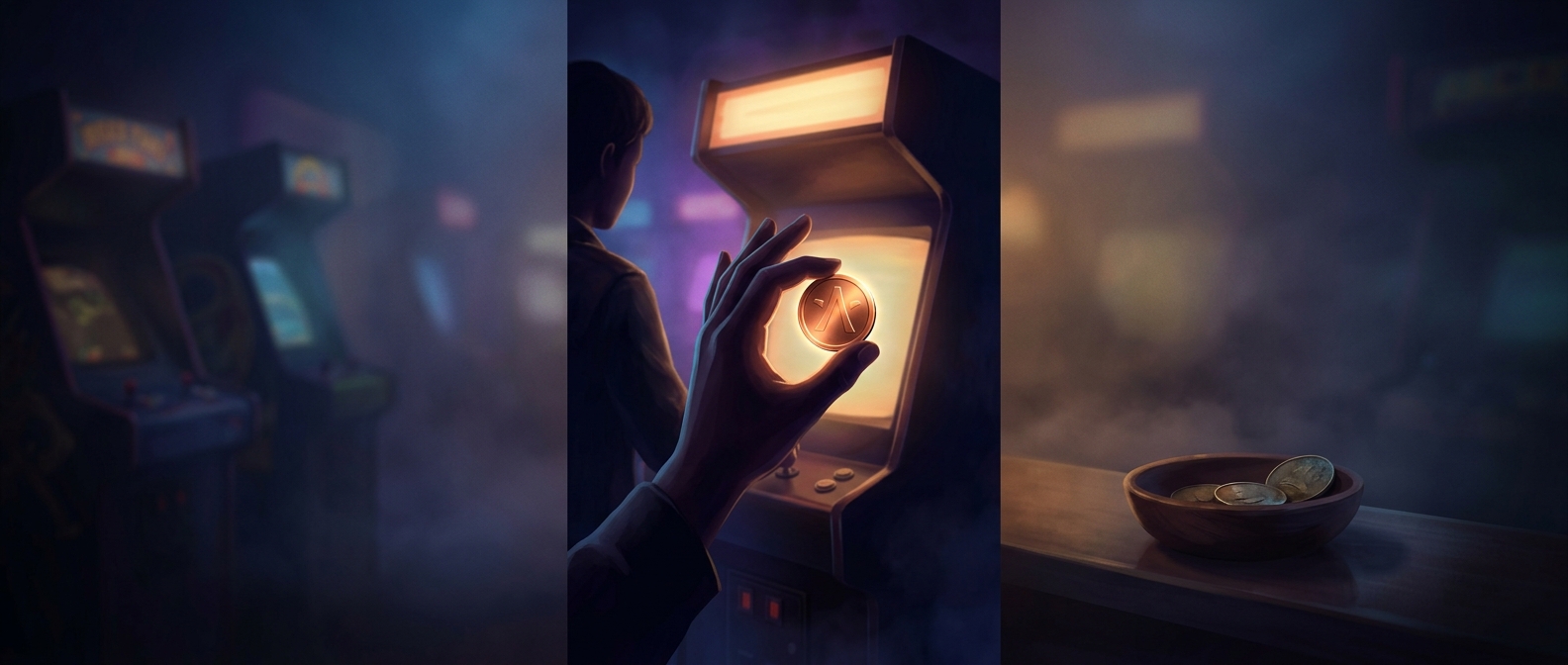
A player bought tokens with ordinary money at the counter or a change machine, then spent them at the games. The operator could collect and reuse the tokens without sending them to a bank or relying on a fresh supply of government-minted coins. Meanwhile, the quarters used to buy tokens could return to circulation outside the arcade.
Tokens also gave operators more control over pricing. A game could cost one token even when its cash price did not match a convenient coin denomination. That made tokens useful beyond periods of shortage, though they also tied customers to the arcade: an unused token generally worked only there.
A Small Change With a Wider Effect
The token did not create new money or replace quarters everywhere. It separated the arcade’s internal payment system from the public supply of coins. For players, the change was simple—trade cash for a metal token, then feed it into the machine. For the economy, it meant fewer quarters trapped in game cabinets and more available for ordinary purchases.