How one plate could hold two scenes
In a double exposure, the camera records light from two separate moments on the same photographic plate or film. The first exposure leaves an image in the light-sensitive material; a second adds another. Where both scenes register, their shapes overlap in the finished photograph.
A studio photographer could use this to place a faint figure beside a sitter. The trick required control: the ghost image had to be weak enough not to overpower the portrait, while the sitter and background had to remain convincing. The result was not a spirit caught in the room, but a carefully arranged image made by letting two exposures share one frame.
Why the picture could feel like proof
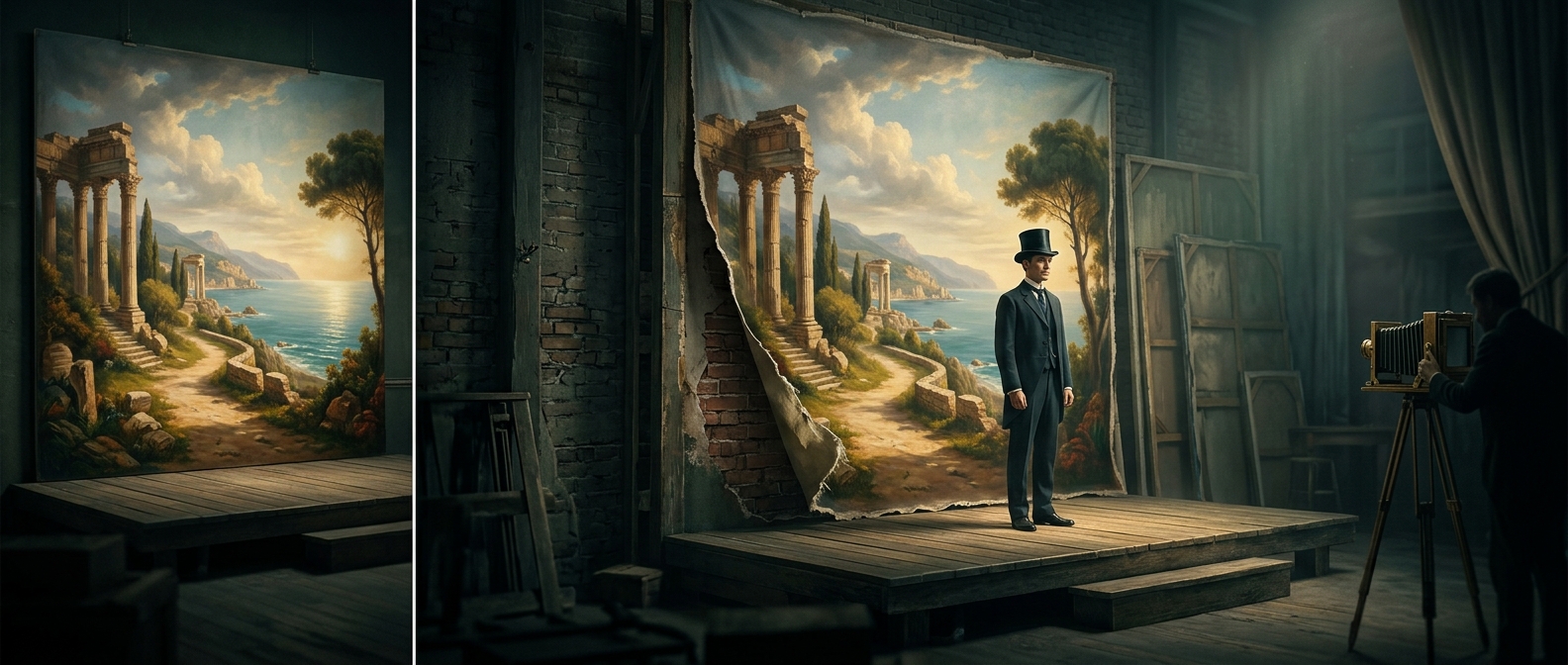
A photograph seems to have a special connection to what it depicts: light from a person or place physically helped make the image. That connection is real, but it does not guarantee that the scene happened as it appears. A camera can record light from different times in one frame, just as it can be pointed at a staged scene.
Viewers often focus on the picture’s apparent detail—the face, clothing, room—and overlook the decisions behind it. If the image looks like an ordinary portrait, the added figure can seem less like an artistic effect and more like an unexplained presence. The camera’s mechanical process lends the illusion authority even when the photographer has constructed it.
The camera was not a neutral witness
The trick worked by exploiting a gap between what a photograph records and what viewers infer from it. The image contained genuine traces of people or objects in front of the lens, but those traces came from separate exposures. Seeing the result could not reveal that hidden sequence on its own.
That is why a convincing ghost photograph did more than show a pale figure. It invited viewers to mistake a photographic effect for evidence about the world—and showed how easily a seemingly objective image can conceal the choices that made it.