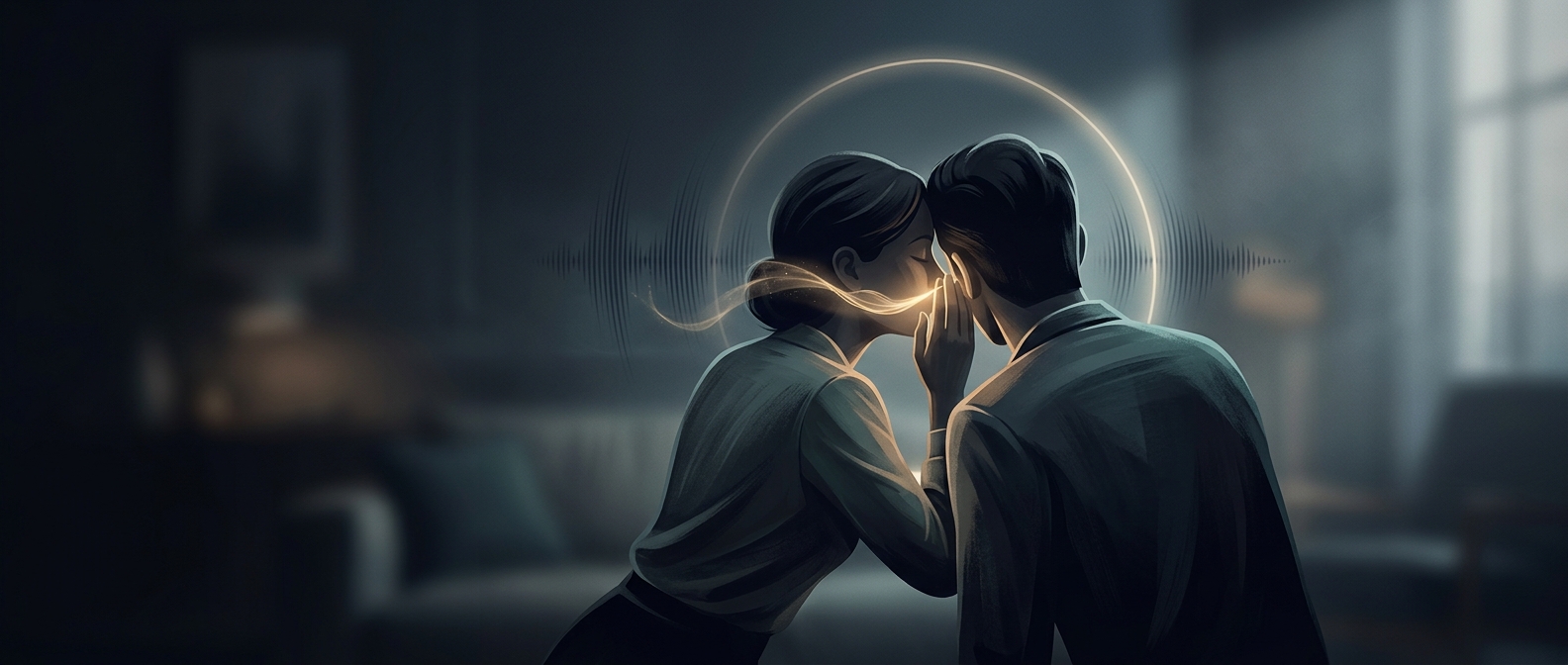
Why a whisper can feel unusually close
A whisper lacks the loudness and sharp edges of ordinary speech, but that does not make it sound distant. When a speaker is close to a microphone, tiny details—breath, mouth movements, the soft scrape of a brush—come through clearly. Headphones deliver those details directly to each ear, creating a sense of proximity even though the speaker may be miles away.
That intimacy is part of the appeal of ASMR, short for autonomous sensory meridian response. People who experience it describe a pleasant tingling, often around the scalp or neck, along with relaxation. Common triggers include whispering, slow hand movements, and sounds that suggest focused, gentle attention, such as someone pretending to examine or care for the viewer.
The mind responds to cues of careful attention
These videos often imitate a one-to-one interaction. A creator may speak softly, move deliberately, and keep their attention on the camera, as if attending to a single person. Those cues can make the scene feel personal and predictable. For some viewers, that combination supports calm; for others, it produces the characteristic tingles, or no special sensation at all.
The close recording matters because it makes small sounds legible without requiring the viewer to strain. A brushstroke or quiet syllable can become the main event rather than background noise. Headphones reinforce the effect by making subtle differences in sound between the left and right ears easier to notice.
Why millions press play
The format turns an ordinary act—listening to someone speak—into a carefully controlled sensory experience. Viewers can choose the sounds and pace they find soothing, then replay them in a private setting. The same whisper that feels comforting to one person may be merely quiet to another; ASMR is a response some people experience, not a guaranteed effect. When it works, a microphone helps make distant attention feel startlingly near.