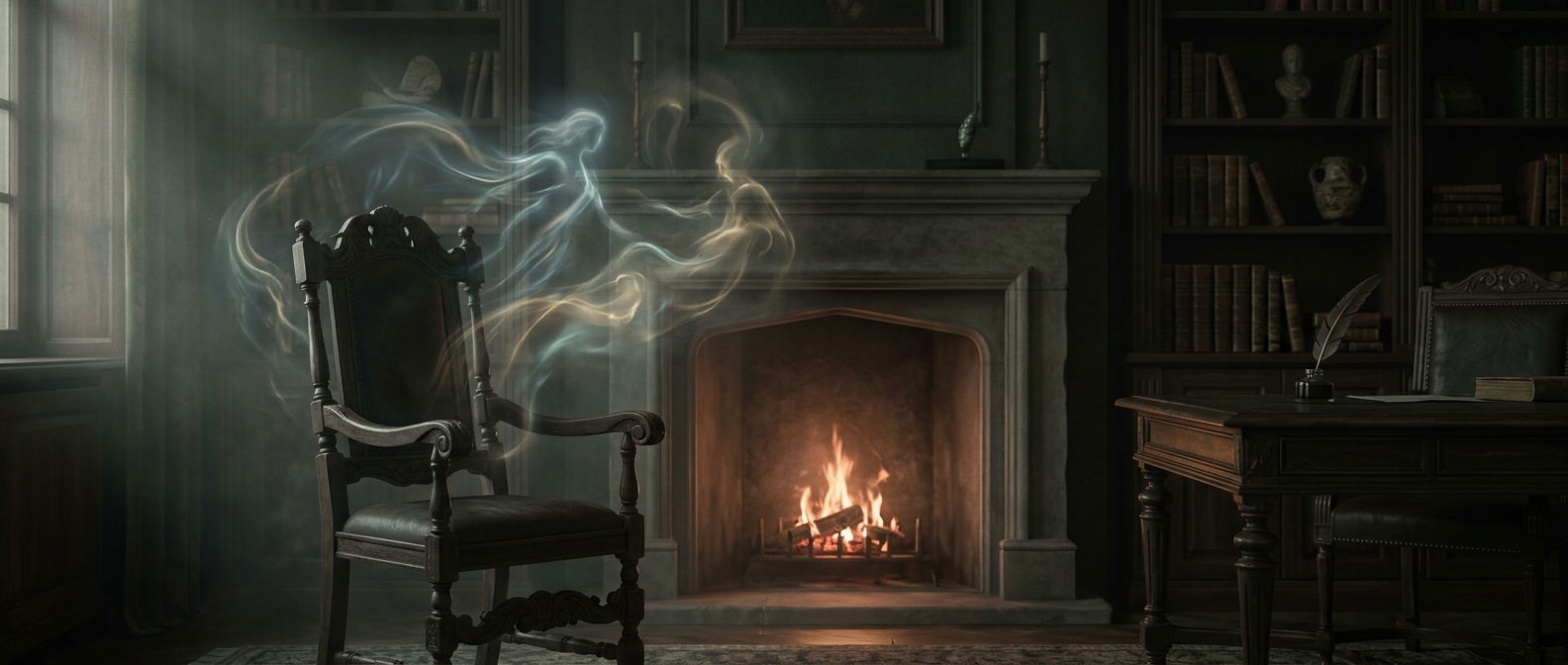
Why an Empty Place Waited by the Hearth
A chair left empty beside the fireplace could serve as a sign of welcome—not for a late-arriving family member, but for ancestors imagined as able to return and visit. The place gave that welcome a visible form: the household made room for the dead just as it might make room for a guest.
The hearth mattered because it was a gathering point in the home, associated with warmth and family life. Setting aside a place there connected the ancestors to the household’s ordinary world without requiring anyone to see or speak to them. The empty chair was a gesture of hospitality, not evidence that a living person was expected to sit down.
A Welcome, Not a Reserved Seat
The custom’s meaning depends on that distinction. An unused chair might otherwise look like a practical reservation; in this belief, its emptiness was the point. It marked a place for an honored visitor whose presence was understood through tradition rather than physical appearance.
Practices involving ancestors differ across families and cultures, so the gesture should not be treated as universal. But its basic idea is easy to recognize: care for the dead could be expressed through a familiar act of care for the living—leaving room at the hearth.