Why Some Tattoos Can Feel Hot During an MRI
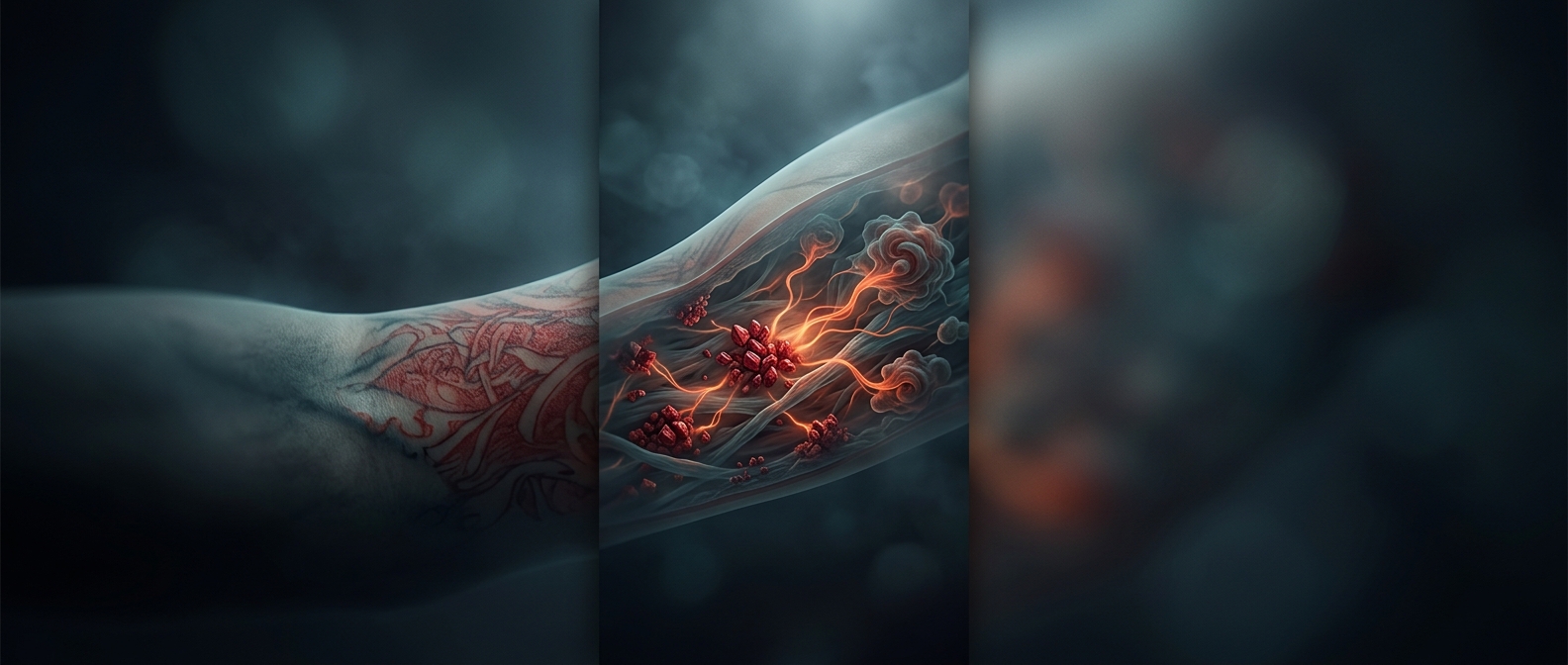
An MRI uses a strong magnetic field and pulses of radiofrequency energy to produce images. Those pulses can induce tiny electrical currents in conductive materials, including some tattoo pigments. The resulting warmth or tingling is usually minor, but in rare cases it can become a skin burn. The risk depends on the pigment’s ingredients, the tattoo’s size and shape, and the scan conditions—not simply on whether the ink looks dark.
The Ink Is Not a Set of Little Antennas
Some pigments contain iron oxides or other materials with magnetic or conductive properties. But it is misleading to picture every ink particle acting like a miniature antenna that rapidly heats the skin. MRI-related tattoo heating is uncommon, and its exact mechanism can vary. Burns have also been linked to the way conductive paths form in or around a tattoo; rings or loops of ink may be more prone to heating than a small, straight mark.
Medical tattoos used to restore the appearance of an areola after breast surgery are among the tattoos patients should mention before a scan. The pigment may be concentrated in a small area, and its composition may not be known to the patient. That does not automatically make an MRI unsafe, but it gives the imaging team information to assess the situation.
What Patients and Imaging Teams Can Do
Before the scan, tell the technologist about tattoos and permanent makeup, including recent medical tattooing. During imaging, report warmth, stinging, or burning immediately; the team can stop the scan and check the skin. Staff can also adjust how the scan is performed when appropriate. Cooling measures may be used under their direction, but a patient should not rely on a cold compress as a substitute for speaking up.
The practical lesson is simple: a tattoo is not usually a barrier to MRI, but it belongs in the safety conversation—especially when a healing surgical scar has just been given its finishing color.