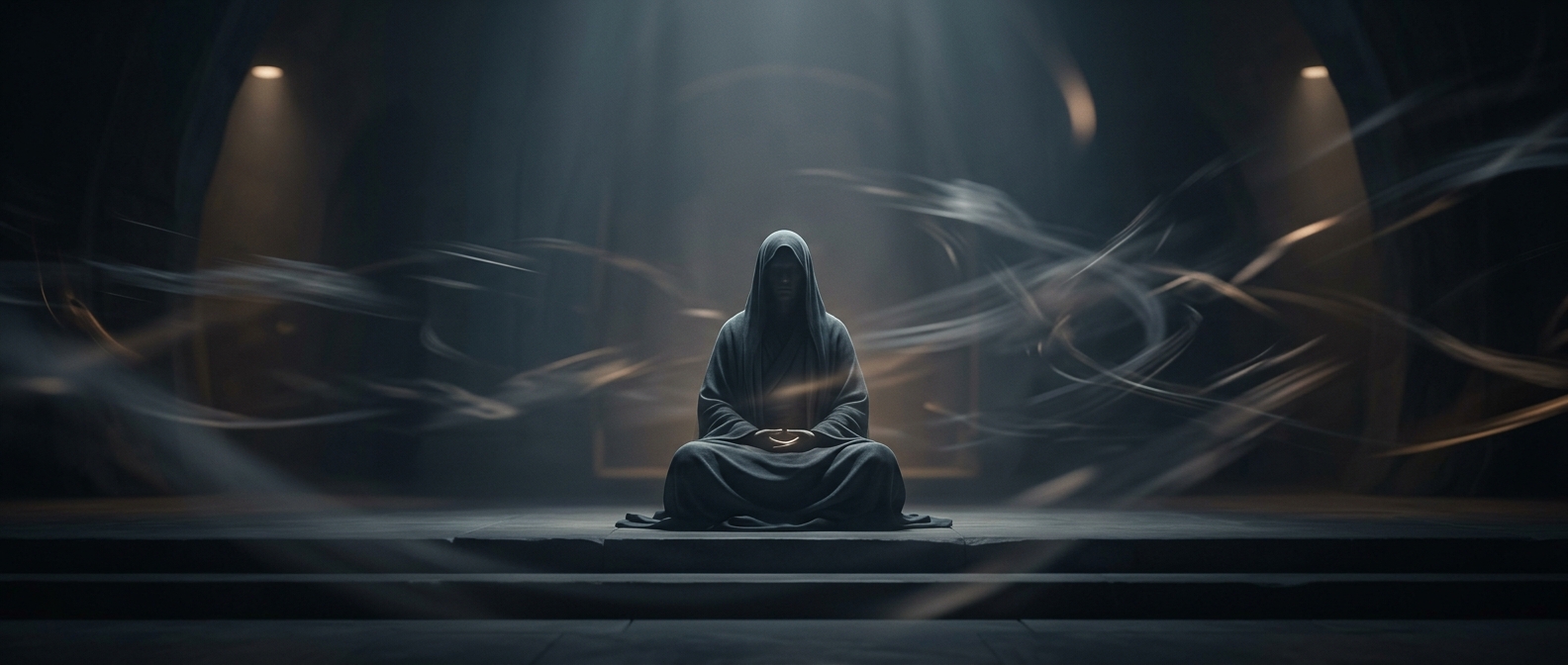
What Dharana Asks the Mind to Do
In classical yoga, dharana means gathering attention and keeping it anchored to one chosen object. That object might be the breath, a point in the body, a visual image, or a repeated sound. The practice is not to force every other thought out of existence; it is to notice when attention has wandered and return it to the chosen focus.
That return is central. A sound, memory, or plan can pull the mind away before we consciously decide to follow it. Dharana trains the moment of recognition between distraction and response: the practitioner notices the detour and redirects attention, again and again.
From Effort to Continuity
Yoga traditions distinguish dharana from dhyana, often translated as meditation. Dharana emphasizes deliberately placing and holding attention; dhyana describes attention flowing more continuously toward its object. The distinction is less like flipping a switch than building steadiness through repeated practice.
A simple exercise makes the demand concrete: focus on the breath, notice when the mind starts planning the day, and return to the next breath. The aim is not a blank mind or a perfect performance. It is a more stable relationship with attention—one in which a stray thought can appear without automatically taking over.