How 3D Scenes Get a Comic-Book Finish
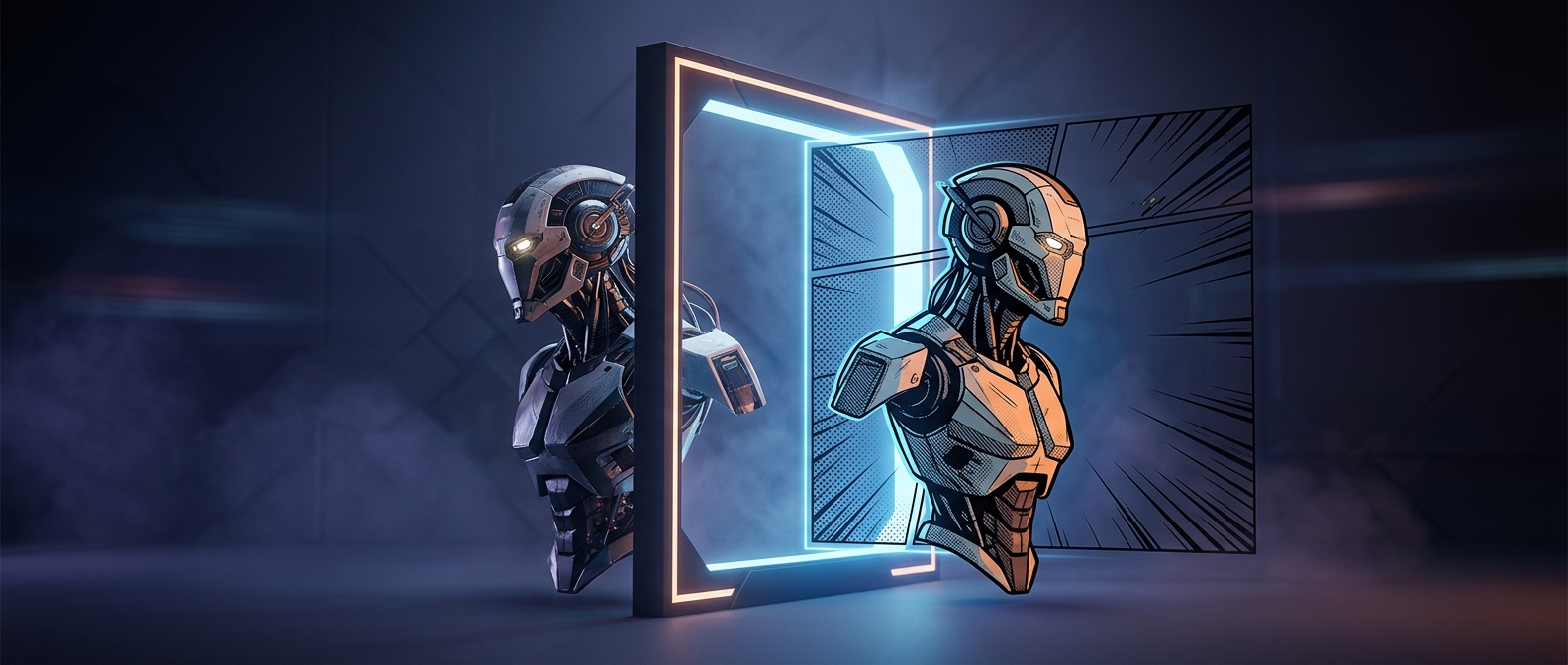
A 3D model normally changes brightness gradually as it turns away from a light: a cheek, for example, passes through a continuous range of tones. To make that model resemble a drawn cartoon, artists can replace those smooth gradients with a few distinct bands—often a base color, a shadow color, and sometimes a highlight. This approach is commonly called cel shading or toon shading.
Turning Light Into Graphic Shapes
The software still calculates how a surface faces the light, but instead of displaying every small brightness change, it groups those values into steps. Areas that receive similar light are assigned the same color. As a character moves or a light shifts, the boundary between the bright and dark bands moves across the model, preserving the sense of form without the soft shading associated with realism.
That simplification changes what the viewer notices. A clean shadow boundary can read like an intentional ink or paint shape, while a smooth gradient may make the same face feel more photographic. Creators can tune the number of tones and where the transitions fall, controlling whether the result looks bold and graphic or closer to softly painted animation.
Why the Model Still Matters
The comic-book effect is not just a filter laid over a finished image. A 3D scene has to hold up as its camera and lighting change, so artists often adjust models, colors, and shadow behavior to keep important features legible. A nose shadow, for instance, can otherwise shift in a way that obscures the expression. Outlines may be added as another deliberate graphic element, but they are separate from the stepped shading itself.
The payoff is a useful middle ground: creators can move characters through a three-dimensional scene while presenting them with the simple, controlled light-and-shadow shapes of a drawing.