A city, its outskirts, and a lot of playable ground
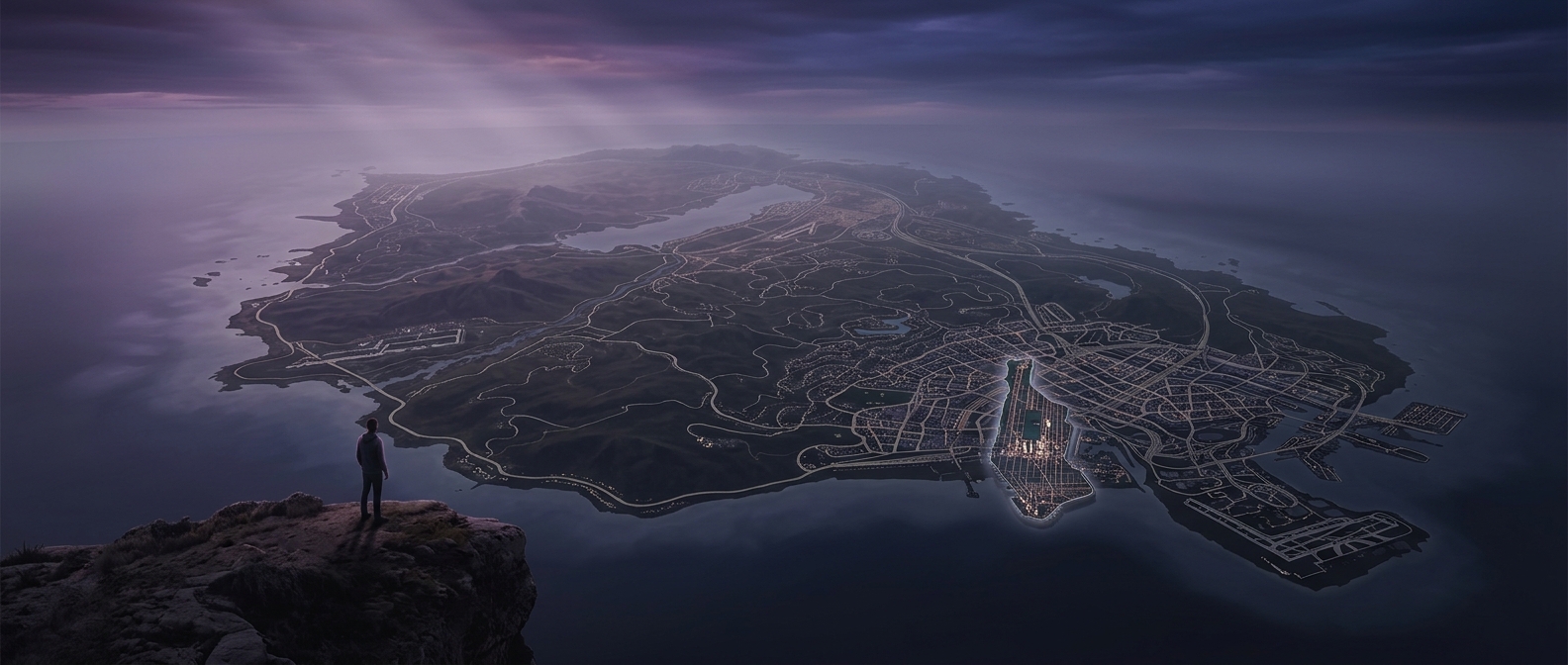
The comparison with Manhattan points to the sheer extent of Grand Theft Auto V’s playable world. Its fictional map combines Los Santos—a city inspired by Los Angeles—with surrounding countryside and the desert region of Blaine County. The result is not simply a larger city: it is a connected landscape in which dense streets give way to suburbs, hills, and wide-open roads.
Why the distance matters to play
That variety changes what moving across the map feels like. In the city, traffic, buildings, and tight turns make driving feel crowded. Farther out, winding mountain roads reward careful handling, while desert highways leave room to speed. The transitions make a trip across the map feel like a change of setting, not just a longer commute.
The world is built for a game, not as a literal map of Southern California. Its landmarks and landscapes are arranged to create different kinds of play within one continuous space. That means the map’s size is useful because it gives those settings room to feel distinct—and lets a player drive from a crowded city street into remote country without a loading screen interrupting the journey.