Why the hero and the title have different names
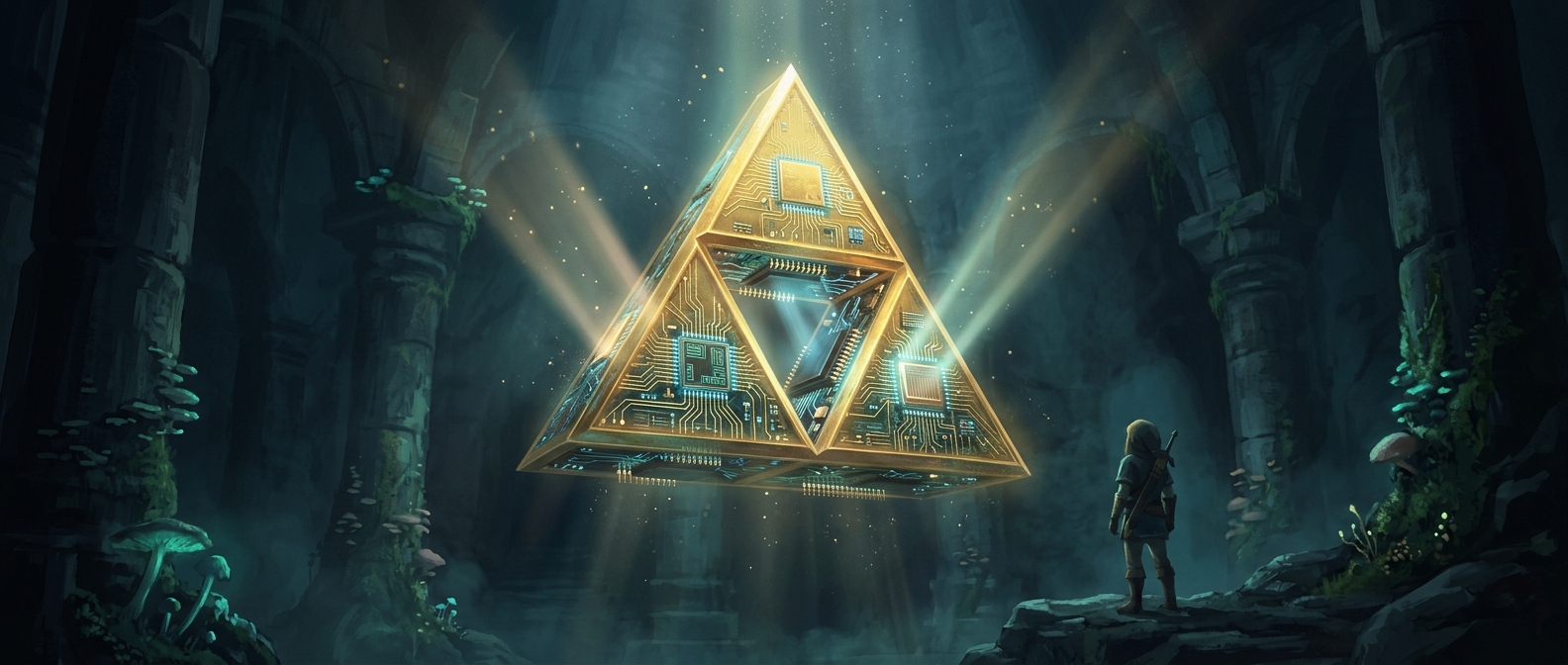
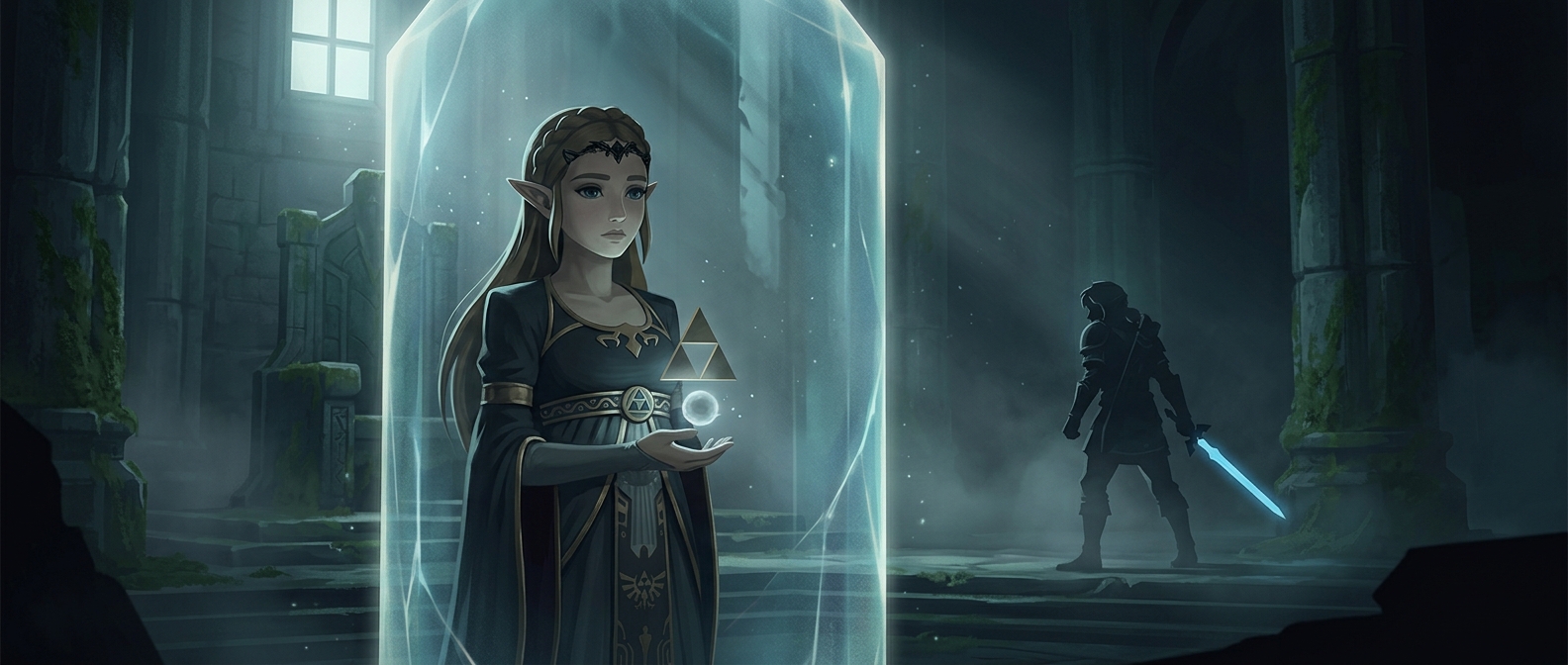
The title The Legend of Zelda names the saga’s central figure, not the character players most often steer. Link is the playable hero in many entries; Zelda is a princess whose fate is bound up with Hyrule, the kingdom at the heart of the series. That division lets the title point to the larger story and its recurring world, while the player’s journey unfolds through Link.
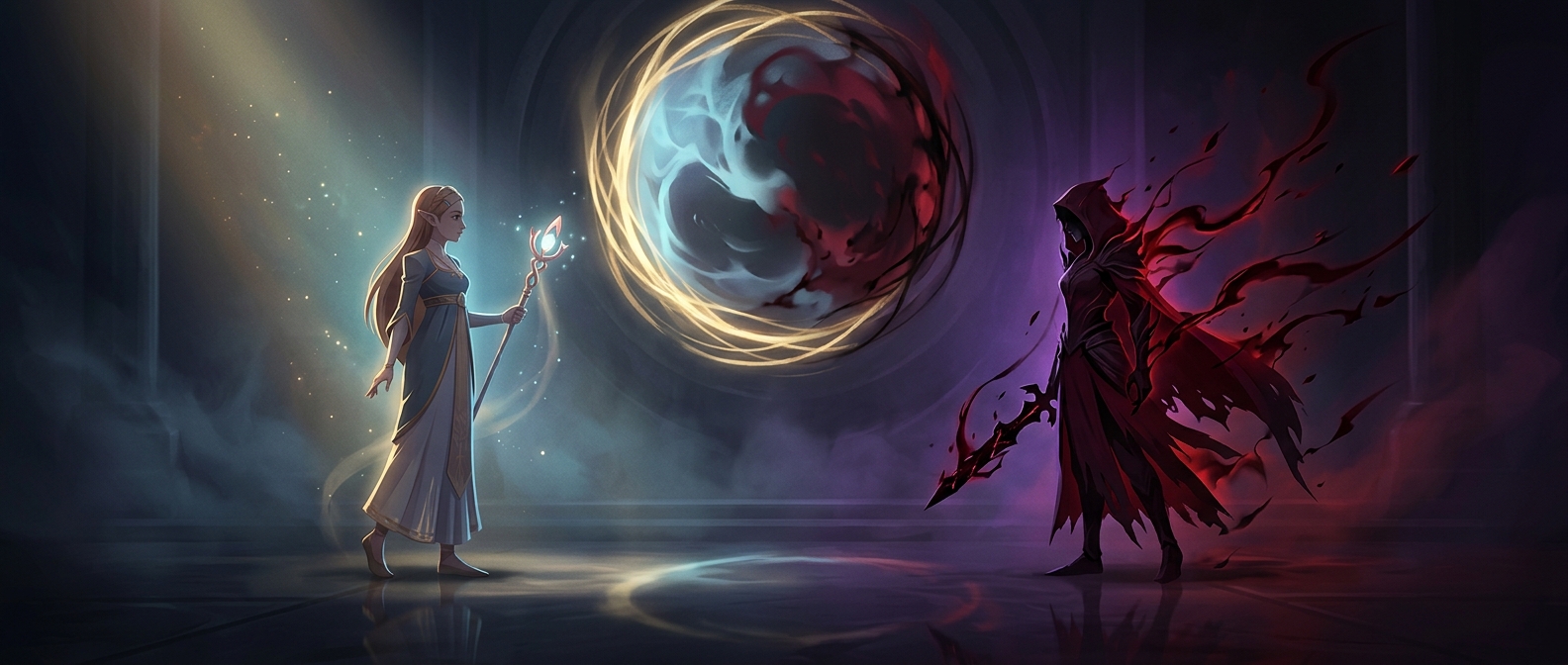
It also makes the rescue premise easy to grasp: Zelda’s capture or danger gives Link a concrete goal and gives the adventure stakes beyond reaching the next dungeon. But “princess to be rescued” is a recurring role, not a complete description of her character. In Ocarina of Time, Zelda acts under the disguise of Sheik and helps guide Link; in Spirit Tracks, she travels alongside him as a companion.
A recurring name, not a fixed role
The series can return to Zelda and Link while changing what each one does. Link remains the familiar playable point of view, while Zelda may be the person in peril, an ally, or an active participant in the adventure. The title keeps the broader legend in view even when its namesake is not the character holding the sword.
That contrast is part of the series’ structure: players usually experience the quest as Link, but the story’s identity—and often its stakes—revolves around Zelda.