Thirty Lines Could Not Preserve a Face
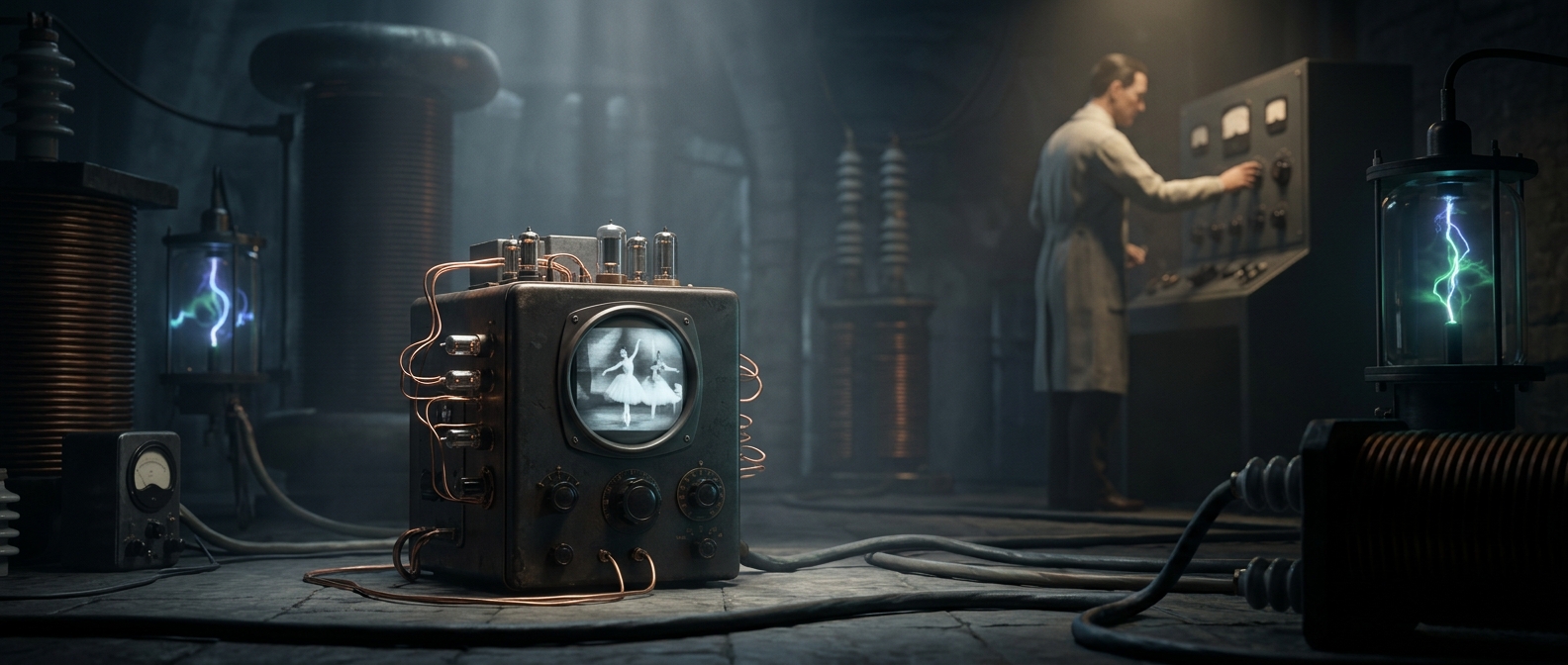
Baird’s mechanical television built each picture from just 30 horizontal lines. A rotating scanning disk broke the scene into successive strips and transmitted them as an image. With so little detail, subtle changes in skin tone, shading, and expression could blur together before viewers saw them.
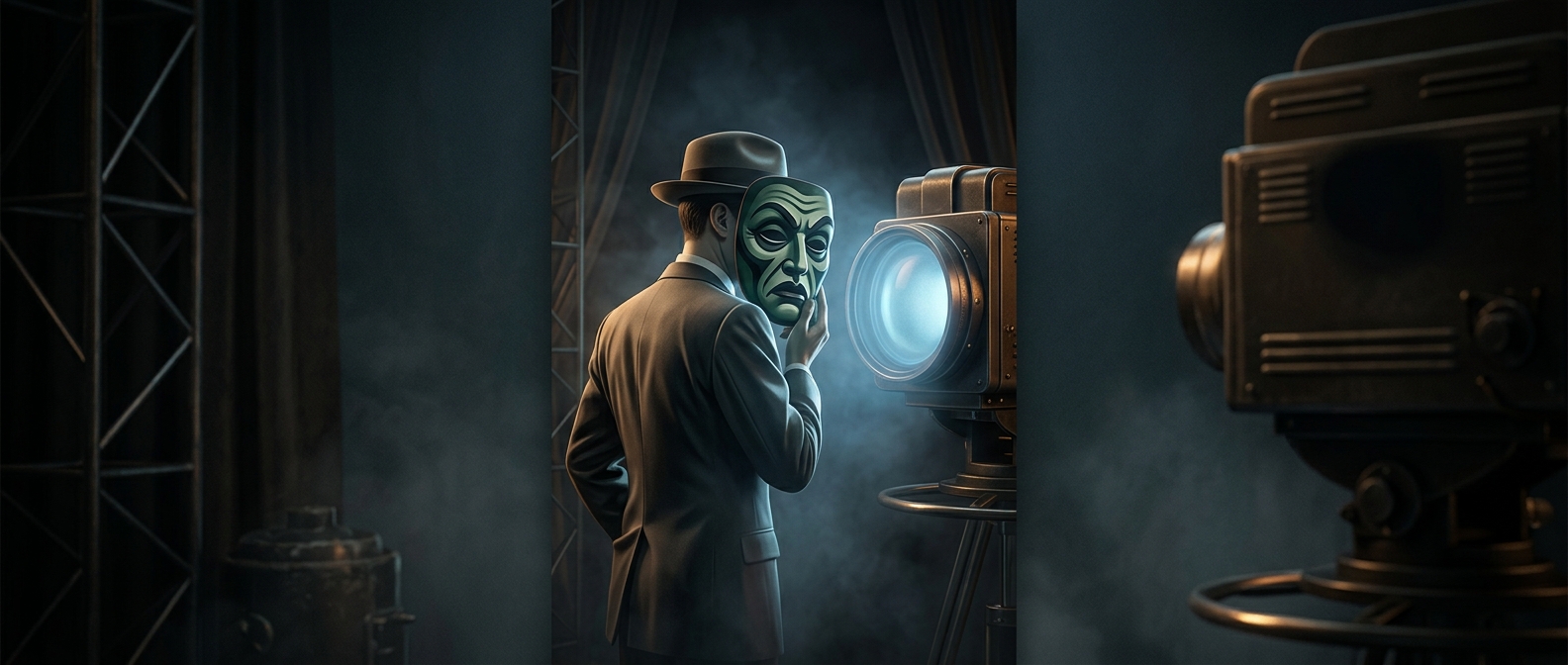
Makeup gave the camera stronger visual boundaries to work with. Stark black and white areas created contrasts that were more likely to remain distinct on the screen than delicate, natural-looking features.
Makeup Designed for the Screen
The goal was not to make actors look ordinary in person. It was to make eyes, mouths, and other facial features register in a crude transmitted image. A face that seemed dramatically painted up close could appear clearer on the receiving screen, where limited resolution softened its edges.
That tradeoff shows how early television shaped performance before viewers ever saw the picture: actors’ faces had to be prepared for the machinery’s narrow visual vocabulary, not simply for the audience in the studio.