A cooking segment became a repeatable on-screen partnership
The appeal of Snoop Dogg and Martha Stewart’s pairing began with a simple advantage: a kitchen gives two very different public personalities something concrete to do together. Stewart’s precise, instructional style and Snoop’s relaxed humor could play off each other while they handled familiar food. The mashed-potato segment on her daytime show offered more than a celebrity cameo; it let viewers watch their contrast turn into easy banter.
That kind of chemistry is useful in television because it gives a format both structure and surprise. Stewart can anchor a dish or hosting task, while Snoop can bend the mood without derailing it. The audience does not need to know either person’s full career to understand the joke or follow the cooking.
From a guest appearance to a shared format
Their later series, Martha & Snoop’s Potluck Dinner Party, expanded that basic setup into a social show. Cooking remained the excuse to bring people together, but the focus widened to conversation, comedy, and celebrity guests. The partnership worked because it was not simply a repeat of the original contrast: each person had room to host, react, and be part of the joke.
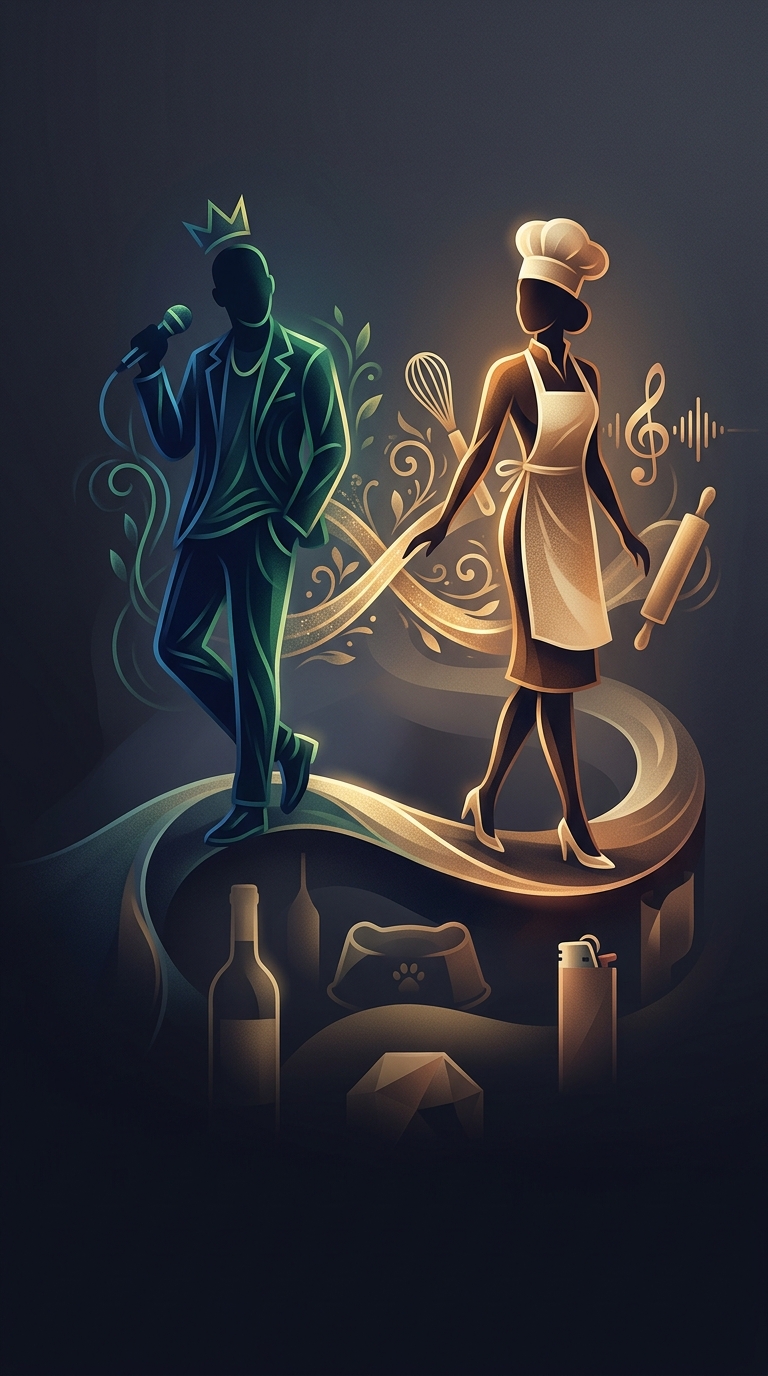
That flexibility also made the pairing useful beyond television. A recognizable duo can carry its audience into products and collaborations, including wine and pet-related ventures. The merchandise is an extension of a public relationship viewers already understand, rather than a partnership that has to explain itself from scratch. A bowl of mashed potatoes was a small beginning, but it revealed the durable format underneath: put two distinct personalities around a shared activity and let their differences do the entertaining.