A pocket comic built to persuade
The operation behind the warning was Chick Publications, founded by cartoonist Jack Chick. Its best-known products were small illustrated booklets, often called Chick tracts: comics that could be handed to someone, left in public places, or passed along through churches. The format made a religious argument easy to carry and quick to read, without asking a reader to pick up a conventional book.
The stories used a forceful sequence: a character encounters a supposedly dangerous influence, suffers spiritual consequences, then faces a choice about salvation. That structure turned abstract religious claims into scenes of temptation, fear, and conversion. Dungeons & Dragons, rock music, and Catholicism appeared in this framework not as separate subjects for balanced analysis, but as signs of what Chick considered spiritual danger.
How the message traveled
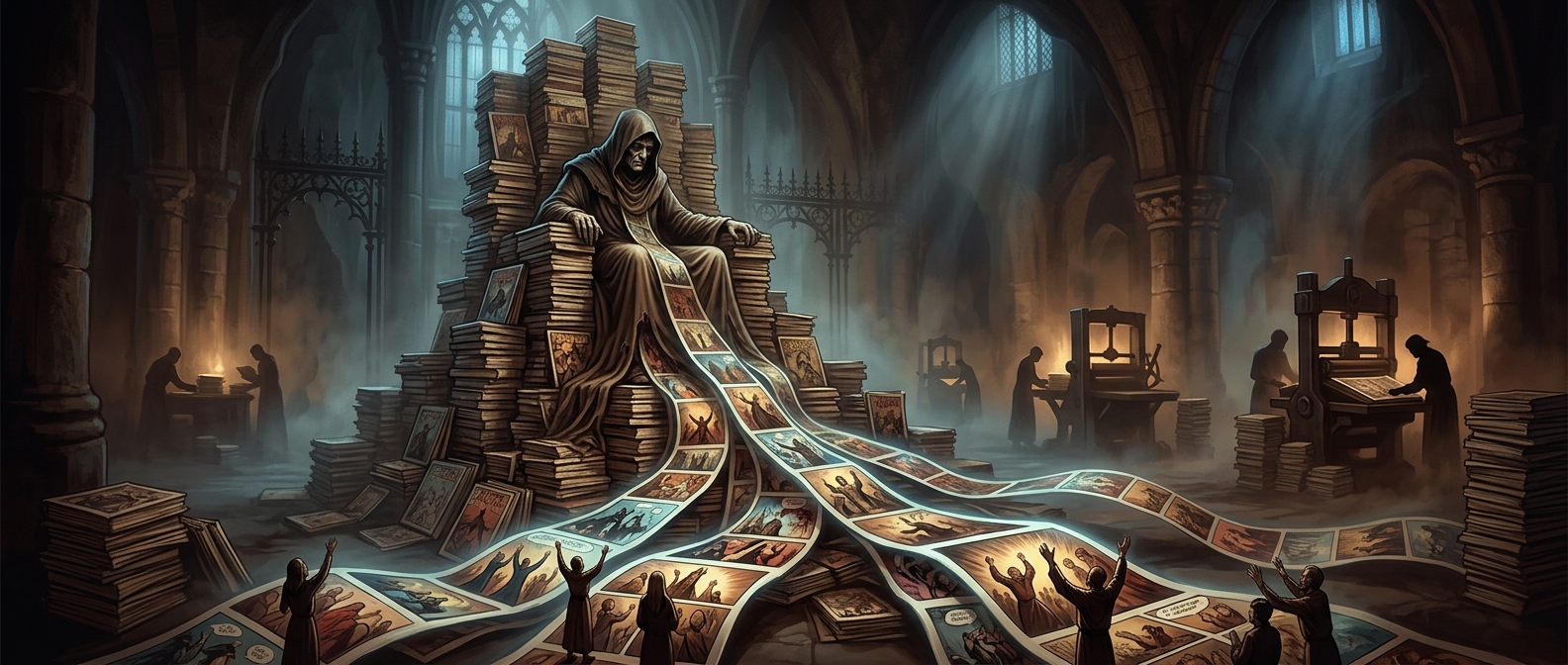
Chick kept a low public profile, but the pamphlets were designed to circulate without their author. Their compact size and direct storytelling suited informal evangelism: a reader could give one to a stranger or leave it for someone to find. A single comic could therefore carry the same urgent message far beyond a personal conversation.
The approach also made the tracts memorable—and controversial. Their stark moral divisions and dramatic consequences helped readers grasp the intended warning immediately, while critics objected to their portrayals of religious groups and popular culture. The contrast between an elusive creator and a widely passed-around comic was part of the operation’s reach: the stories, rather than the author, did the talking.