A Saint’s Authority in the Wilderness
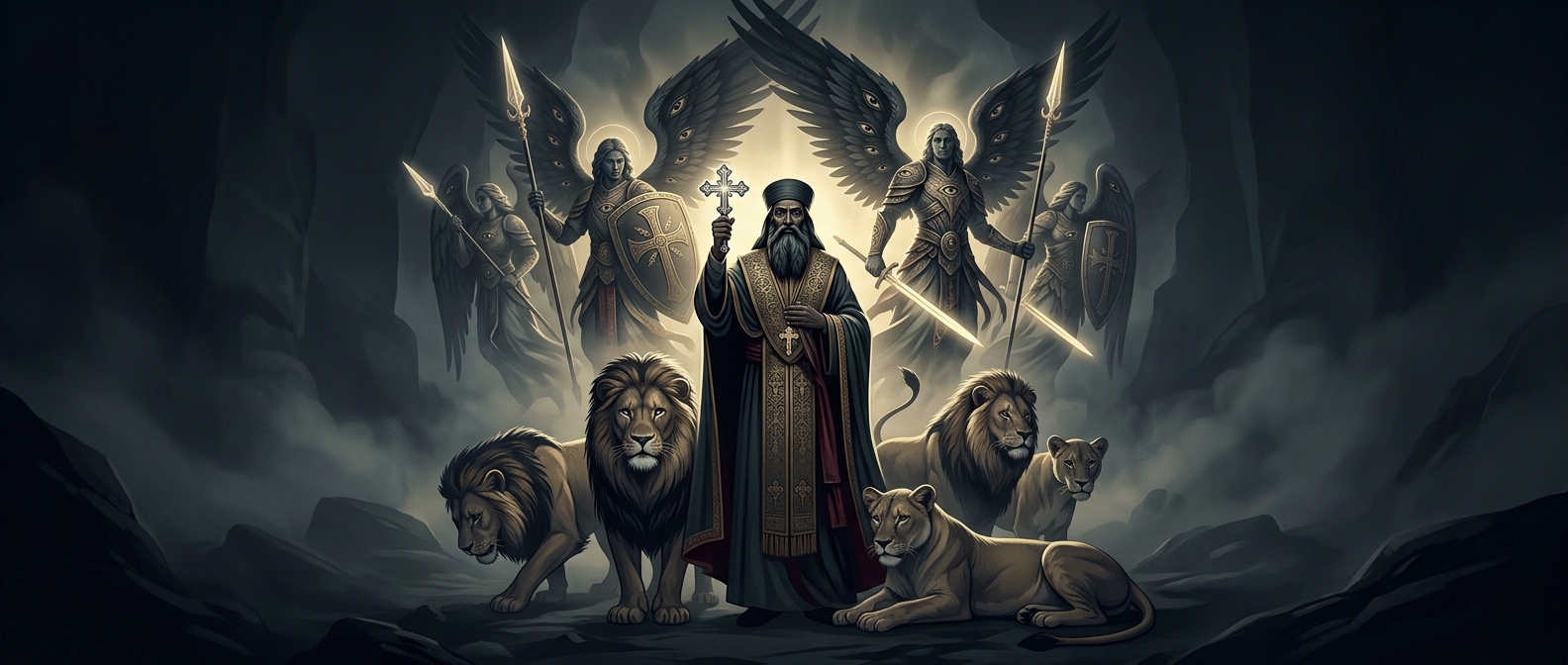
Stories of Abba Samuel of Waldebba place him in a landscape where ordinary protections seemed absent: wild animals, isolation, and the dangers of travel. In his hagiographies—devotional accounts of a holy person’s life—Samuel’s ability to ride lions and his escort of formidable angels make that exposure part of the story. The wilderness is not merely a backdrop; it is where his spiritual authority becomes visible.
What the Lions and Angels Signify
The image of a monk riding a lion reverses the usual relationship between human and beast. The animal that might threaten a traveler instead bears the saint, suggesting that discipline and holiness have brought even the untamed under control. The many-winged, militant angels extend that protection beyond the natural world: Samuel journeys not as a lone wanderer but as someone guarded by heavenly forces.
These episodes belong to religious storytelling, not a field report. Their purpose is to portray what the community understood Samuel’s ascetic life to mean. Asceticism—strict self-denial undertaken for spiritual devotion—could be represented not as weakness or retreat, but as a source of power and protection.
The Meaning of a Terrifying Escort
The contrast is the point: a figure who gives up ordinary comforts appears surrounded by extraordinary strength. Lions and armed angels turn an austere life into a public sign of sanctity, making the invisible claim of spiritual authority vivid and memorable. In the stories, the wilderness that should leave a traveler vulnerable becomes the setting in which Samuel’s protection is most dramatically displayed.