How River Reeds Became a Writing Surface
Papyrus began as the soft inner pith of a plant that grew along the Nile. Makers cut it into strips, laid one layer side by side, placed another layer across it, then pressed and dried the crossing fibers into a sheet. The result was firm enough to write on but far less cumbersome than a slab of stone.
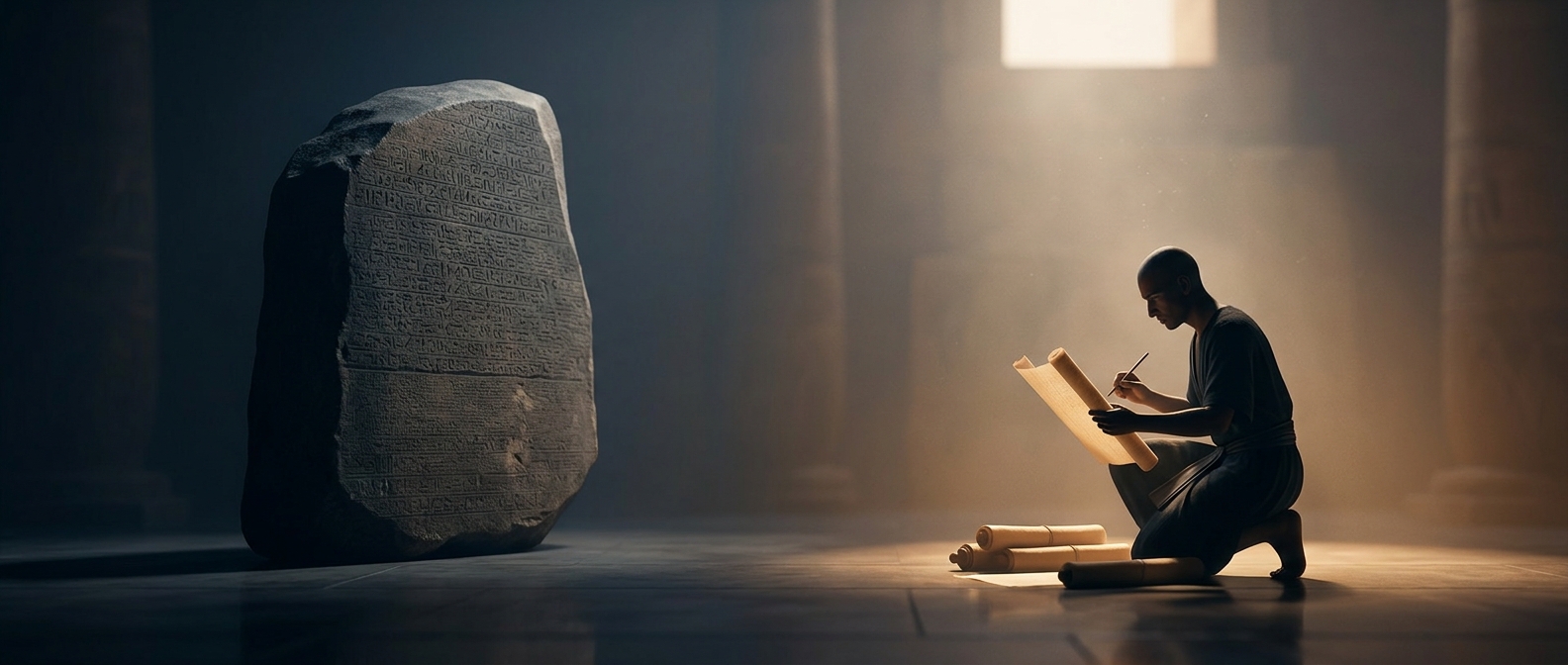
Individual sheets could be joined edge to edge to make a long roll. A scribe could unroll the part needed, write in ink with a reed pen, and roll the document up again. Unlike a carved inscription, a papyrus text could travel with its owner or be stored with other records.
A Change in What Writing Could Do
That portability mattered for the work of governing a large kingdom. Officials could send written instructions, keep accounts, and record deliveries without putting every message on a permanent monument. Scribes could also draft and copy texts on a surface suited to extended writing, rather than laboriously cutting each mark into stone.
Papyrus did not make stone obsolete. Carved inscriptions remained useful when rulers wanted words displayed on buildings or monuments; papyrus served needs that called for movement, storage, or revision. The materials supported different kinds of communication: one fixed in public view, the other carried from place to place.
The practical consequence was that a written record no longer had to be anchored to the spot where it was made. In Egypt, administration could travel as a roll instead of requiring a monument at every destination.