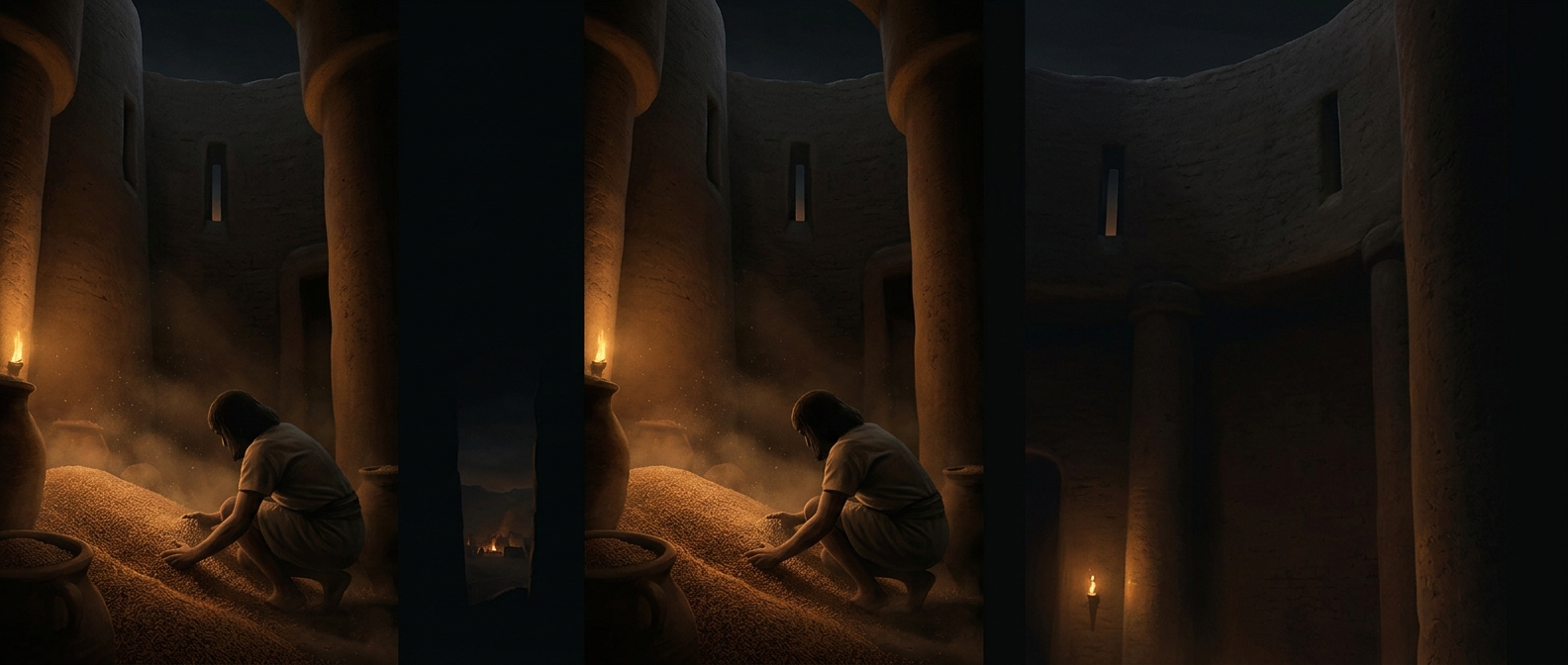
At Buhen, stored grain turned fortifications into a strategy
A wall could slow an attacker, but it could not feed the people defending it. At Buhen, in Nubia, grain stores addressed that weakness: provisions let the garrison remain inside the fortress when a siege cut off ordinary resupply. The defenses and the food supply worked as one system. Moats and controlled crossings made an assault harder; arrow slits let defenders shoot from protected positions, including across lines of attack. Each added difficulty could buy more time for the stores to matter.
A siege tested the supply chain
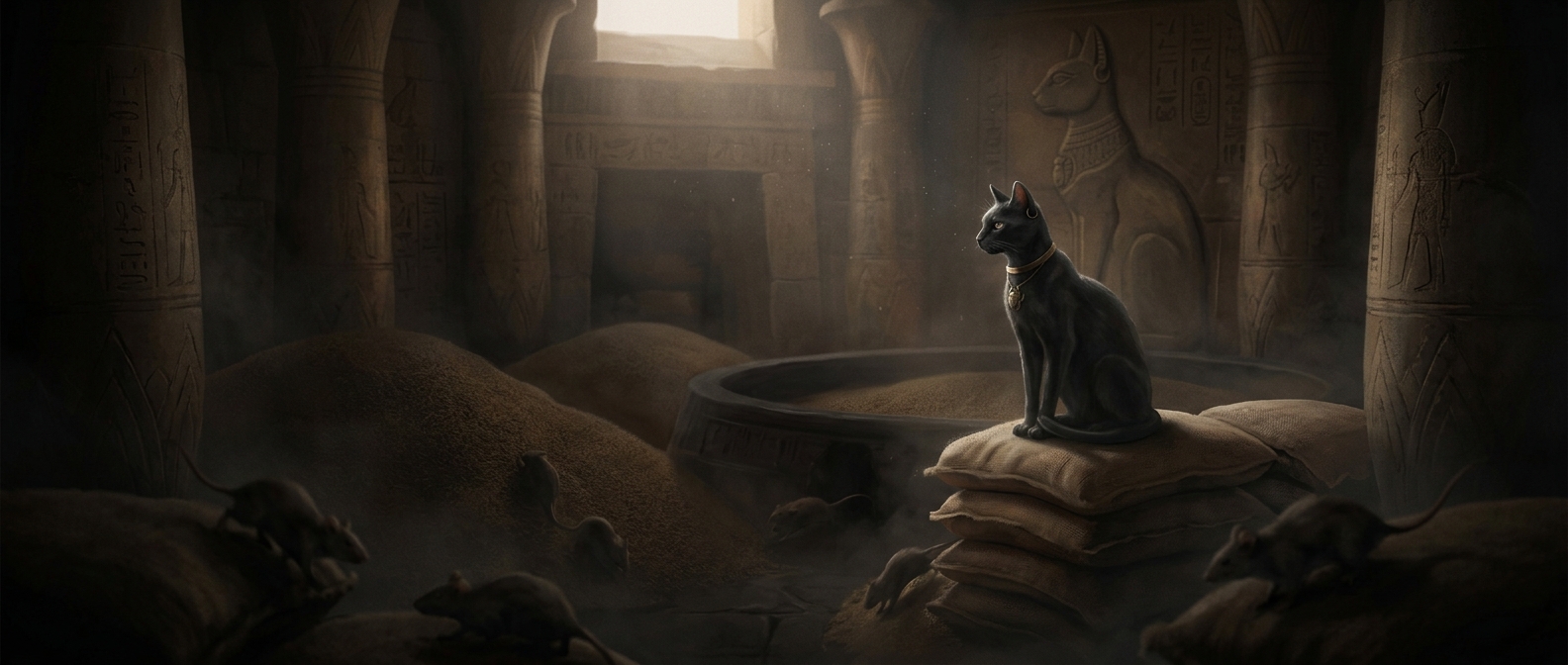
Inside a sealed fortress, grain was more than a reserve against hunger. It was a way to keep soldiers on duty and sustain the people supporting the garrison while access to outside supplies was blocked. Without stored food, defenders might have to surrender or risk a dangerous sortie before the walls were breached. With it, they could wait, forcing attackers to spend time and effort maintaining the siege.
That advantage had limits. Stored grain could be consumed, spoiled, or lost, so a fortress could not hold out indefinitely. Its value depended on having enough provisions before the siege began and on keeping the storage secure. The walls protected the stores, while the stores made prolonged defense possible.
The fortress’s real weapon was delay
Buhen’s layered defenses were designed to make a direct assault costly, but delay mattered only if the garrison could survive it. Grain converted a short-term defensive position into a potential long stand. The practical lesson is stark: in a siege, a fortress’s strength was measured not just by how difficult it was to enter, but by how long its defenders could keep eating.