From grain guards to sacred animals
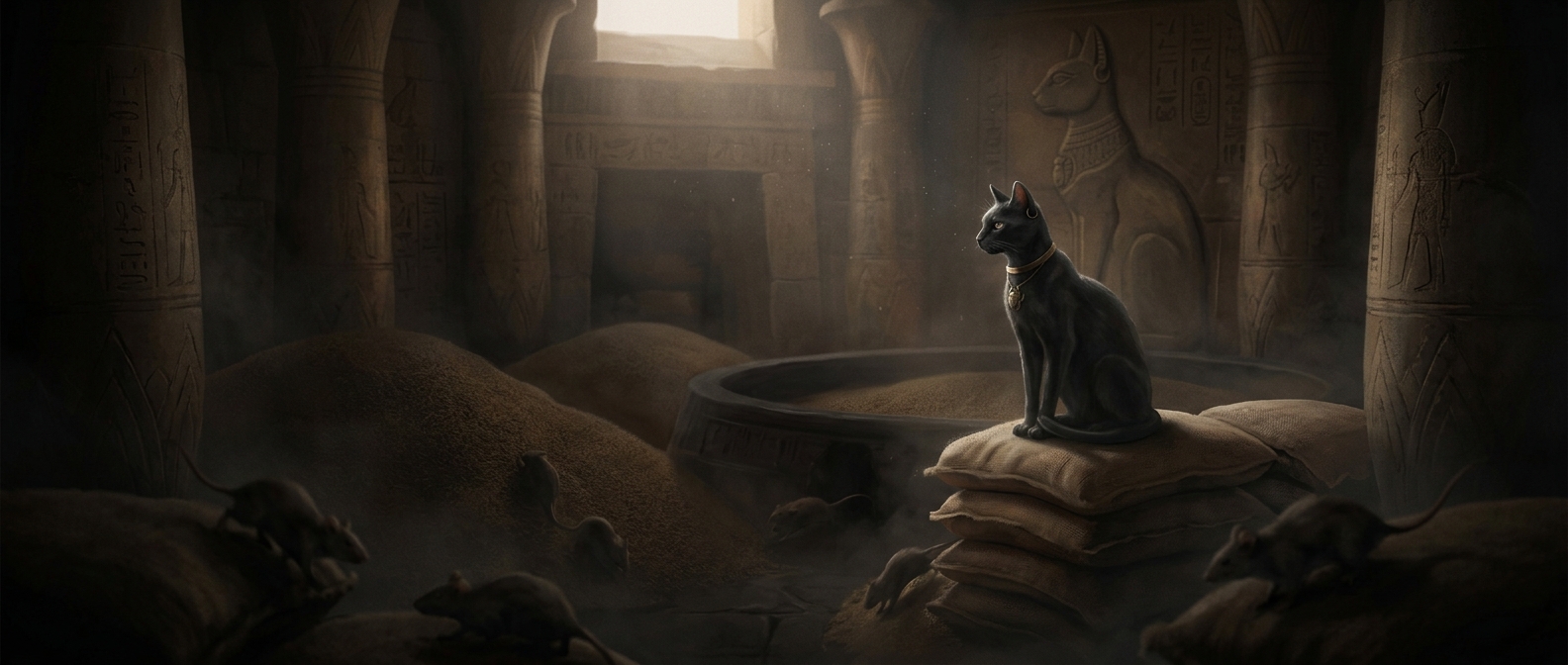
A cat’s value in Egypt began with a practical problem: stored grain drew rodents, and cats could catch them. In a farming society, protecting food stores mattered well beyond one household. A predator that kept pests down could also help limit the damage and disease rodents brought near people and supplies.
That usefulness encouraged people to tolerate cats close to homes and granaries. Over generations, the relationship became more than a matter of pest control: cats were familiar animals whose alertness and ability to defend a space made them fitting symbols of protection.
Protection took a divine form
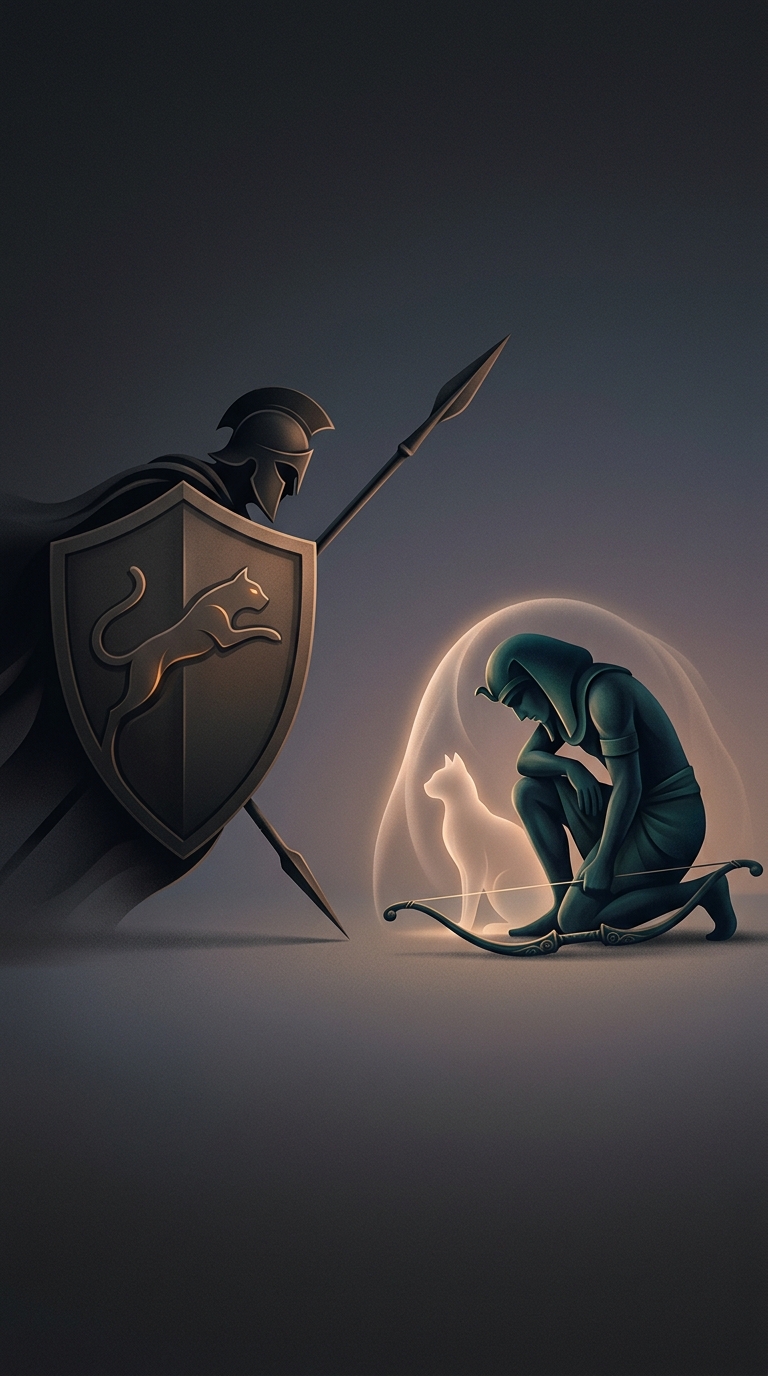
Egyptians connected cats with Bastet, a goddess associated with protection and, in some traditions, the home and fertility. Religious images often showed her as a cat or as a woman with a cat’s head. This did not mean every cat was treated as a god. Rather, cats could be understood as animals linked to a powerful sacred presence.
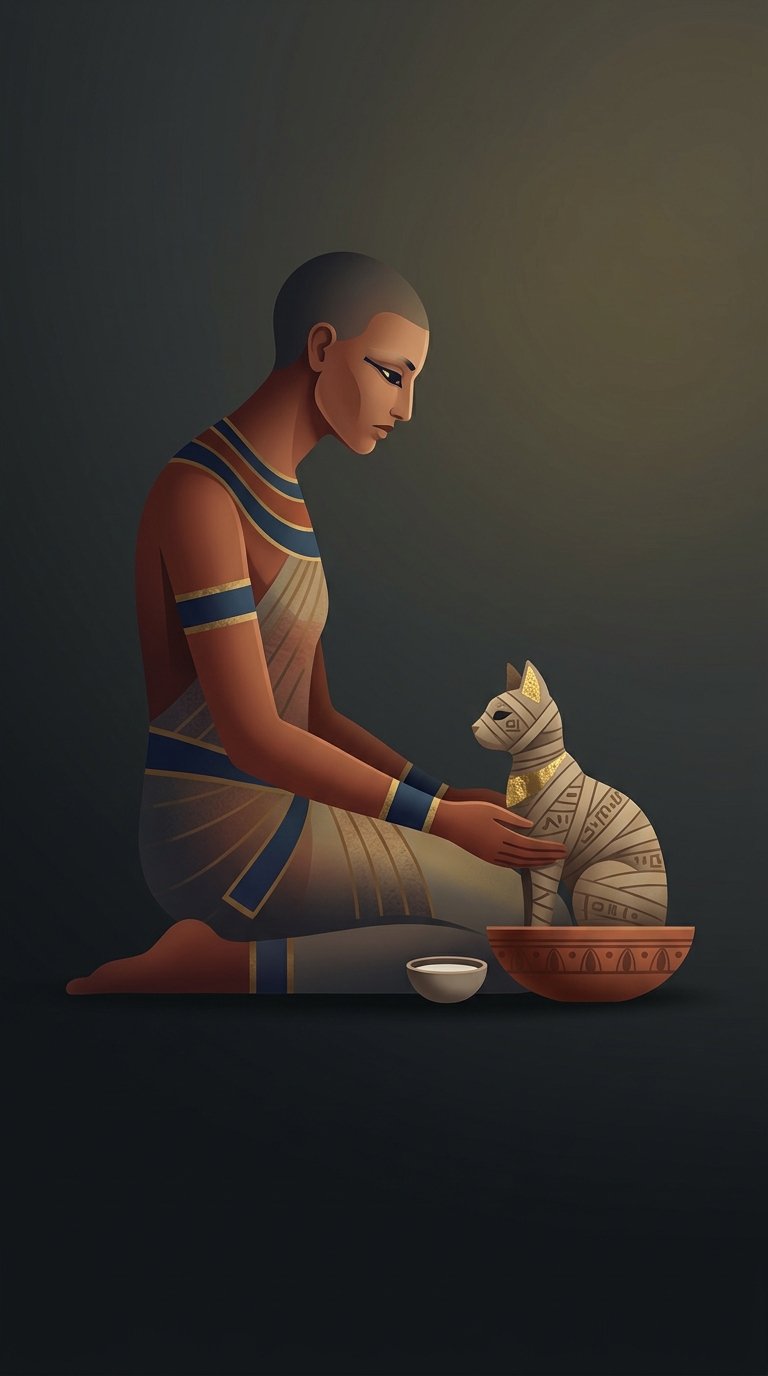
That connection helps explain why cats could receive costly ornaments and be mummified. Mummification—preserving a body for religious purposes—gave an animal a place in ritual practice, not merely in daily life. Cat mummies also served as offerings associated with devotion to a deity.
A relationship made visible
The shift from useful hunter to revered animal was not a sudden change from practicality to religion. The same traits that made cats valuable—watchfulness, independence, and skill at catching pests—could also make them seem protective. In Egyptian life, household security and religious meaning were not separate worlds.
A cat beside a grain store therefore represented more than a successful defense against rats. It embodied protection people could see every day, in an animal that lived among them.