A bakery made small enough for a tomb
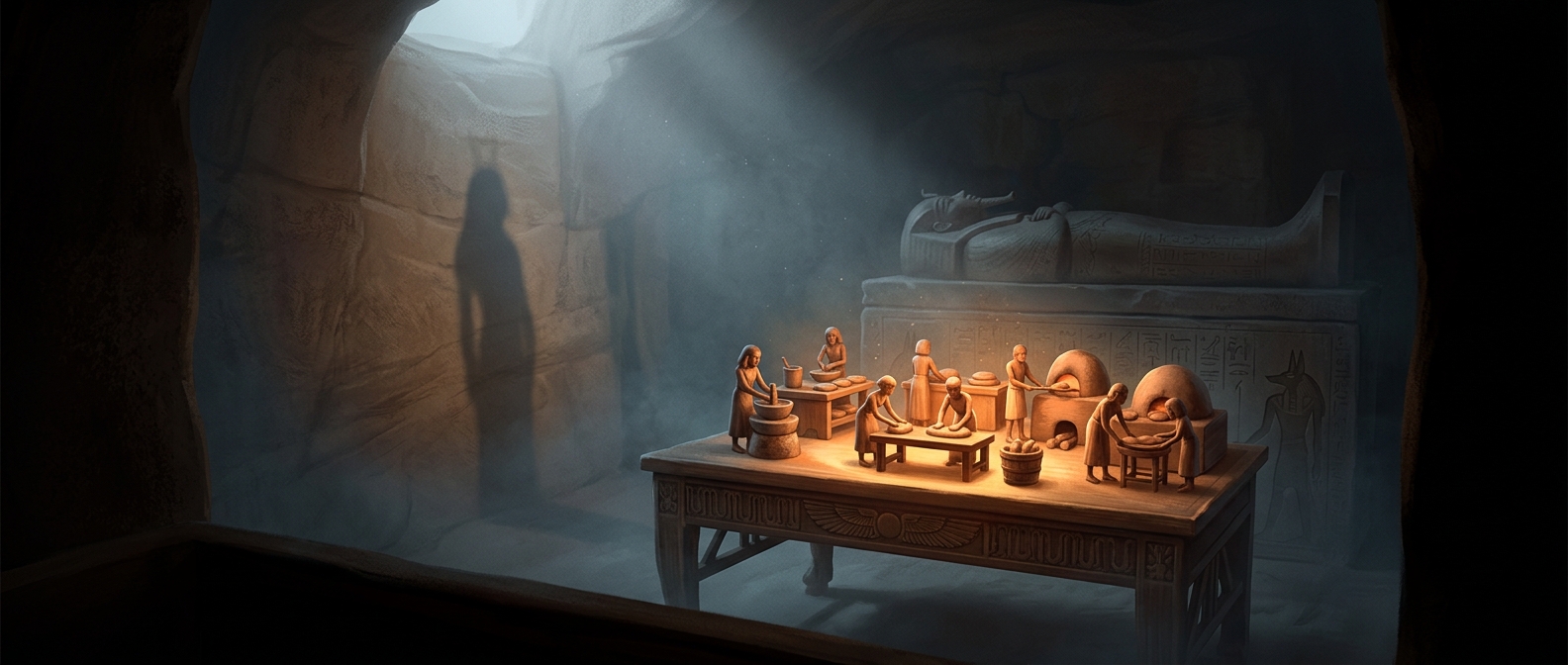
Some ancient Egyptian tombs contained miniature scenes of people grinding grain, preparing dough, baking bread, or brewing beer. These were not simply keepsakes or decorations. They represented the work needed to turn basic ingredients into staples that could sustain the deceased in the next life.
Bread and beer were everyday necessities, and they also figured in funerary offerings. A model bakery brought the whole process into the tomb: not just finished food, but workers and equipment capable, in the tomb’s religious logic, of producing it.
How a model could do real work
Egyptian funerary practice treated images and objects as more than reminders. Through ritual and belief, a depicted person or provision could serve the dead. A carved or painted offering might stand in for food; a three-dimensional workshop could represent an ongoing source of it. The models therefore made a practical promise in miniature: the deceased would not have to rely only on perishable offerings left by the living.
The scenes also preserved a recognizable chain of labor. Grain had to be processed, dough prepared, and bread baked; beer required its own preparation. By placing the makers alongside the means of production, tomb owners could provide for the afterlife through an entire working operation—not merely a picture of a meal.