Returning a share of the harvest to the earth
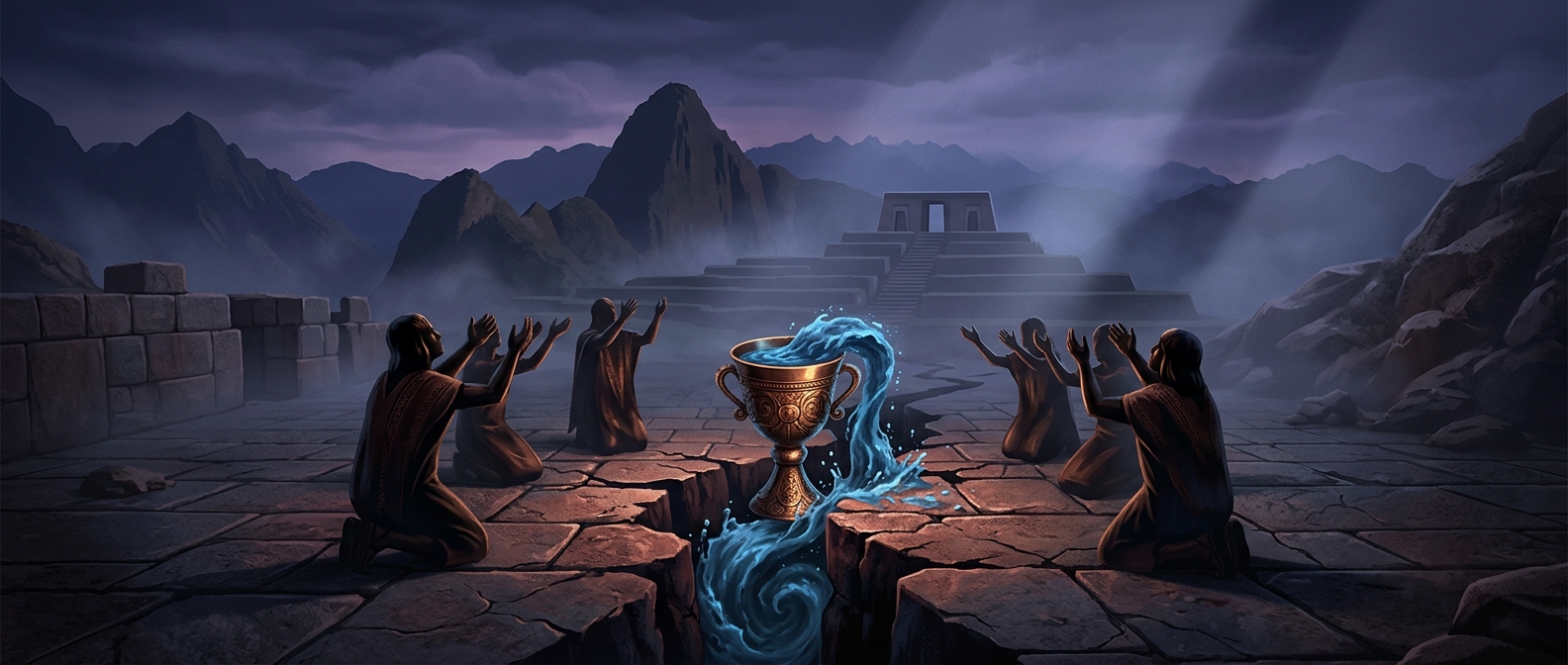
For the Incas, pouring chicha onto the ground was more than spilling a drink. Chicha—a fermented beverage made from corn—was part of agricultural celebrations, and the libation, or liquid offering, made the soil itself a recipient of the ceremony. The act expressed a hope that the earth would continue to support crops.
Pachamama and agricultural reciprocity
Pachamama, often translated as “earth mother,” represented the life-giving ground in Andean belief. Treating the earth as something to honor helped frame farming as a relationship, not simply a matter of taking food from the land. People depended on fertile soil for their crops; offering chicha acknowledged that dependence and asked for continued fertility.
The drink’s use also connected the ritual to the harvest: corn was both a crop people relied on and the ingredient from which chicha was made. Pouring some onto the ground turned part of that agricultural abundance into an offering. The gesture made the hope for fertile fields tangible: a valued drink was given back to the earth on which future crops depended.