Gold made the sun’s power visible
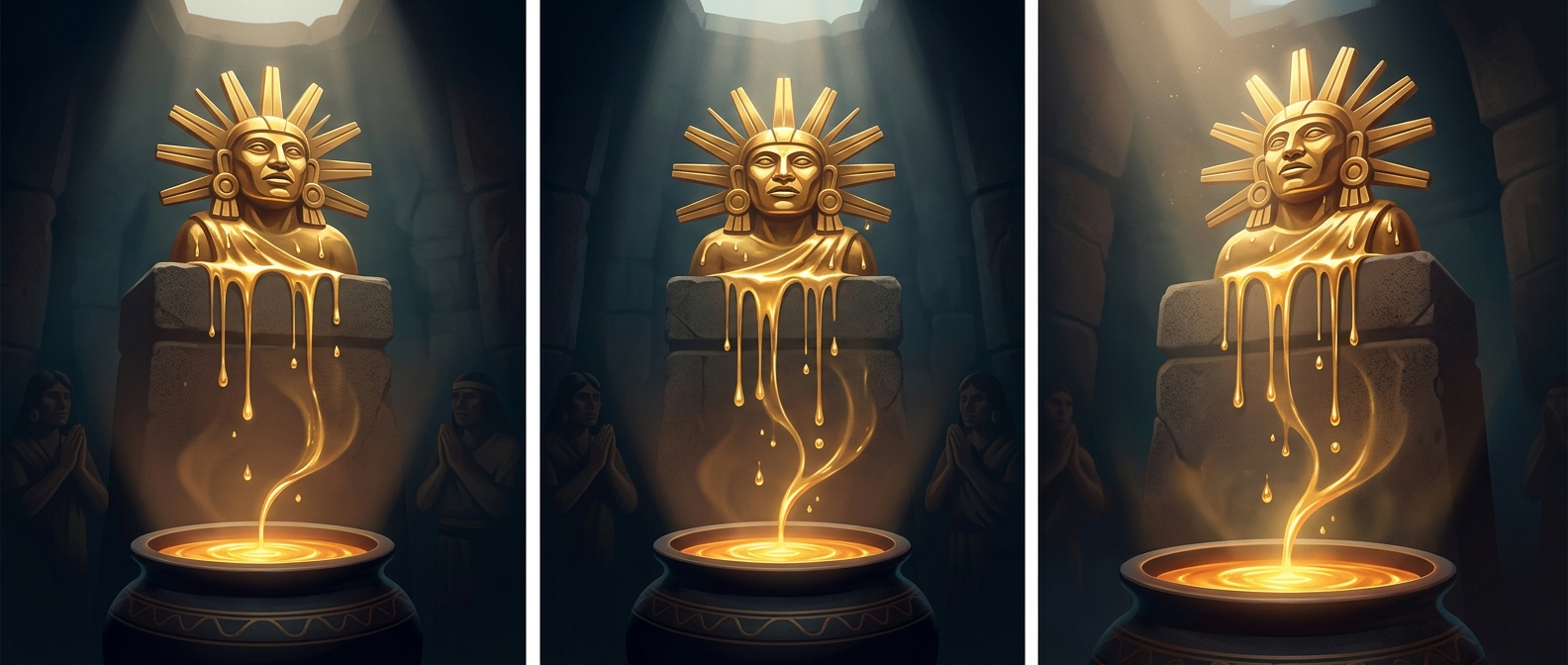
In Inca belief, gold was associated with Inti, the sun god, and was described as his “sweat.” Its bright, enduring surface made it a fitting material for representing sunlight and divine presence. Gold objects were therefore more than decoration: in a sacred setting, they helped make the relationship between the sun, the ruler, and the Inca state tangible.
That meaning shaped where gold appeared. Temples could be adorned with gold, including the important Temple of the Sun in Cusco. There, the metal’s gleam reinforced the idea that the sanctuary belonged to a power that sustained life and ruled beyond the human world.
Sacred value was different from a price tag
Calling gold sacred rather than cash does not mean it was useless or that people never valued it materially. It means its significance did not rest mainly on buying things in a market. Inca rule relied heavily on organizing people’s labor and resources, while gold’s religious and political meaning made it especially suited to ceremonial objects and spaces.
The distinction helps explain why gold could be immensely precious without functioning like modern money. Its worth was expressed through what it represented—and through who could place it in a temple or use it in a ritual. A wall covered in gold did not simply display wealth; it made the sun god’s presence part of the architecture.