A Sacred Beginning at Lake Titicaca
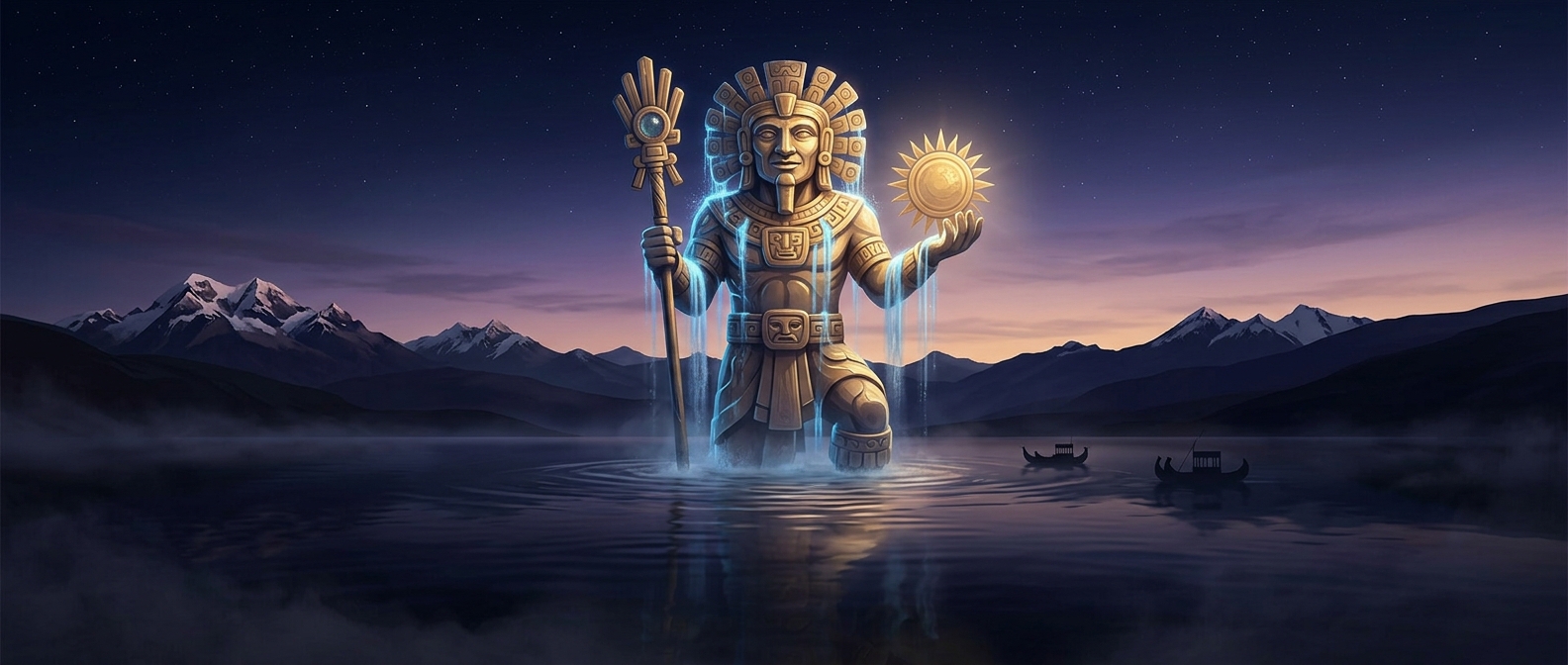
For the Incas, Lake Titicaca was more than a striking landmark high in the Andes. In creation accounts recorded after the Spanish conquest, the creator figure Viracocha came from its waters and brought order to a dark world by making the sun, moon, and stars. Some versions place the making of the first people at Tiwanaku, an ancient ceremonial center near the lake’s southern shore.
These stories survive in accounts written down under Spanish rule, rather than in Inca-authored texts. Details differ, so they should be understood as versions of a living religious tradition, not a single fixed script.
Why the Lake Mattered
The lake’s role made the surrounding landscape part of the story: the waters marked a point of origin, while nearby places connected divine creation to the beginnings of human society. For an empire that ruled many peoples and regions, such sacred geography could give distant communities a shared point of reference without erasing local traditions.
The result was a creation story rooted in a real Andean place. Lake Titicaca was not simply where the world began in myth; it made the origins of the sun, sky, and people legible on the landscape itself.