A rainbow was more than a patch of color
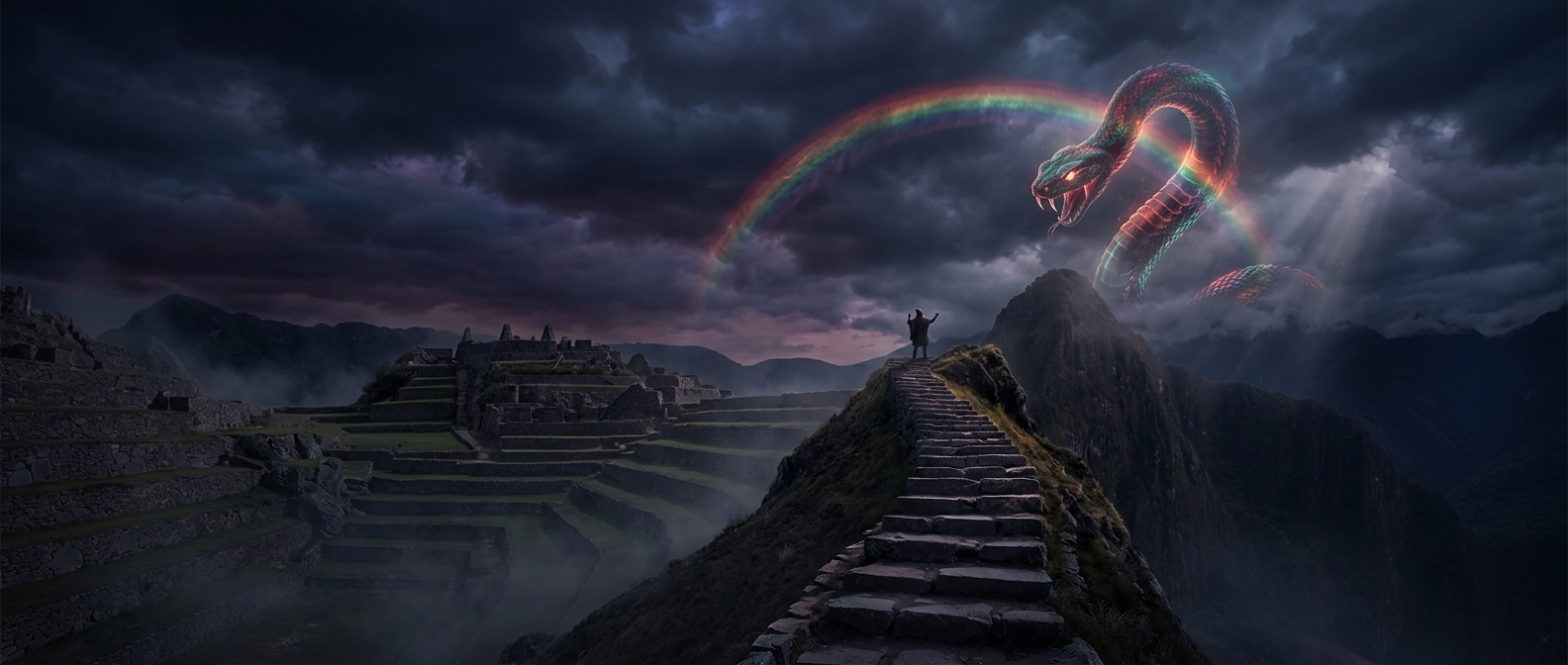
In Inca belief, a rainbow could be understood as a dangerous being in the sky, not merely an optical effect. Its serpent-like form linked a familiar sight in the clouds with a creature capable of harm. The danger was thought to reach the body: rainbows were associated with ailments of the skin and stomach.
That idea made looking at a rainbow a matter of caution. People covered their mouths to keep from swallowing it—a protective gesture that treated the opening of the body as a possible route for danger to enter. The belief gave an invisible celestial threat a practical, everyday response.
A gesture shaped by a worldview
The account reflects a way of interpreting nature in which events in the sky could have bodily consequences. A rainbow’s sudden appearance and vivid arc could be read as the presence of a powerful, hazardous creature; covering the mouth was a way to guard against that presence.
The gesture is striking because it turns a familiar natural display into a physical risk: the boundary between sky and body could be imagined as crossed through an open mouth.