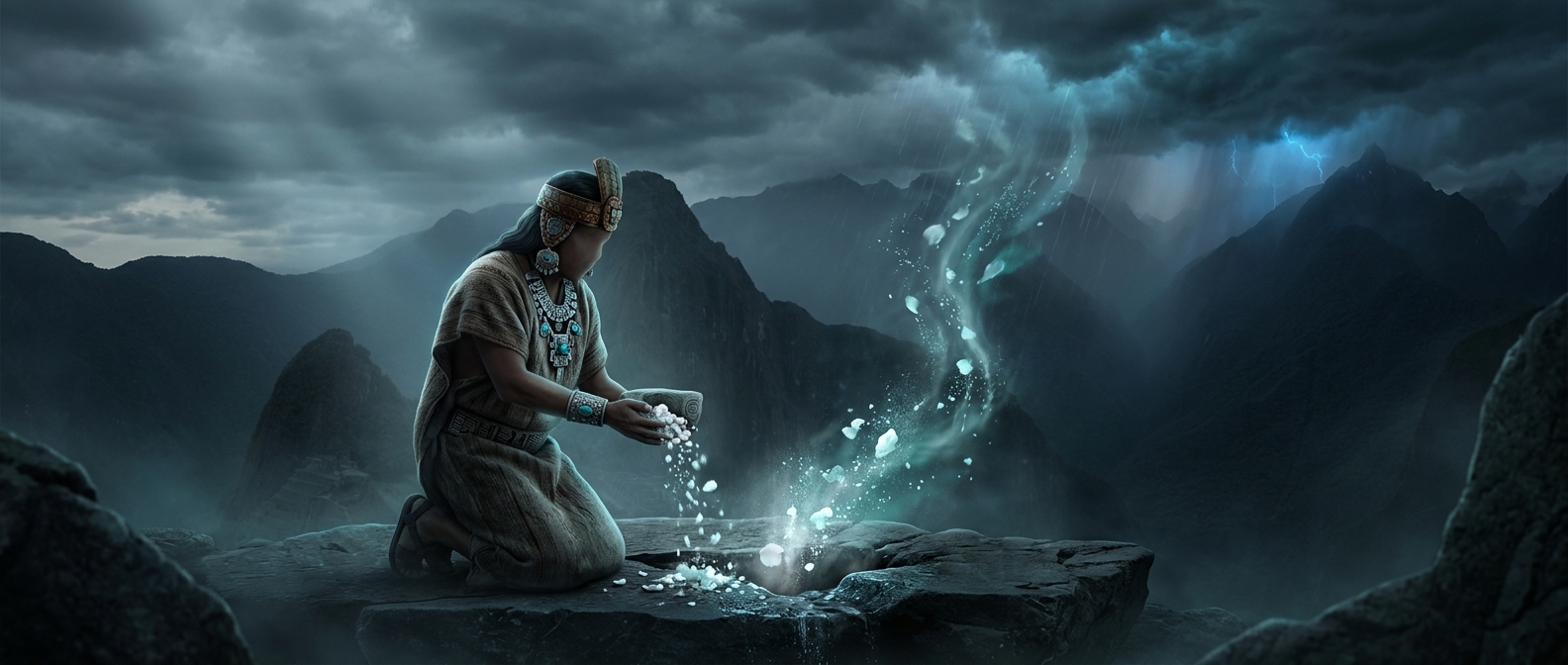
A piece of the ocean made into an offering
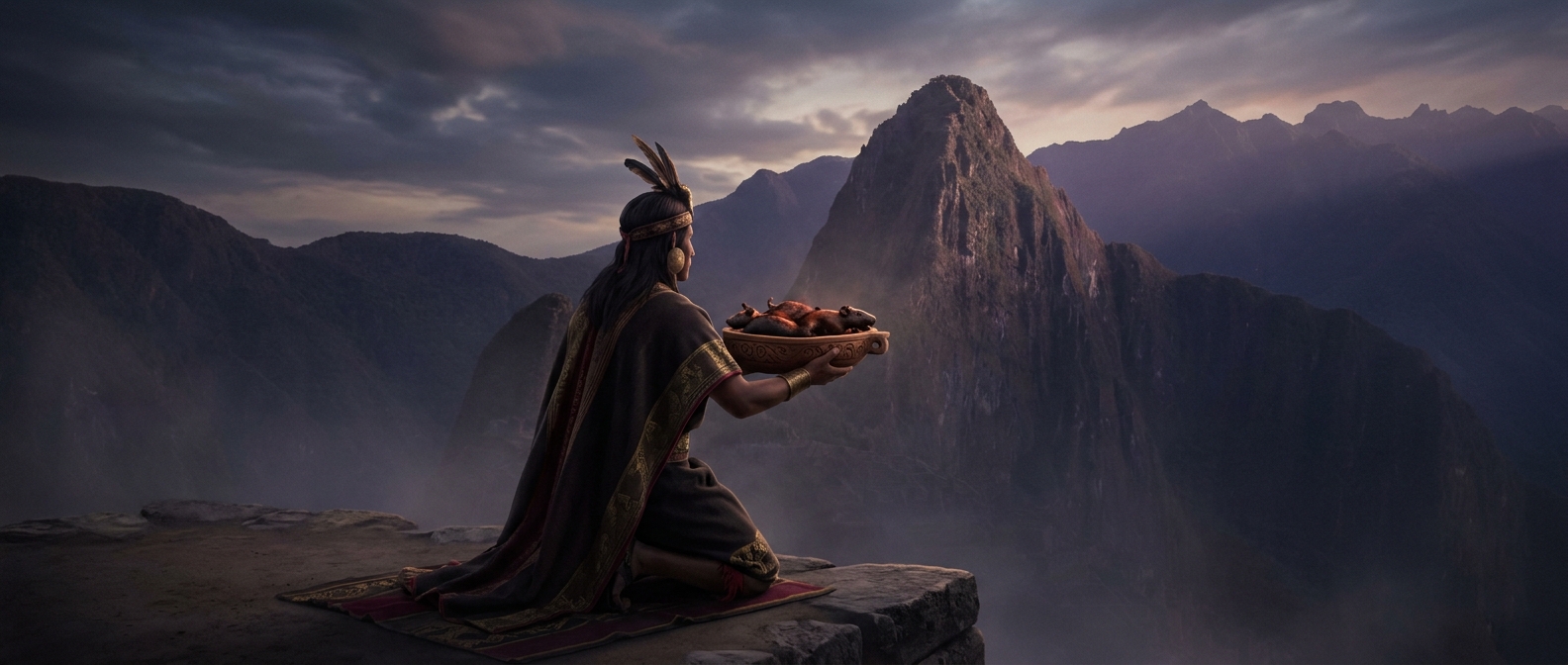
Spondylus is a brightly colored marine shell found in the warm waters off parts of the Pacific coast. In the Andes, it was valuable not simply as decoration: it traveled inland through exchange networks and was used in offerings. Its rarity and ocean origin made it a fitting substance for rituals concerned with water and fertility.
Grinding the shell changed its role. Instead of placing a whole, precious object at a shrine, worshippers could release its finely crushed material into the air. The gesture carried the offering beyond the ground and toward the sky, linking the sea with the clouds on which farming communities depended.
Why rain called for ritual
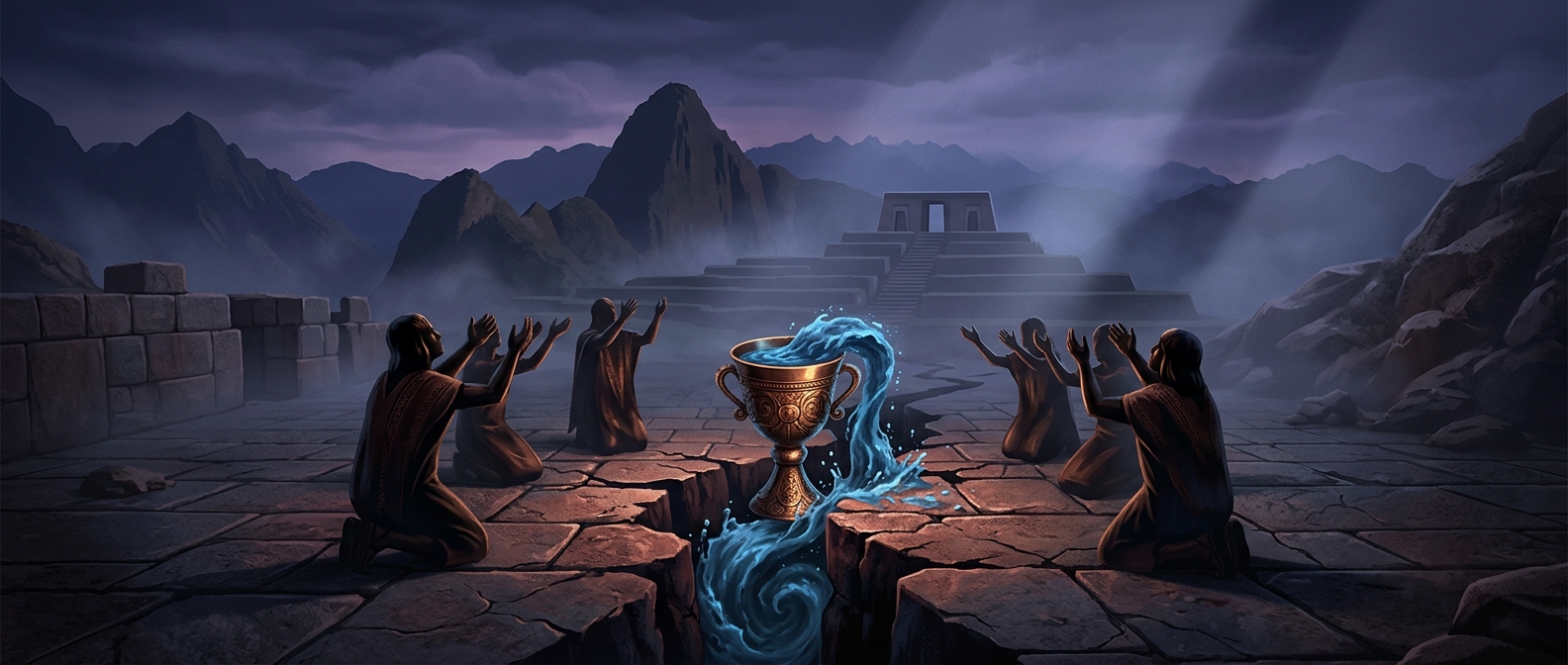
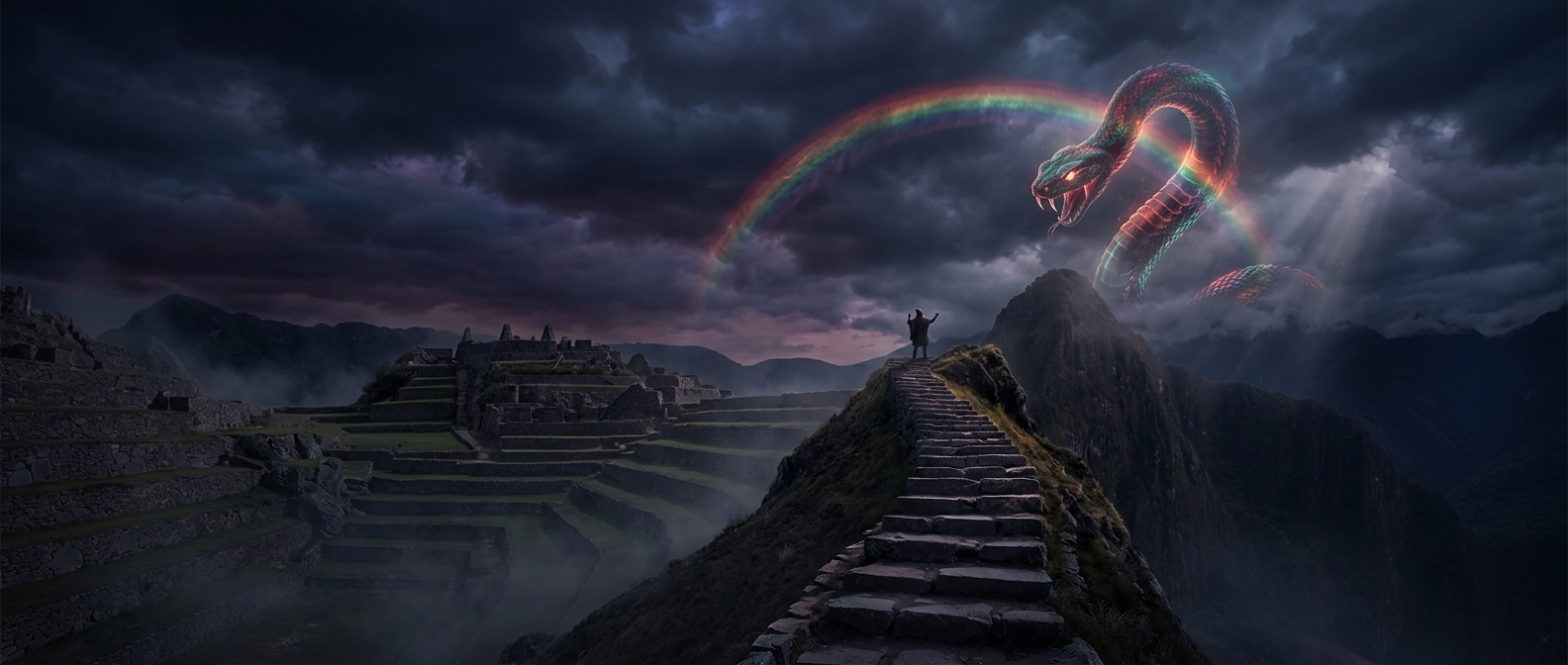
In the highlands, rain was not an abstract blessing. Crops relied on seasonal water, and a dry spell could threaten food supplies. Andean religious practice treated the natural world as a field of relationships: people made offerings to powerful places and beings, seeking to maintain a balance that sustained life. A ritual involving a sea-born shell could express that relationship without claiming that the shell physically created rain.
The act’s force lay in making a need visible and giving it a form. Ocean material rose into the air as an appeal for water from above. When rainfall mattered to the harvest, even a handful of shell dust could turn waiting for clouds into a deliberate, communal act.