Why natron could preserve a body
Natron was a naturally occurring mineral salt, not a single pure chemical. Its drying power came largely from sodium compounds that pulled water from tissues. That mattered because the organisms and chemical reactions that break down a body need moisture to proceed quickly. By removing much of that water, embalmers made the body a far less hospitable place for decay.
The surrounding desert helped finish the job. Dry air carried away moisture released from the body, while the salt packed inside its opened cavities could reach areas that were harder to dry from the outside alone. Preservation was therefore not a matter of salt simply coating a corpse: it depended on reducing moisture through the body and keeping the environment dry.
Drying came before the wrappings
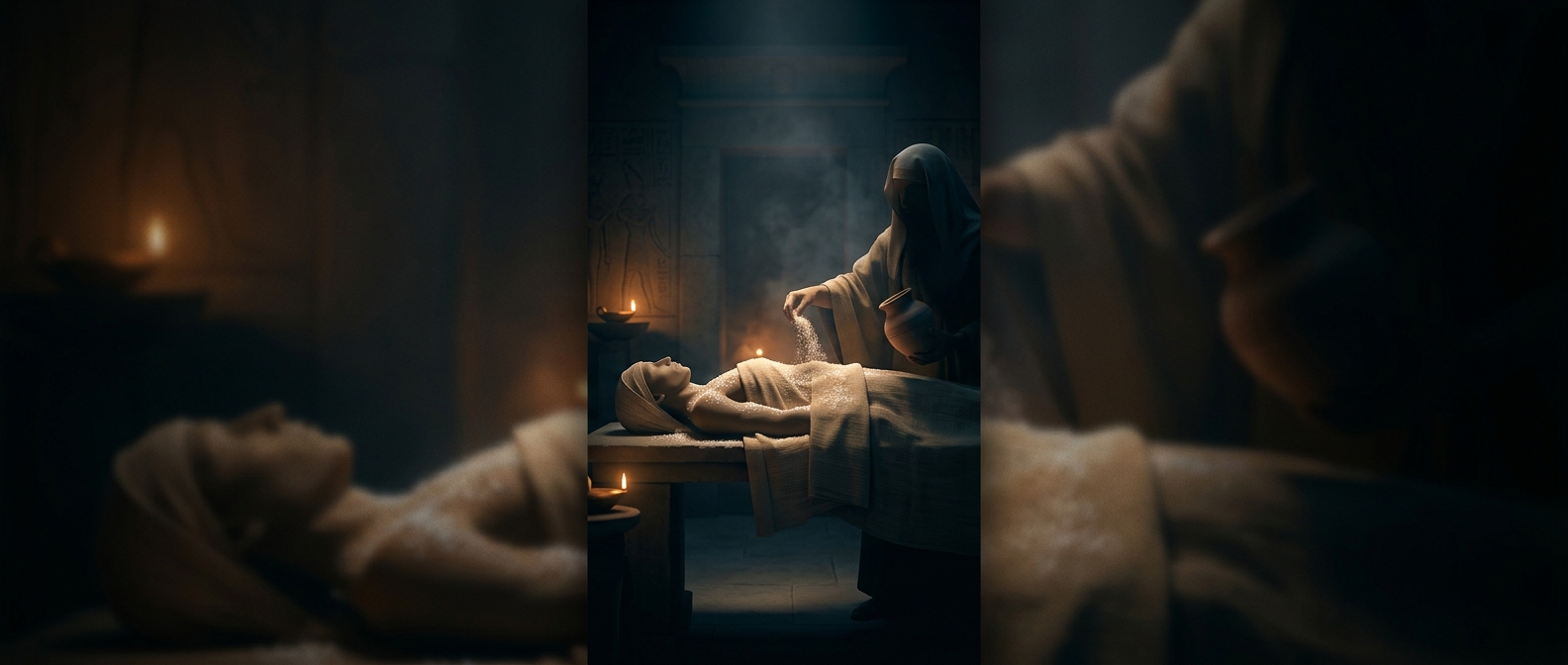
Removing internal organs and packing the cavities with natron addressed a basic problem: soft tissues inside the body would otherwise remain moist and decay. The body was also covered with the salt mixture, then left to dry. After this stage, embalmers could prepare it for wrapping; linen and other materials helped protect and shape the dried body.
Drying changed what preservation meant. The goal was not to keep a living-looking body unchanged, but to slow decay enough that the body could remain intact for burial and religious rites. Natron’s practical advantage was that it turned Egypt’s mineral resources and arid climate into parts of the same preservation process.