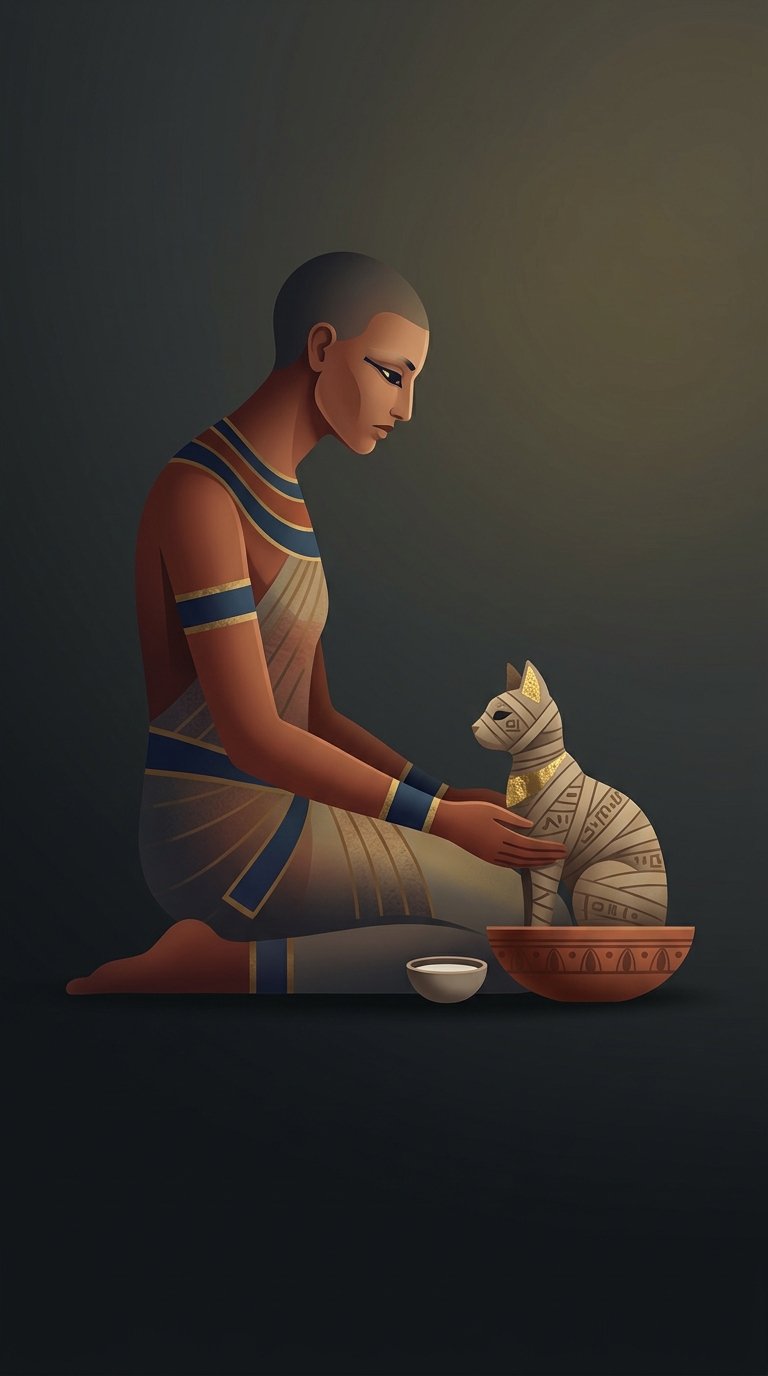
A household made grief visible
A shaved eyebrow is an unusually public sign of private loss. In the account of the Greek historian Herodotus, a cat’s death prompted everyone in the household to alter their appearance, making mourning something the family displayed together rather than something confined to a burial.
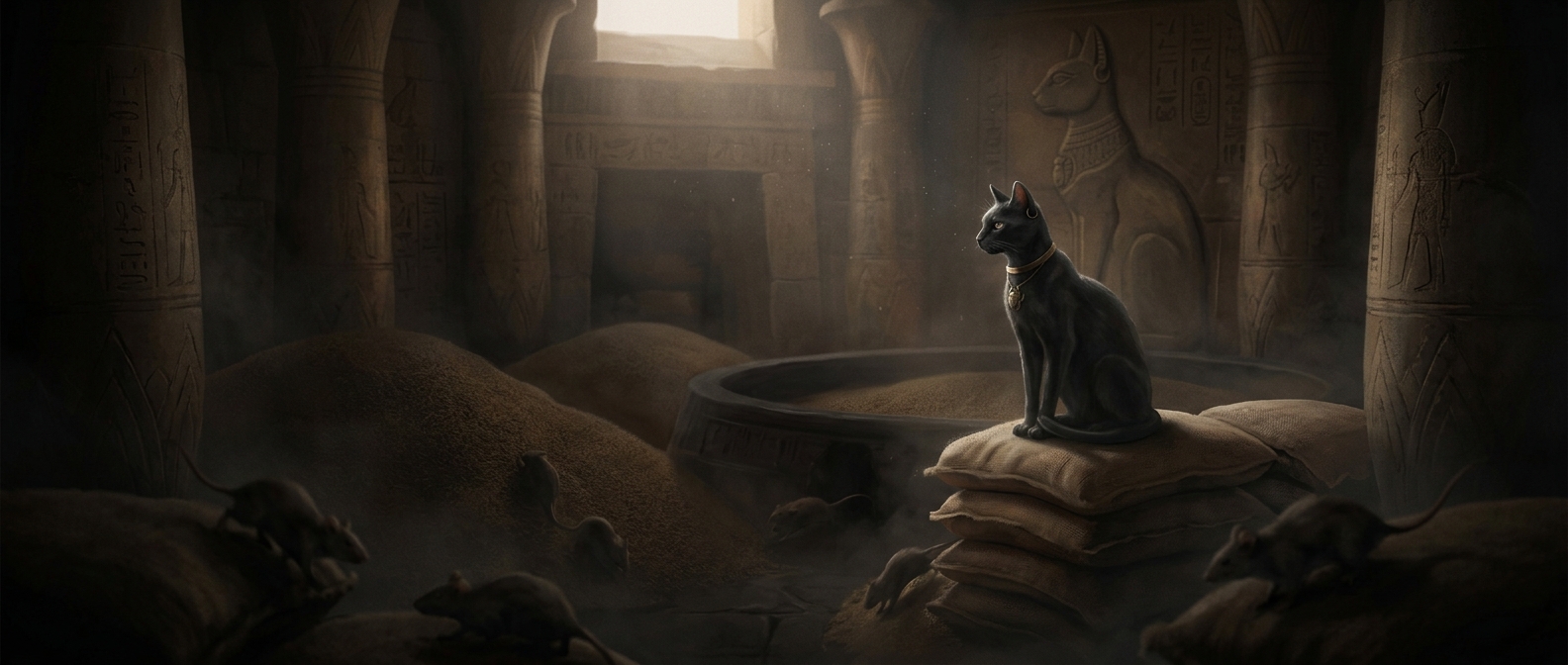
The ritual also helps explain why a cat’s death could matter so much. Cats had a place in Egyptian religious life, including associations with the goddess Bastet, whose protective qualities were often represented through feline imagery. A household cat was therefore not simply a useful animal that kept pests away: affection for it could sit alongside wider religious meanings attached to cats.
From domestic loss to sacred burial
Egyptians preserved many animals as mummies, but their burials could serve different purposes. Some animals were cherished companions; others were prepared as offerings connected with worship. Herodotus describes dead cats being taken to Bubastis for burial, linking the household’s grief to a broader religious landscape in which cats had a recognized place.
The eyebrow-shaving account is a report of a custom, not proof that every Egyptian family followed it in exactly the same way. Still, its striking detail captures the scale of the loss as Herodotus understood it: the family’s mourning was written on its faces, and the cat’s burial carried that grief beyond the home.