How a race result traveled by pigeon
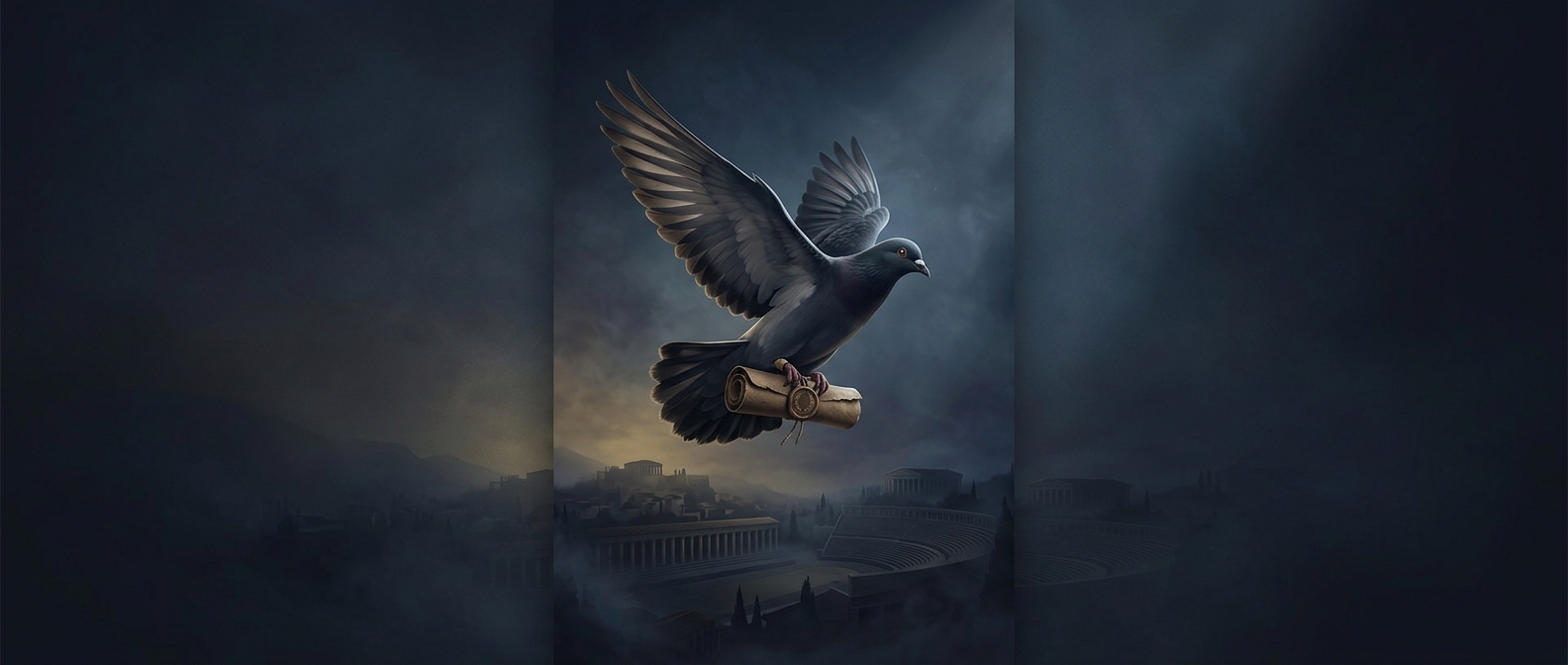
A carrier pigeon was not sent toward a town it had never seen. It was trained to fly back to its home loft—the place where it was kept. To send a message from a competition, handlers brought pigeons from the destination loft to the event, secured a small written note to a bird, and released it. The bird’s homing instinct did the navigation.
That made the message’s route depend on the birds available: a pigeon could carry news to the town where its loft stood, but not deliver it everywhere. Someone at the loft had to retrieve and read the note, then pass the result along by other means.
Fast for its era, limited by its route
A bird could cover the distance while the contest was still a recent event, giving people away from the venue a report without waiting for a traveler to make the journey. But pigeon post was a point-to-point system, not a live feed. Each bird carried only a short message, and every destination required its own trained pigeon and receiving loft.
The tiny parchment scroll was part of a practical compromise: keep the result light enough to carry, while turning the pigeon’s reliable return flight into a delivery service. The news could arrive quickly—but only where a bird had a home to fly back to.