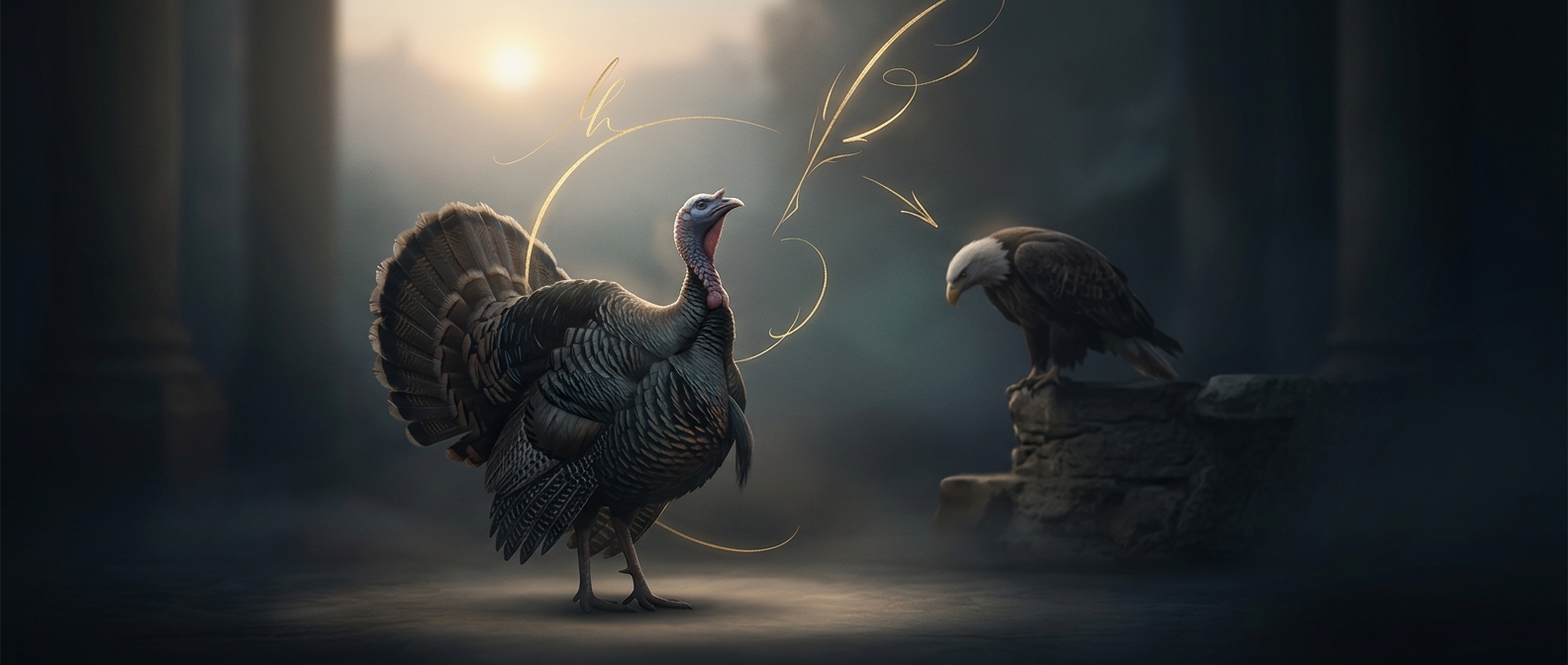
Franklin’s turkey was a joke with a political edge
Benjamin Franklin’s preference for the turkey was not a serious proposal for America’s national emblem. He was making fun of the Society of the Cincinnati, an organization founded by Revolutionary War officers whose insignia featured an eagle. In a letter to his daughter, Franklin imagined the bird’s character as if it reflected on the society that had chosen it.
His eagle was no noble provider: Franklin mocked it for taking fish caught by other birds. The turkey, by contrast, was native to North America and, in his comic portrait, more respectable. The humor depended on treating the birds like people and turning a grand emblem into a test of manners.
Why the emblem invited a joke
The Society of the Cincinnati honored the officers’ service, but it also allowed membership to pass to descendants. That hereditary feature made the group a target for suspicion in a new republic wary of inherited rank and aristocratic privilege. Franklin’s bird jokes gave him a way to tease the society without laying out a formal political argument: an eagle that lived by taking from others was an awkward symbol for an organization whose critics worried about privilege.
The turkey was useful precisely because it was an improbable alternative. It was familiar, American, and decidedly less majestic. Franklin’s mock endorsement punctured the solemnity of the eagle emblem; it did not launch a campaign to replace it. The point was less “choose the turkey” than “don’t mistake a grand symbol for proof of noble character.”