When livestock crossed into the courtroom
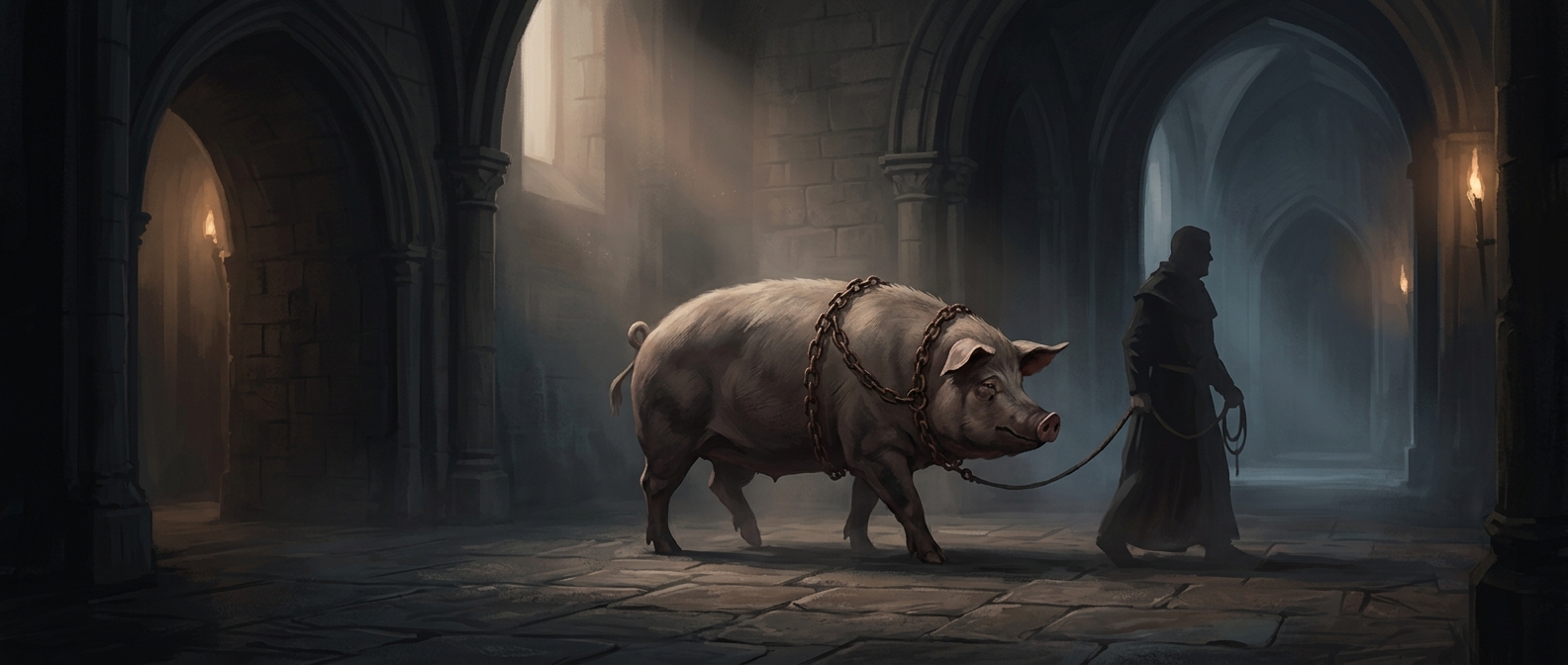
In parts of medieval Europe, an animal could be named as the defendant in a formal proceeding. Pigs appear often in surviving accounts: they roamed through settlements and could trample or eat crops, as well as injure people. A dispute that might otherwise have been handled as a farm loss could therefore be framed in legal terms—not simply as a question of who owned the pig, but as a case against the animal itself.
A human court for an animal case
The proceedings used the forms of human justice: an accusation, a hearing and, in some cases, a sentence. The animal could not explain what happened or understand a legal argument. The court’s treatment of it as a defendant reflects a world in which human institutions could assign responsibility to an animal, rather than only pursue its owner for failing to control it.
That does not mean every damaged field led to a trial, or that medieval courts everywhere handled animals the same way. Animal cases varied by place and circumstance, and surviving examples are unusual enough to have attracted notice. They belong to a legal culture unlike today’s, where responsibility for livestock damage is generally addressed through the people who own or manage the animals.
Why the proceedings stand out
Putting an animal on trial made a practical conflict—whose crops had been damaged, and what should happen next—look like a public matter of justice. It also exposed the limits of that justice: the court could impose a human sentence, but the creature at its center could neither answer the charge nor take part in its own defense. The spectacle of a pig facing a court is memorable because it reveals how differently medieval communities drew the boundary between human and animal responsibility.