Why a knight’s horse could look small by modern standards
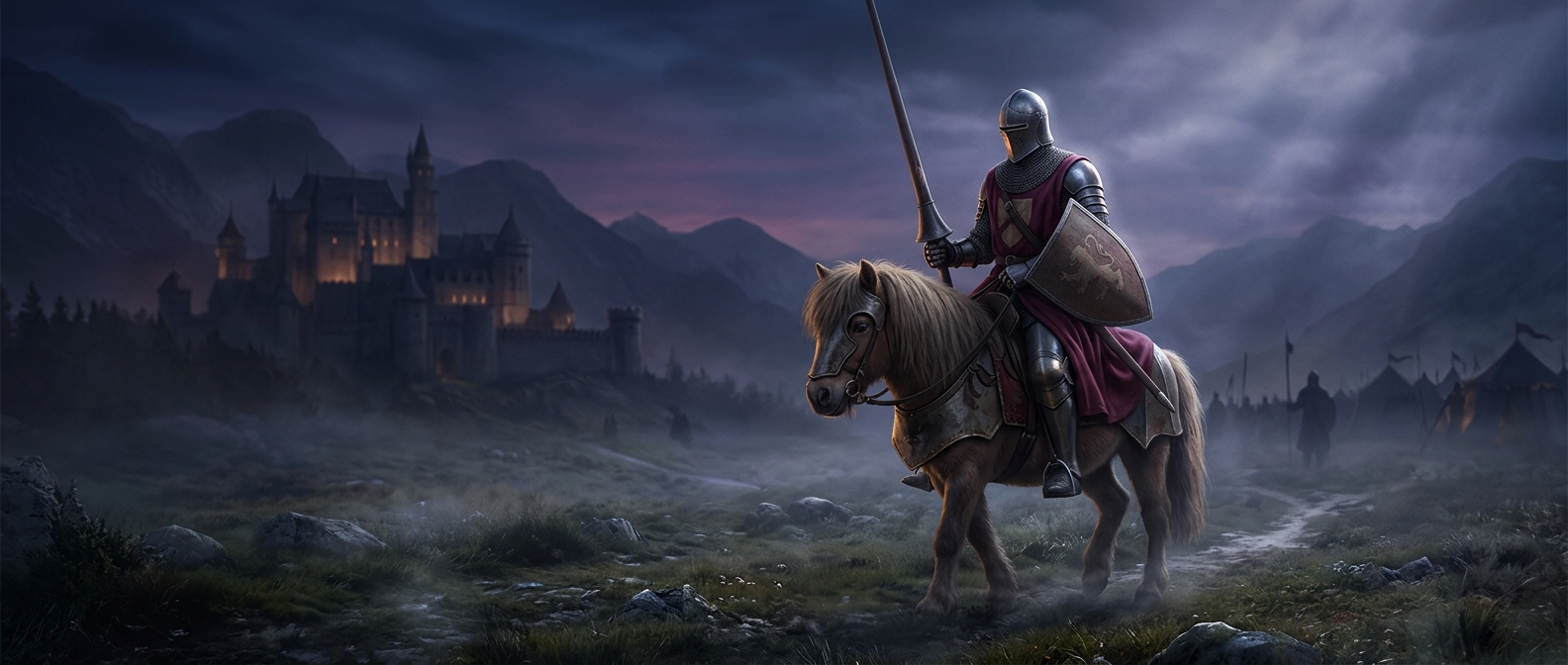
Medieval warhorses were often closer in height to modern ponies than to the towering animals in films. That comparison is about height, not build: many were compact, muscular horses selected to carry a rider and move through the demands of medieval travel and combat. Medieval horses also varied widely; a knight’s mount was not necessarily the same kind of horse as an ordinary farm or riding animal.
“Pony” can be misleading here. Today, it is commonly a height category, while medieval horse names often described a horse’s role or type. A short horse with a strong frame could still be a formidable mount.
A warhorse was chosen for more than height
A knight needed a horse that could carry him, accelerate, turn, and keep going. A larger animal might offer more reach and carrying capacity, but it also needed more feed and could be harder to manage. Compact strength and reliable movement could matter more than sheer size, especially on uneven ground or during long journeys.
The famous destrier—the prized warhorse associated with knights—was a specialized and valuable animal, not a label for every horse used in battle. Knights also traveled on other mounts, and horses used for different tasks came in different sizes. Archaeological remains show variation rather than one standard “knight’s horse.”
Armor did not require a giant mount
Popular images often pair a fully armored knight with an enormous horse, making the rider’s weight seem impossible without a giant frame. But the horse did not need to be exceptionally tall to carry a rider and equipment; strength, conditioning, and the combined load mattered. The striking contrast is that medieval prestige was attached to a horse’s quality and role, not simply its height. A sturdy, relatively short mount could be both valuable and useful without resembling a modern draft horse.