A bird could become a lifeline when the wires went dead
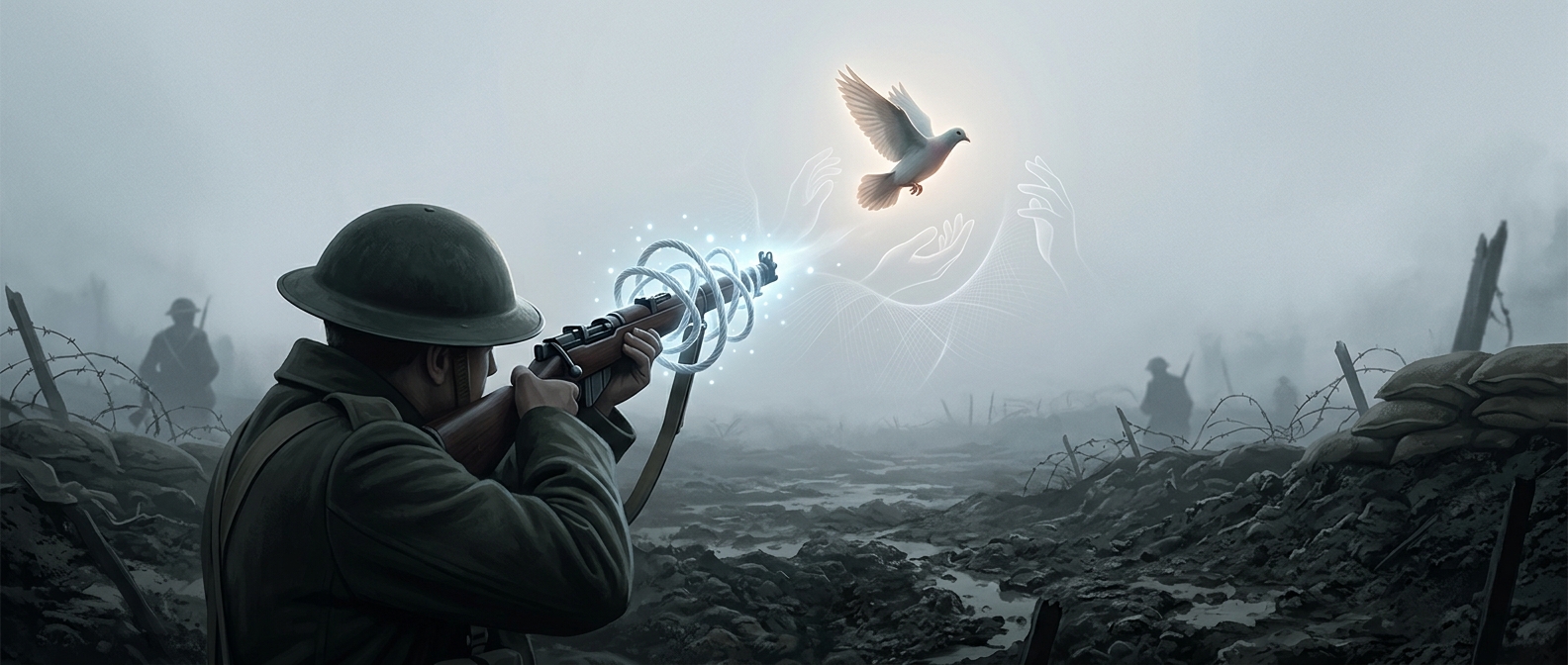
A homing pigeon did not need to know where a message was going. It needed only to be released away from its home loft: its powerful instinct to return carried it back across the landscape. A small message attached to the bird could therefore travel without a road, a functioning telephone cable, or a radio signal reaching the right receiver.
That made pigeons useful in wartime precisely where communication was most fragile. A line could be cut or damaged, and a radio could fail or be unusable. A pigeon was no substitute for fast, high-volume communication, but it could still bring a brief report—such as a position or request for help—to the people waiting at its loft.
Why interfering with a pigeon mattered
The law’s significance was practical: harming a bird in flight could destroy the message it was carrying. Britain treated shooting, killing, or even annoying a messenger pigeon as a punishable offense, with a possible prison term of six months. The rule extended protection beyond the battlefield, where a bird might pass through places where people could otherwise mistake it for ordinary wildlife.
A pigeon’s route was one-way in an important sense: it could reliably return home, not deliver a message to any destination its sender chose. Its value depended on having a prepared loft and on the bird making the journey safely. Protecting it therefore protected a narrow but vital link in a larger communications system. The striking idea was not that a pigeon could replace a telephone line, but that it could keep one small channel open when the line itself had gone silent.