A tiny light with a tactical advantage
In a trench, even a small flame could matter. A candle or lamp made a bright point that could be seen from outside, while a flashlight’s beam might travel farther still. Glowworms offered a different kind of light: a faint glow produced by a chemical reaction inside the insect, rather than by burning fuel. The reaction gives off very little heat, and the light is too weak to throw a strong beam across the trench.
Reading at close range
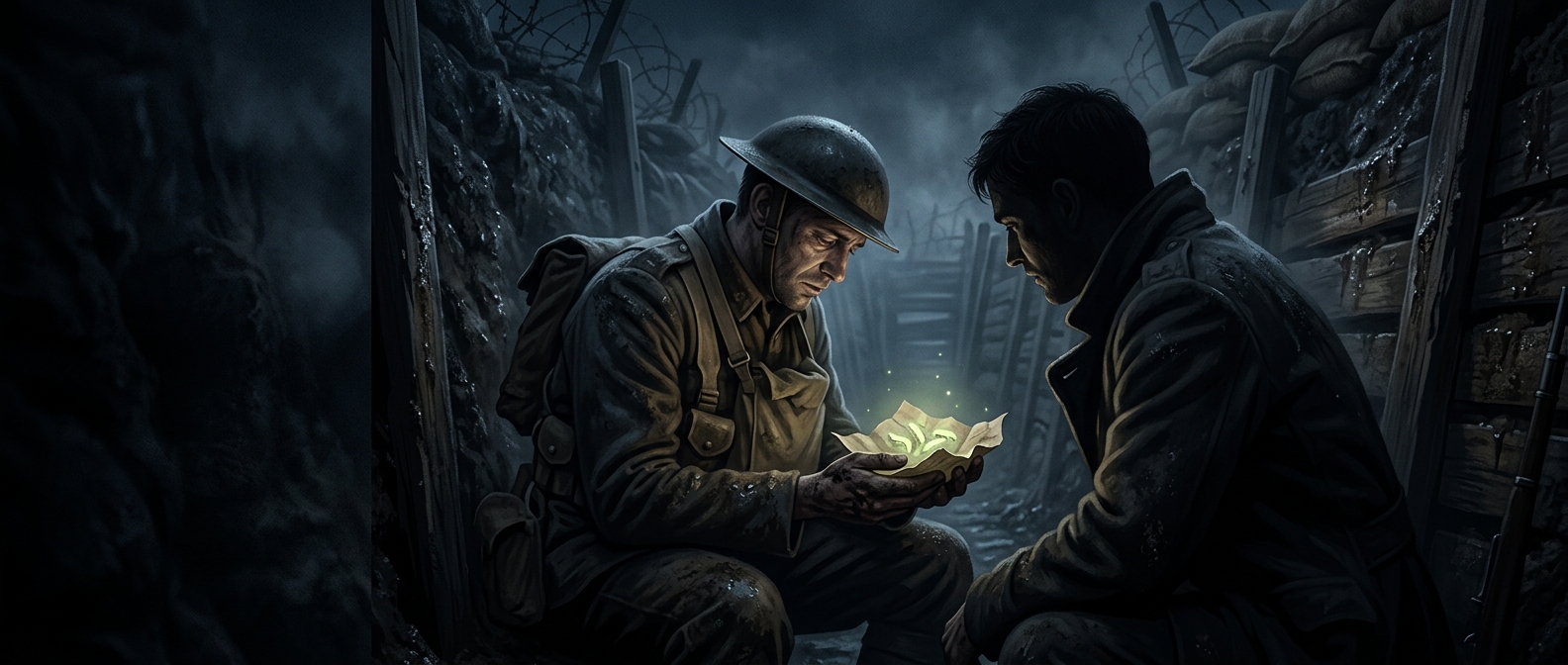
A jar gathered several glowing insects in one place, making their light easier to use than a single scattered glow. It would not illuminate a room. A soldier had to bring the letter close and read slowly, relying on a small pool of light rather than lighting the whole space. In darkness, eyes gradually become more sensitive, so a dim glow can be more useful after waiting than it would be in daylight.
The method traded convenience for concealment. The insects could not provide dependable brightness on demand, and their light was limited; a letter still had to be held near them. But that limitation was also the point. By accepting a slower, cramped way to read, soldiers could avoid creating the conspicuous flash that might give away their position. A jar of living light turned a basic act—reading a message—into a matter of managing visibility.