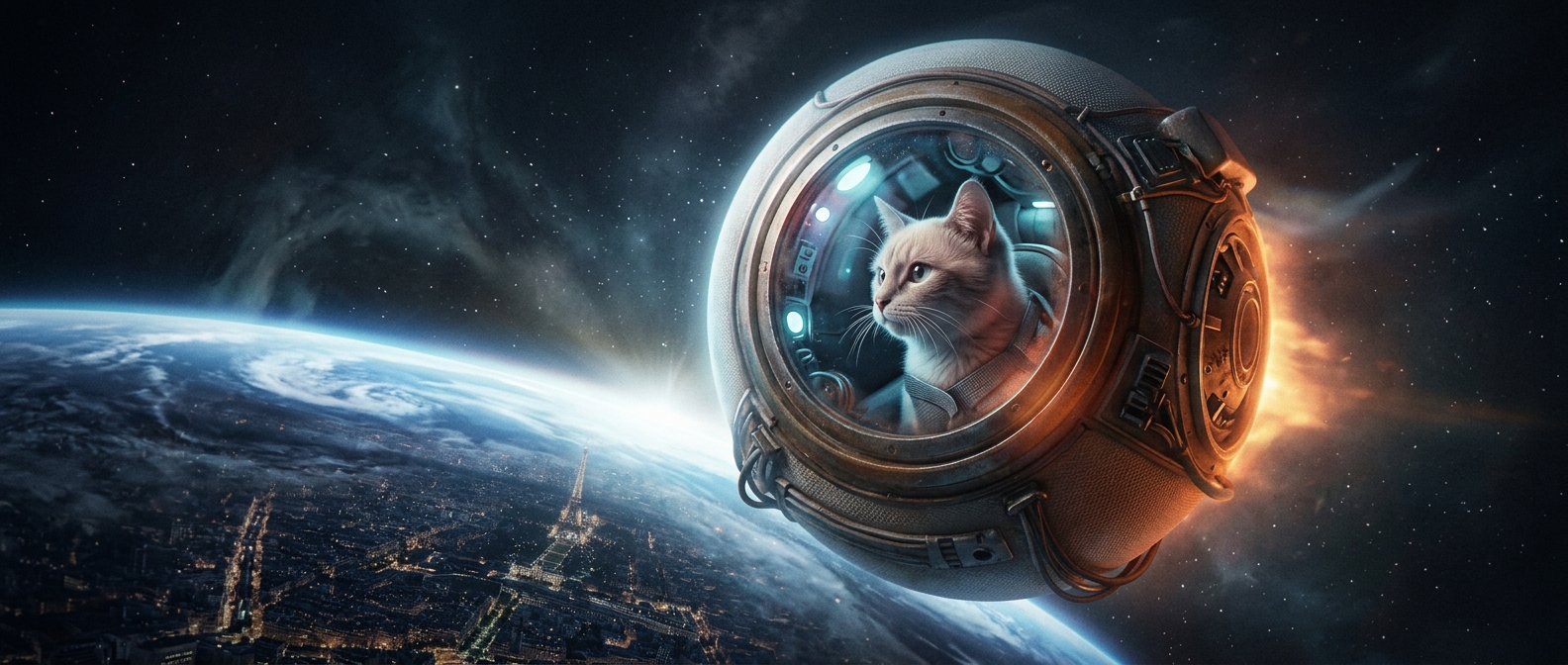
Why France sent a cat on a rocket
In the early 1960s, spaceflight was still a practical experiment in human survival. France’s researchers wanted to know how a living body responded to launch and brief weightlessness, and cats were small enough to fit inside the instrumented capsule. Félicette was one of several cats prepared for the program; her flight made her the one who returned to Earth and became widely known.
Turning a flight into an experiment
Before launch, electrodes were attached to Félicette’s brain so instruments could record electrical activity during the ride. Those signals gave researchers a way to track changes in the nervous system while the rocket’s acceleration gave way to weightlessness. The electrodes were part of a wider monitoring setup: the capsule also carried equipment to transmit information back to the ground.
The rocket did not place Félicette in orbit. It sent her on a suborbital flight—up beyond the atmosphere, then back down along a curved path. That made the trip short, but it still exposed her to the intense acceleration of launch and the sudden change in gravity before the capsule descended by parachute.
A small flight with a lasting place in history
Félicette’s safe recovery meant the mission could provide measurements from an animal that had experienced the full ascent and return, rather than a simulated ride on the ground. The flight belonged to a period when countries used animals to test the limits of space travel before sending people. Its striking detail is also its scientific one: a stray cat’s brief trip became a way to study what launch and weightlessness did to a living brain.