Why ibis offerings accumulated by the millions
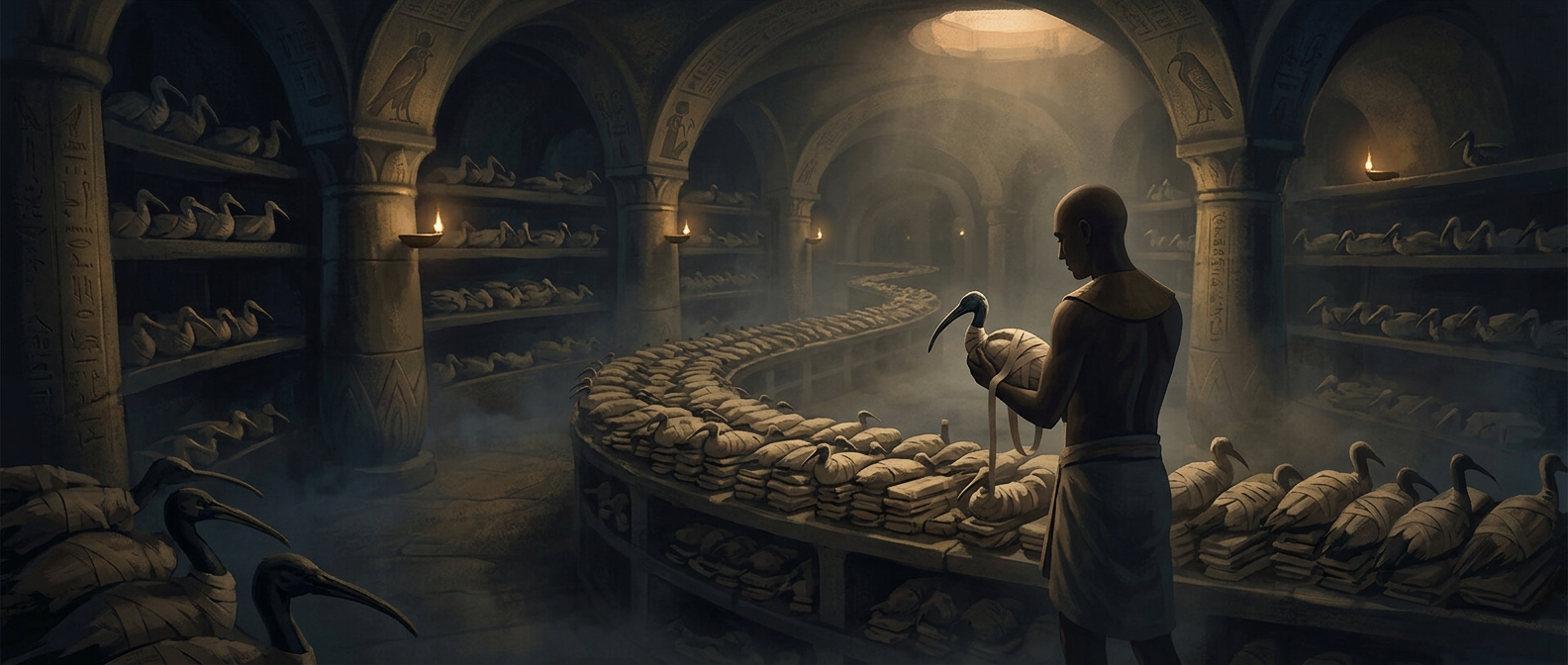
An ibis was more than a bird in ancient Egypt: its curved beak and distinctive profile linked it to Thoth, a god associated with writing and knowledge. Worshippers could honor Thoth by dedicating a mummified ibis at a temple. The bird was not necessarily a beloved household pet being buried by its owner; it could serve as a votive offering, a physical gift placed in a sacred setting as an act of devotion.
From individual gift to mass deposit
Each offering began as a separate act, but repeated over generations, the practice created a remarkable archaeological record. Birds were preserved, wrapped, and placed in underground catacombs set aside for these deposits. Some bundles held an intact bird; others could contain only parts, so the wrappings did not always guarantee a complete specimen.
The scale points to an organized religious practice, not simply an unusual burial custom. A steady supply of birds and people able to prepare and deposit them would have been needed to sustain so many offerings. The catacombs gathered countless private acts of worship into a shared sacred landscape.
What the catacombs preserve
Mummification made the offerings durable enough to survive, while the crowded deposits turned devotion into evidence archaeologists can study. The birds’ remains and wrappings reveal how religious belief could shape everyday activity: worshippers expressed reverence through a tangible gift, and repeated gifts became a vast archive. Millions of small offerings, laid down one at a time, made Thoth’s association with the ibis visible underground.