Why a Dangerous Predator Became Sacred
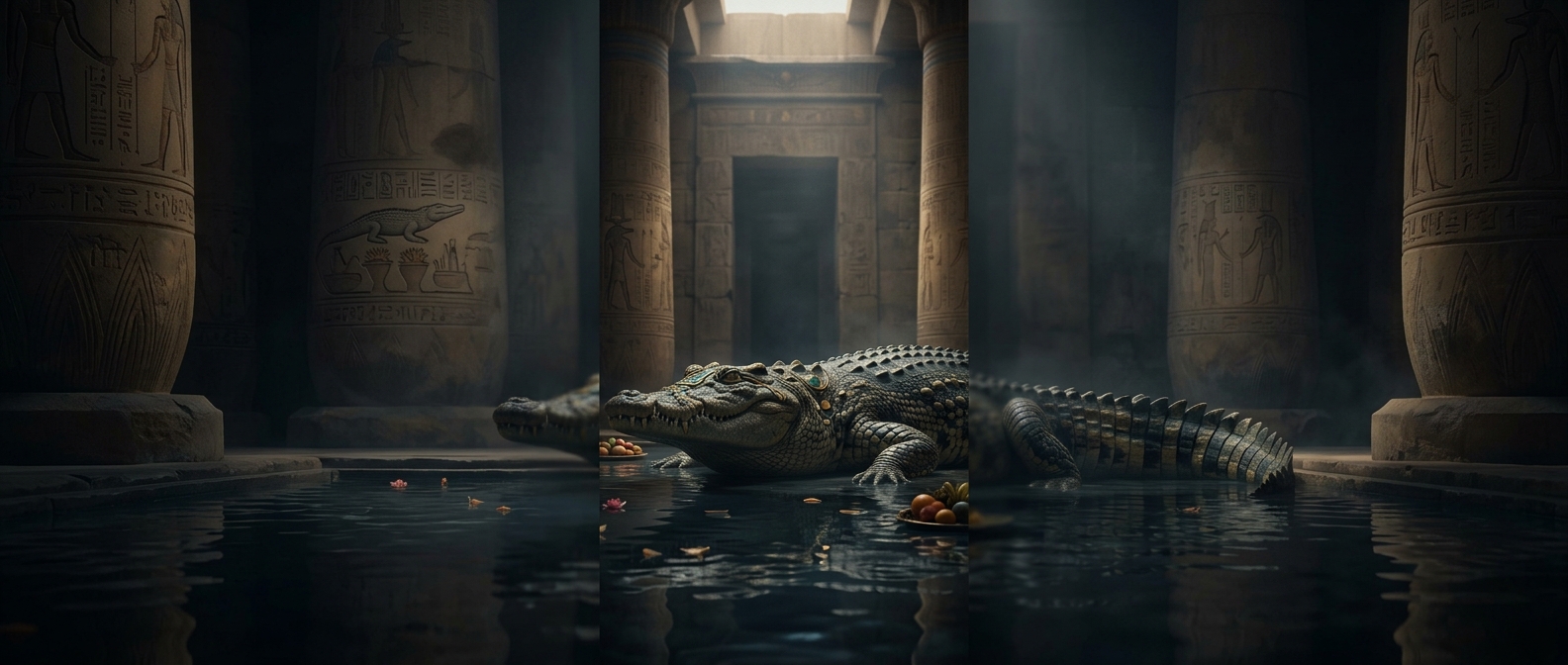
A crocodile was more than an impressive temple animal in ancient Egypt. It made Sobek’s power visible: the god was associated with crocodiles, the Nile’s waters, and the force that could sustain or endanger life. Revering a living crocodile let worshippers approach that power in tangible form—close enough to feed and adorn, but still unmistakably wild.
That made care for the animal part of religious service. Temple attendants supplied food and tended the crocodile as a sacred presence, not simply as a creature kept for display. Meat mattered for a practical reason, too: a large predator needed feeding. The ritual setting turned that necessity into an act of devotion.
From Living Animal to Mummy
When a sacred crocodile died, mummification carried its religious role beyond its lifetime. Egyptians preserved bodies for burial because they believed the dead could continue into another existence; mummification was a way of preparing a body for that passage. Crocodile mummies also made the animal’s connection to Sobek endure after the living creature was gone.
The practice reveals a striking Egyptian way of relating to divine power: it could be honored not only in a temple image, but through the care of an actual animal. The crocodile’s danger was not a contradiction to its sacred status. It was part of what made the animal a compelling presence—and why tending it could count as service to a god.