A dangerous animal turned into a guardian
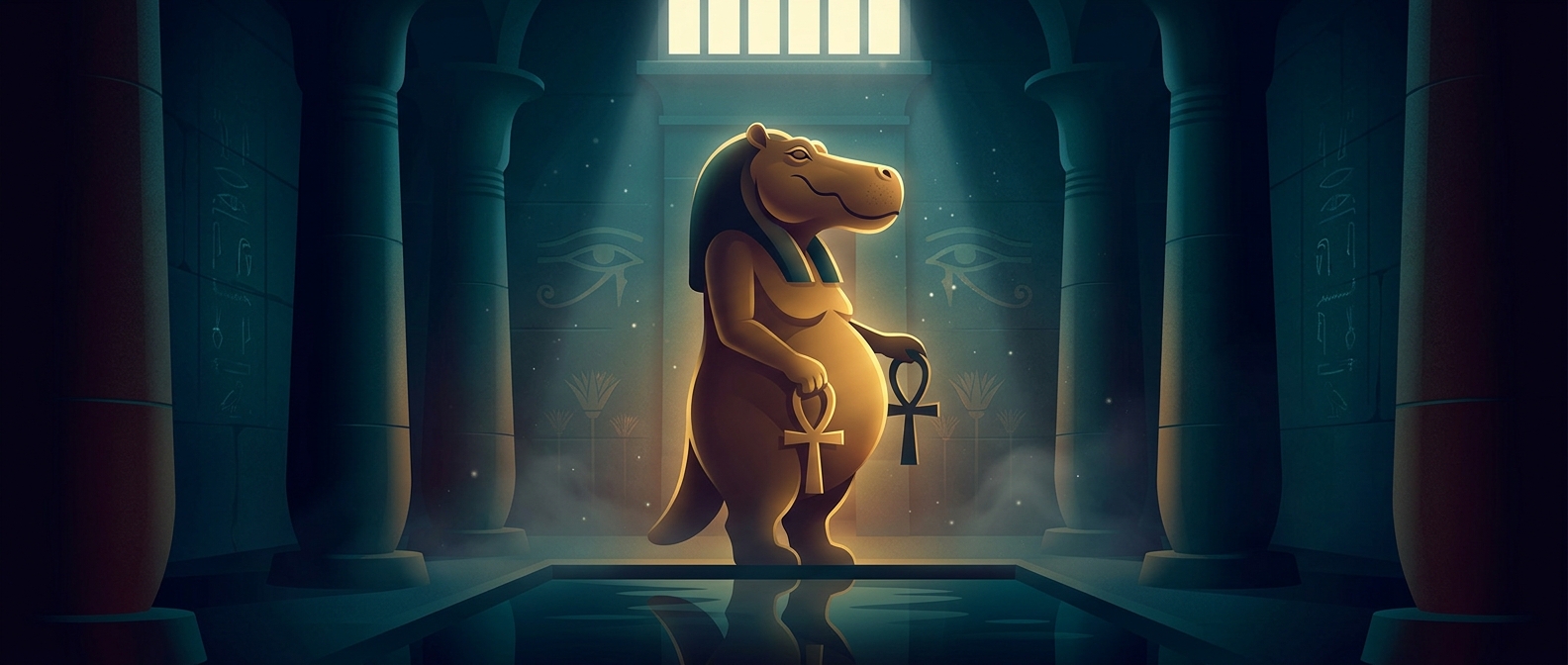
Taweret’s appearance gathered together animals that Egyptians regarded as formidable: the hippopotamus, lion, and crocodile. In images, she usually has a hippo’s heavy body, lion-like paws, and a crocodile’s tail. The combination made her look strong enough to confront threats, rather than gentle or fragile. Her fierce shape was part of her protective force.
Protection close at hand
Taweret belonged especially to the world of home and family. Her image appeared on objects such as amulets—small items worn or kept nearby as protection. For someone facing pregnancy and birth, invoking a protective goddess brought religious practice into an intensely personal danger: the vulnerable moments around delivery and the survival of mother and child.
Ancient Egyptians did not draw a sharp modern boundary between practical care and religious protection. Remedies and skilled assistance could address physical problems, while divine figures offered another form of help. An amulet bearing Taweret’s image made that appeal tangible: protection was something a person could carry or place within the household.
Why her image mattered
The contrast was the point. Taweret looked like a threat, but her strength was imagined as turned against threats to mothers and babies. Her image therefore did more than identify a goddess; it gave fearsome power a protective purpose, right where families most needed it. It is a reminder that, in ancient Egyptian life, divine protection could be woven into ordinary objects and the most intimate family concerns.