A fruit guarded by time
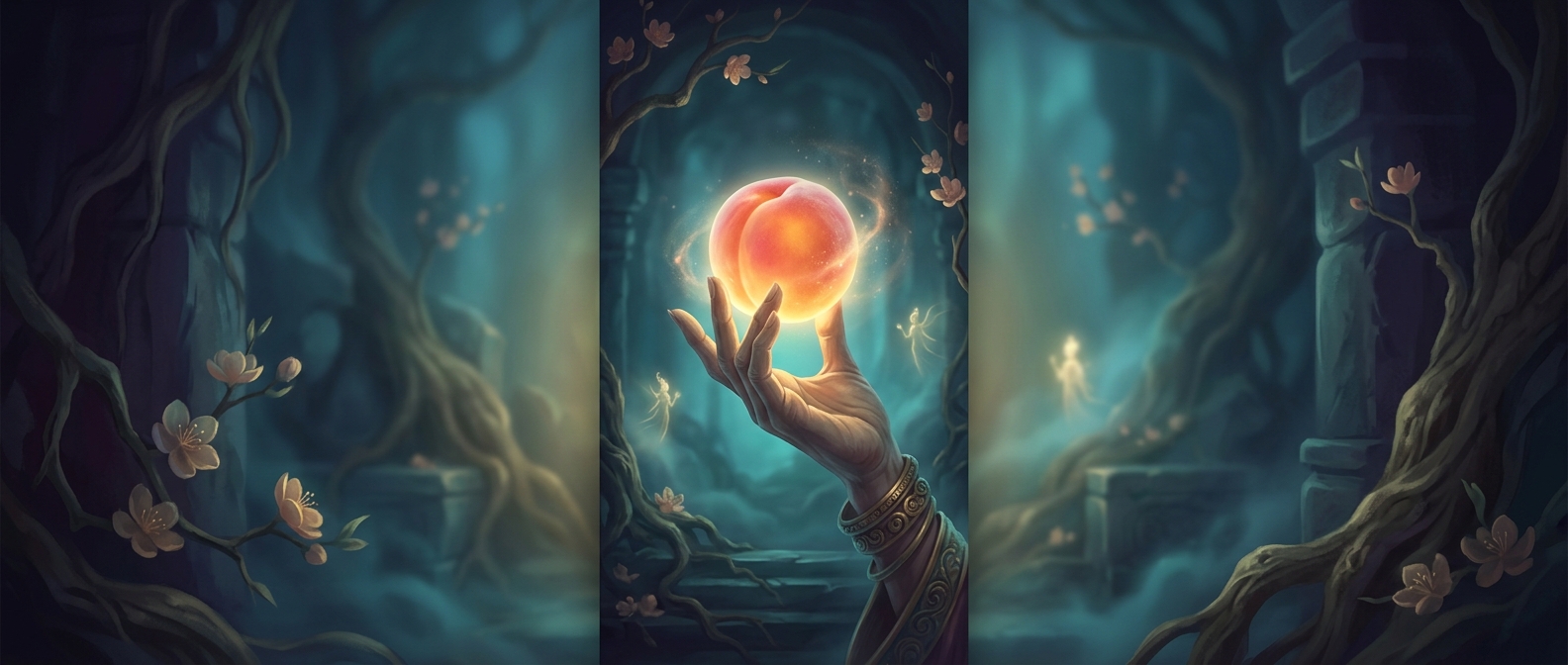
In Chinese mythology, the peaches of immortality grew in the garden of Xiwangmu, the Queen Mother of the West, a powerful divine figure associated with the western reaches of the cosmos. The trees took thousands of years to bear ripe fruit. Their extraordinary patience made each peach more than a meal: it was a rare passage into the gods’ deathless world.
Stories differ in their details, but the central idea is consistent. Immortality was not something ordinary people could simply obtain. It belonged to a divine realm, and access depended on reaching a fruit that might ripen only once across many human lifetimes.
Why peaches became a sign of long life
The peach’s role drew on a broader cultural association between the fruit and longevity. In the myth, that symbolism becomes literal: eating the peach does not merely wish someone a long life; it changes their fate. The slow-growing orchard turns time itself into a test of rarity and privilege.
That made the fruit especially useful in stories about the boundary between humans and gods. A stolen or bestowed peach could create a dramatic conflict because it carried something no ordinary treasure could offer: freedom from death. The desire for it also exposed the risks of challenging divine authority.
From divine orchard to everyday symbol
The peaches’ afterlife in Chinese culture outlasted any single tale. Their connection with longevity made them familiar symbols in art and celebration, including imagery associated with wishes for a long life. The myth’s striking bargain remained attached to the fruit: a peach could stand for an ordinary hope for many years, while the legendary version promised something far greater—life without an end.