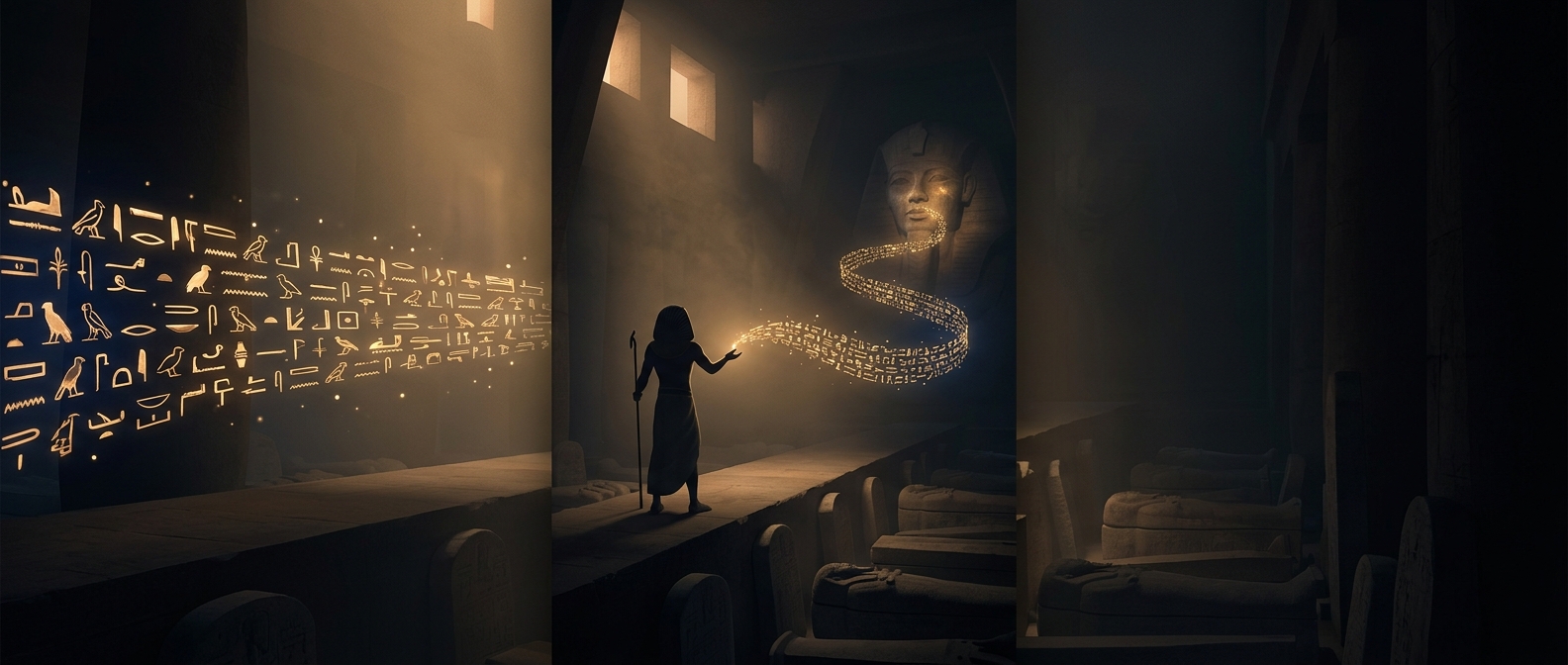
A name could outlast the body
In ancient Egyptian thought, a person was not understood as only a body. The ren, or name, was one part of a person’s identity, alongside elements such as the body and the ka—a vital force that required continued care after death. A name carved on a tomb or monument made its owner identifiable to the living and to the divine world.
That gave inscriptions a practical role in funerary life. Relatives and priests could address the dead person by name while making offerings or reciting prayers. The name connected those acts to a particular individual. If the inscription vanished, later visitors might no longer know whom the tomb commemorated, and the dead person could lose a channel through which remembrance and ritual care continued.
Erasure attacked identity—and reputation
Egyptian rulers sometimes ordered a predecessor’s names and images removed from monuments. Workers could chisel away hieroglyphs, recut a surface, or replace one ruler’s name with another’s. Such changes could serve political ends, but they also carried a deeper consequence in a culture where a name helped preserve a person’s presence beyond death.
Erasure was not necessarily a complete destruction: a name might survive in another inscription, and later rulers could restore it. But a damaged monument made the threat visible. The point was not simply to edit a record of who had ruled. It was to weaken the link between a person and the words, offerings, and memories that kept that person known. In that sense, striking out a name could be understood as an attack on someone’s future as well as their past.